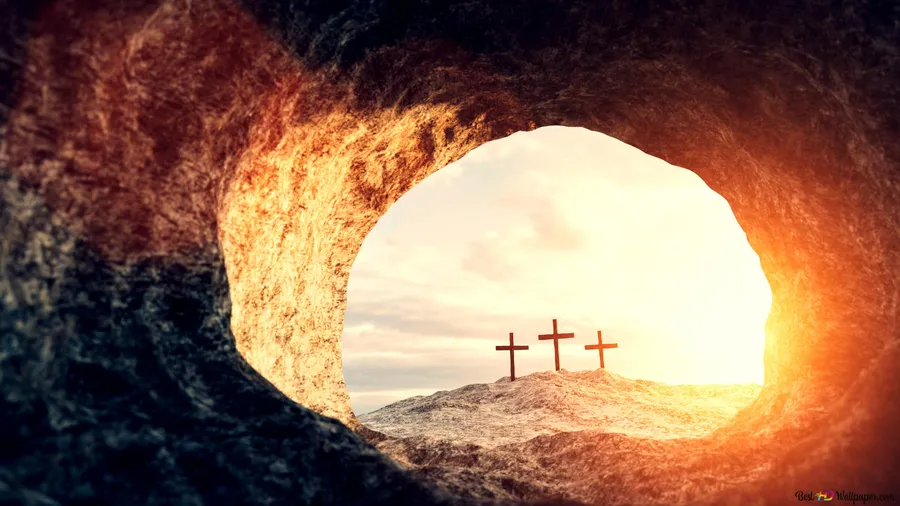
The crucifixion, burial and resurrection of Jesus Christ are foundational to the Christian faith. That’s why the major branches of Christendom memorialize – in various ways – the death, burial and resurrection of Christ each spring . In the English language this observance is called “Easter”, in the Spanish language it is La Pascua.
Mexico has a variety of traditional Pascua customs, many of them deriving from Spain, with a diversity of traditions linked to particular regions and cities.
Semana Santa (Holy Week) begins on Domingo de Ramos (Palm Sunday) , the day of Christ’s Triumphal Entry into Jerusalem. The Last Supper was held on Jueves Santo (Maundy Thursday). Viernes Santo (Good Friday) commemorates the day of Christ’s crucifixion. Sábado de Gloria (Holy Saturday) memorializes the full day Christ was in the tomb. Domingo de Pascua (Easter Sunday) celebrates the Resurrection of Christ.
Schools in Mexico get a two-week vacation, the week preceding and the week following Easter Sunday.
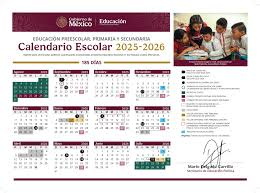
Source: Mexican Government
In some cities there is a Procesión de Silencio, a silent procession, wherein the people march down the street by candlelight, in silence. This custom is from the Spanish city of Sevilla, famous for Semana Santa observances.
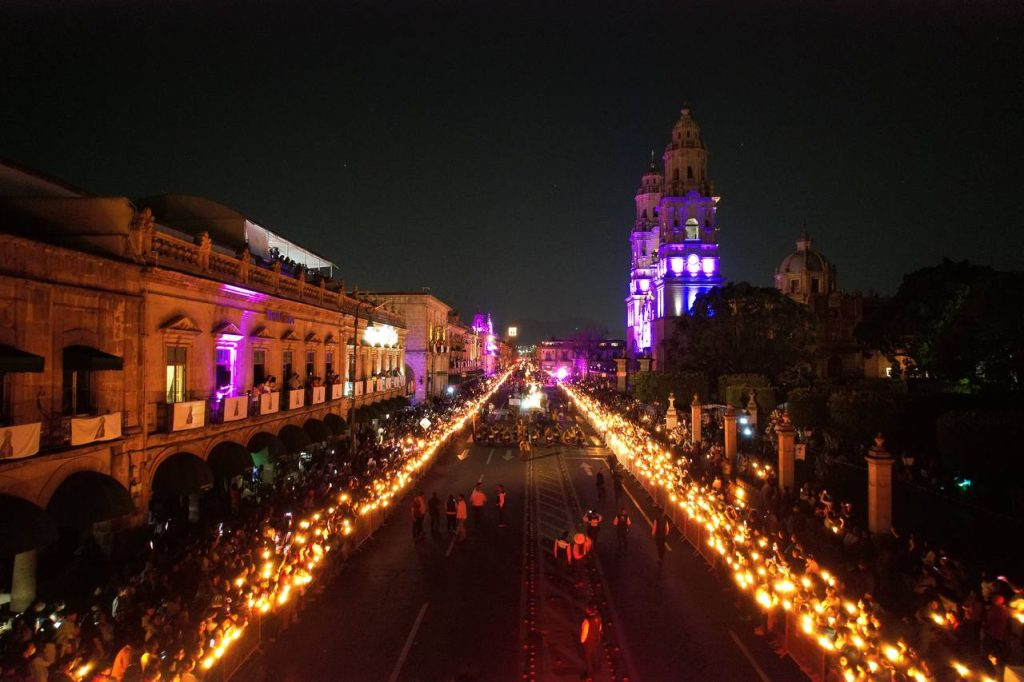
My wife and I attended a Procesión de Silencio in Morelia one year and it was truly impressive. Both the marchers and the audience were totally silent.
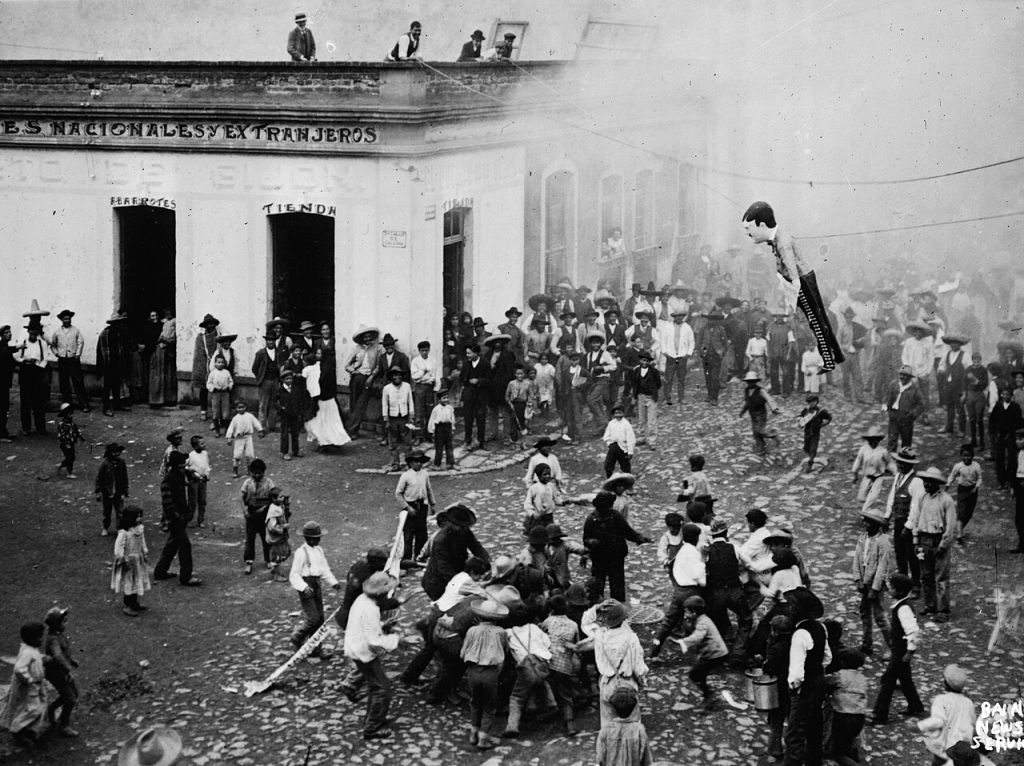
The “burning of Judas” is practiced on Sábado de Gloria, in which effigies of Judas (with firecrackers inside!) are burnt. The Judas effigy is often in the form of a contemporary person, frequently an unpopular politician.
Here’s a photo of a “Judas” hanged in effigy in early 1900s Mexico City. It looks like the kids are having a great time. I assume they eventually got around to burning the effigy.

A Passion Play is a dramatic representation of the crucifixion of Christ.
The most famous Passion Play in Mexico is in the Mexico City borough of Ixtapalapa. It has been performed since Ixtapalapa survived a cholera outbreak in 1833.
The Ixtapalapa Passion Play is a true community endeavour, organized and carried out annually by the locals and sponsored by the secular Iztapalapa government.
The drama includes 5,000 participants, 150 with speaking roles, and draws 2.5 to 4 million spectators.
All the pageant’s actors must have been born in Iztapalapa. Whoever portrays Christ is selected on the basis of both good moral character and physical strength. The actor wears an actual crown of thorns, is flogged, and bears a 200 pound cross through the streets for two and a half miles, and up a hill before being “crucified” (tied to the cross, not nailed).
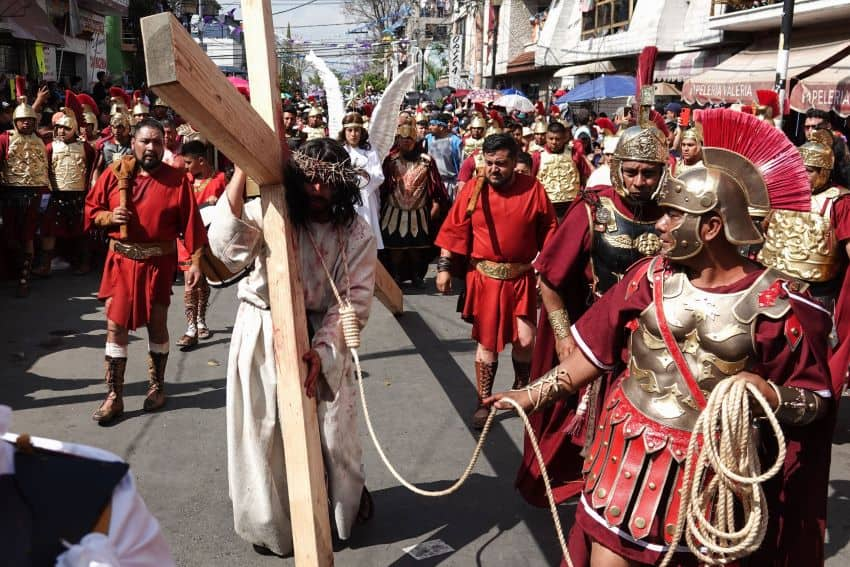
Ixtapalapa Passion Play. Source: Mexico News Daily
The Ixtapalapa Passion Play is truly a sight to behold. When a reporter asked a local man about it, he replied . “We pray, we cry, as if all this is real. We know it is not. But yet …maybe we come because we are all sinners. Maybe somehow it helps us make fewer sins in our lives…Maybe, just maybe, people are better because of it.”
¡Felices Pascuas de Resurrección!