
PISA is an acronym for Programme for International Student Assessment, a test battery administered internationally every three years by the OECD (Organisation for Economic Co-operation and Development), a 38-nation group of which both Mexico and the United States are member states.

Source: MySociety

The OECD recently released the results of the PISA and it attracts attention and provokes discussion as nations see their rankings on PISA.
You can see the OECD report here. The tests were administered in 2025 and included both OECD and non-OECD countries.
I’m about to quote the OECD document, so first I’ll quote its dislaimer: “This work is issued under the responsibility of the Secretary‑General of the OECD, and does not necessarily reflect the official views of OECD Member countries.”
The document reports that “More than 760 000 students took the PISA science, mathematics and reading test in 2025 across 91 countries and economies, representing around 33 million 15-year-olds across the world.”
Besides the traditional math, science and reading tests, there was a computational problem-solving test for the first time, and an optional English-as-a-foreign-language evaluation was offered. But for the rest of this article I’m only discussing the math, science and reading tests.
Here’s what the 2025 results found: “The overall performance of OECD countries declined, with the lowest average levels of performance ever observed in science, reading and mathematics... Overall reading scores saw particularly steep declines in the past three years, including in skills that matter most in the AI age: evaluating information, making connections across multiple sources and thinking critically about what we read.”
So what country “won”? And how did countries compare with each other?
Well, the OECD released separate scores in math, reading and science. But the Education Systems by Country website combined the three to calculate an average of the three tests, thus making a list of the overall results.
Based on that criteria, the winning country was China, with an overall score of 578.7. Well, not the whole country of China, but the provinces/municipalities of Beijing, Shanghai, Jiangsu and Zhejiang.
In second place was Singapore, with 552.7. The population of Singapore is about three-quarters ethnically Chinese.
The Chinese scored #1 on science and mathematics while Singapore had the #1 rating in reading.
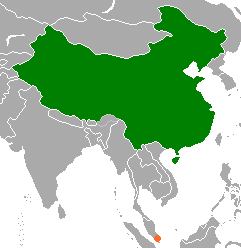
China in green, Singapore in red.
Source: Wikipedia

Taiwan (ethnically Chinese) was #3 and Macao, a former Portuguese-enclave in China, was #4.
Japan was #5, South Korea #6, Estonia #7, and Hong Kong (a former British enclave in China) placed #8.
That means that the top four placings went to ethnically Chinese countries, as well as #8 Hong Kong.
The top six placings went to East Asian countries (counting Singapore for its ethnicity) and #8 was also East Asian.
That’s not surprising, East Asians typically do well at such examinations.
The highest-ranking European country was Estonia, which actually beat Hong Kong.
Following the East Asians, the Anglosphere was highly-ranked: the United Kingdom at #9, New Zealand at #10, Canada at #11, Ireland at #12, Australia at #13 and the United States at #16.
In comparison to its previous ranking, in 2022, the U.S. went up, from 18th place to 16th place. But although the U.S. ranking went up, its overall score went down (489.3 in 2022 to 485 in 2025.)
As an article in Chalkbeat explains, “The good news from the latest PISA results… is that the U.S. has gained relative standing in recent decades. Today, U.S. students score well above average in science and reading. Math scores, long America’s weakest subject, are now on par with other developed countries. The bad news is how this happened. The U.S. has steadily moved up largely because other countries’ scores have deteriorated faster than ours over the last decade. A bevy of data points show American students are learning less than they used to. Even U.S. PISA scores in math and reading are at or near their lowest level.”
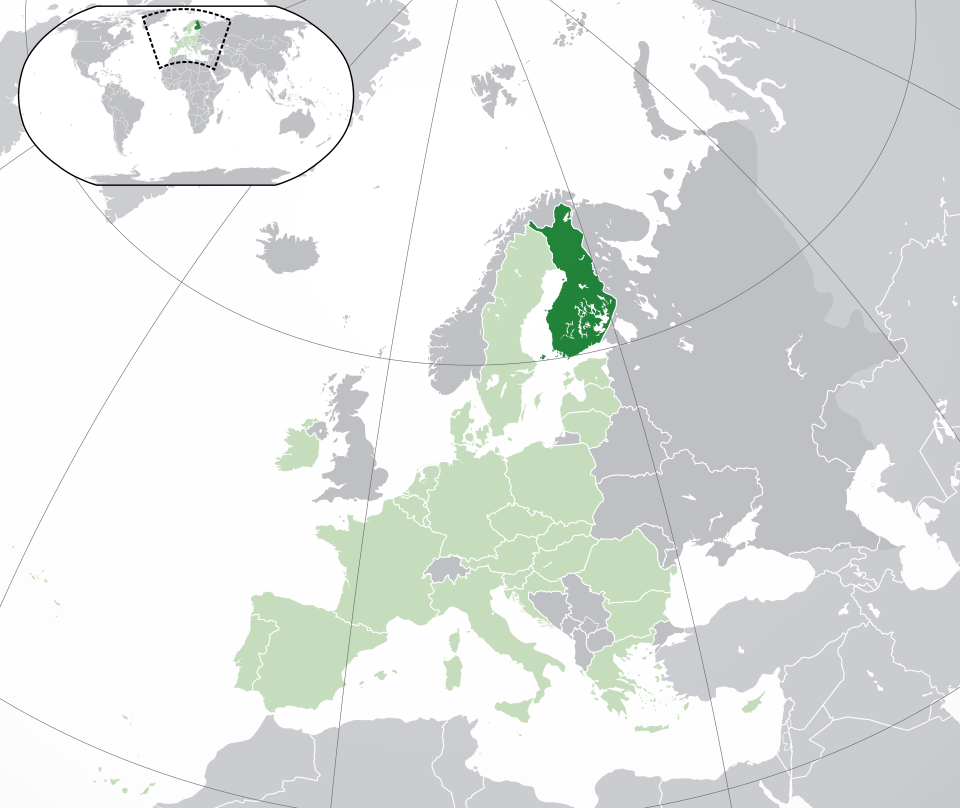
Former champion Finland (2003, 2006) was #17, barely edged out by the United States (US 485 to Finland 482.3). Finland has really gone down from previous years: 540 in 2000, 545 (and #1) in 2003, 552.7 (and #1) in 2006, 543.7 in 2009, 529.3 in 2012, 522.7 in 2015, 516.3 in 2018, and 495 in 2022. And now its overall score is 482.3. From 2000 to 2006 its score was going up, after 2006 it’s been going down. What’s going on in Finland?

Breaking down the U.S.A. score, it was 502 in Science, 490 in Reading and 463 in Mathematics. The Chinese scored 597 in Science, 527 in Reading and 612 in Mathematics.
That means the Chinese beat the U.S. by 149 points in Mathematics!
Mexico was rated #61 with an overall score of 403.3. Mexico’s test scores were 414 in Science, 408 in Reading and 388 in Mathematics.
Compare that to Mexico’s 2022 scores: 410 in Science, 415 in Reading, and 395 in Mathematics.
Mexico went up in Science, down in Reading and down in Mathematics.
How did Mexico’s overall 2025 score compare to other Latin American countries?
Chile was ranked #45, Uruguay #48, Costa Rica was ranked #56. Those three countries scored higher than Mexico.
Latin American countries with lower overall scores than Mexico were Colombia #65, Brazil #66, Peru #68, Argentina #70, Ecuador #71, El Salvador #75, Dominican Republic #83, Paraguay #84 and Guatemala at #86.
Portugal was #28 and Spain was #33.