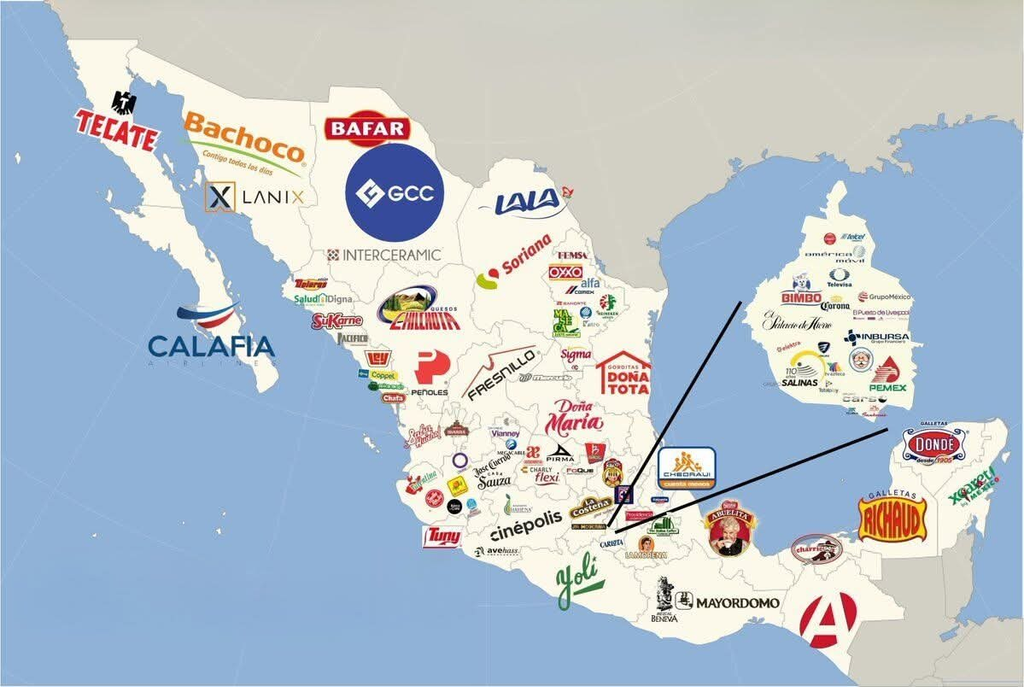
Stats Globe has published a map on Twitter X entitled “The Main Companies of Mexico”. Here is the map, you can see how many companies you are familiar with:
There’s Soriana (a Wal-mart style chain), LaLa (a milk company), Oxxo (convenience store chain), Coppel (department stores, finance), Peñoles (mining and metallurgy), Cinépolis (movie theater chain), Chilchota (cheese), Cemex (cement), Grupo Bimbo (bakery company), PEMEX (government oil company) and many others.
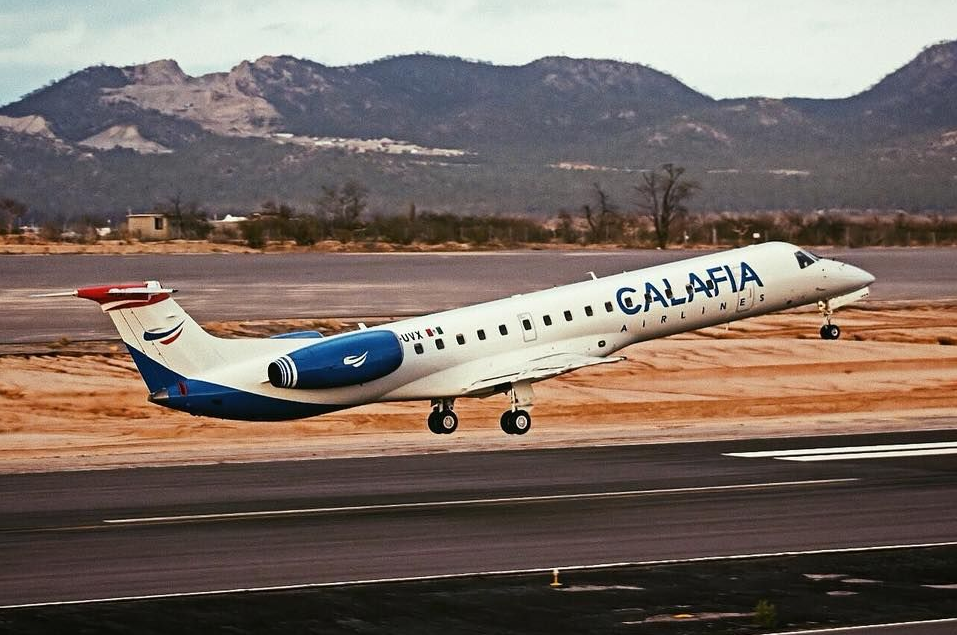
What about Calafia, in the southern part of the Baja California peninsula? As some commenters in the thread point out, Calafia Airlines no longer exists. It ceased operations in 2023 and its permits were revoked in 2025.
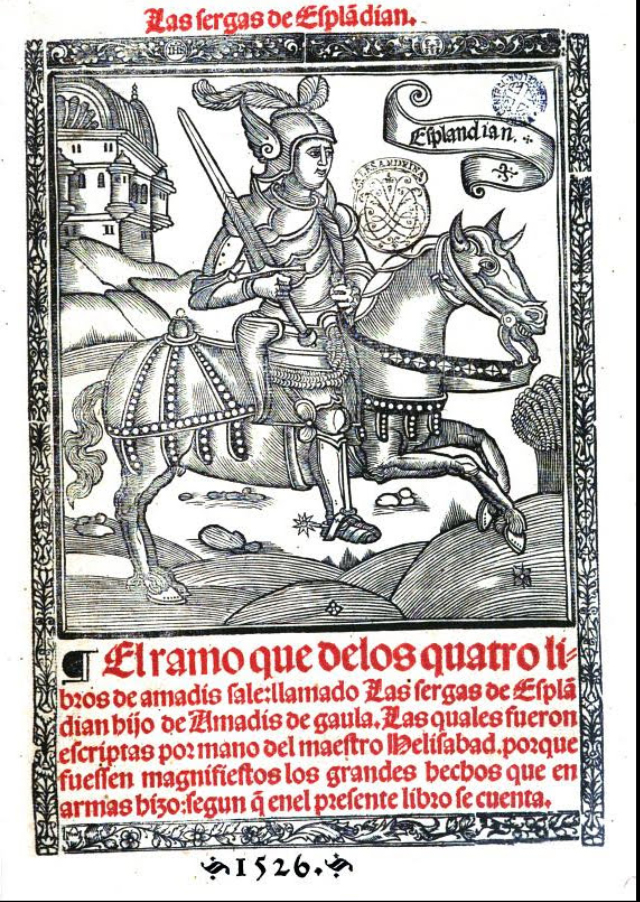
Nevertheless, there’s an interesting history behind the name “Calafia”. It goes back to a work of fiction by Garci Rodríguez de Montalvo published in Spain between 1492 and 1510, entitled Las sergas de Esplandián.
Las sergas de Esplandián, 1526 edition Source: google.com
This fictional book describes an island inhabited only by women, dark-skinned Amazons, and the name of that island was California.
When the Spaniards were exploring western Mexico they discovered a peninsula which for a time they believed was an island. They called that land California after the island in the book. Eventually they discovered it wasn’t an island but a peninsula, but the name stuck, even being applied to the region north of it.
Nowadays, Alta California (Upper California) is the U.S. state of California, while Baja California (Lower California) is the Mexican peninsula.
So California and Baja California are named after a fictional land from a Spanish fiction book. And the Calafia Airlines were named after Calafia, the fictional queen of California in that book.
Queen Calafia Rendition, 1937 On Mural by Lucile Lloyd in California State Capitol Source: California Capitol Museum
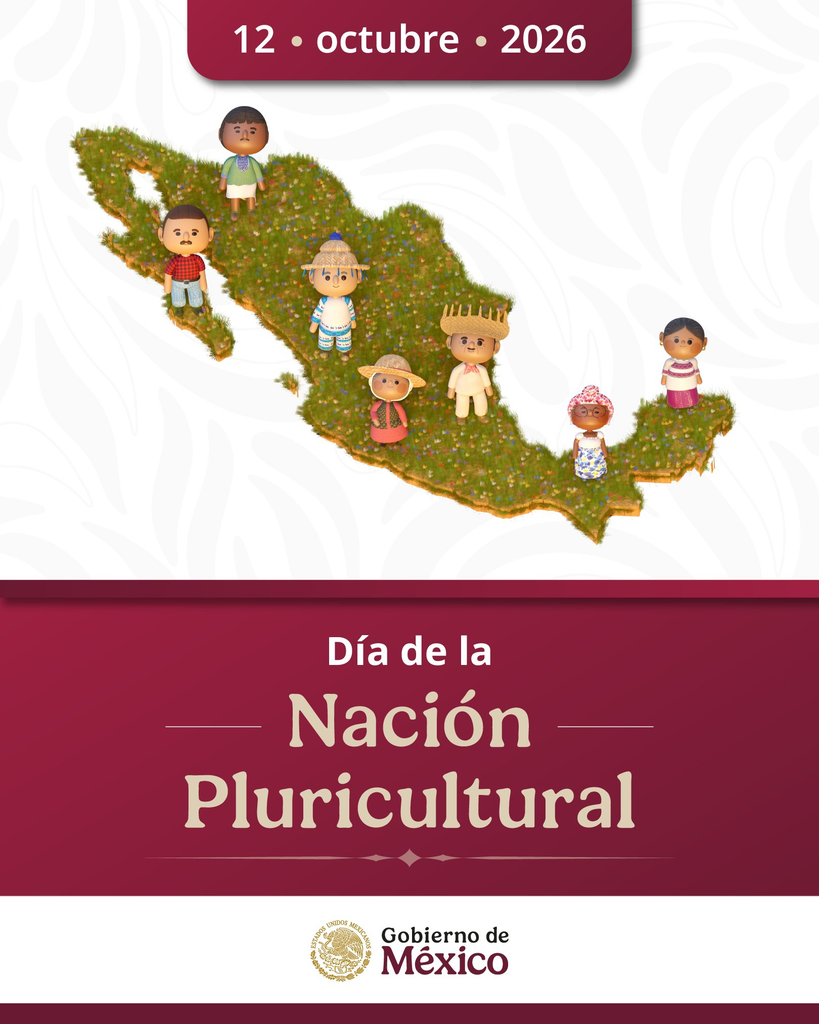
October 12th, Columbus Day, is traditionally Díade la Raza in Latin America. But, as in the U.S., Columbus’ stock has gone down in Latin America. In 2020, then-President AMLO changed the name of the celebration in Mexico to Día de la Nación Pluricultural, “Day of the Multicultural Nation”.
On October 12th, 2026, Mexican President Claudia Sheinbaum me with Mexican Indian and Afromexican leaders. There the Mexican president said that“All Mexicans have an obligation to recognize the legacy of greatness of the indigenous and Afromexican peoples.”
Notice she is lumping Indians and African-descended people together. But the African-descended people would not be in Mexico had it not been for the Spaniards.
“That’s why October 12th now is not the Díade la Raza (Day of the Race) it is the day of the Multicultural Nation.”
But Díade la Raza recognized the mestizo race, a hybrid race formed by Europeans and Indians. This race would not exist had it not been for the Spaniards.
“But we also like to recognize it as the Day of Resistance of the Indigenous and Afromexican Peoples.”
“Day of Resistance”? Is she referring to resistance today or resistance in the past?
There’s more to the speech, if you click here and start after the 58 minute mark you can hear what she said before the comments above, it’s a putdown of the Spaniards and an implication that European culture was inferior.
Claudia Sheinbaum, by the way, has shallow roots in Mexico, all her ancestors arrived in the 20th century.
It’s true that the Pre-Columbian cultures, such as the Maya and Aztec, had some great accomplishments. There was a lot of violence in that area too, however.
Were it not for the arrival of the Europeans, the current nation-state of Mexico would not exist. The majority of Mexicans have both Indian and Spanish ancestors, so none of them would exist either.
The best approach is for Mexico to respect both their Indian and Spanish ancestors, while working to make the Mexico of today a better place.
“In fourteen hundred ninety-two Columbus sailed the ocean blue.” Thus begins a poem by Jean Marzollo. October 12th, 1492 is the date Columbus landed on Guanahani Island in the Bahamas, in the Western Hemisphere.
Desembarco de Colón by Dióscoro Puebla of Spain, 1862. Source: Wikipedia
In Spain, Columbus Day is known as Día de la Hispanidad (Day of Hispanicity). In Spanish-speaking Latin American countries it was traditionally known as Díade la Raza, Day of the Race, referring to the Mestizo Race, produced by a fusion of Spaniards and Indians.
In recent years though, Columbus’ stock has been going down in both the U.S.A. and Latin America.
In 2020, then-President AMLO changed the name of the celebration in Mexico to Día de la Nación Pluricultural, “Day of the Multicultural Nation”.
But consider this: most Mexicans are of both Spanish and Indian ancestry. Therefore, if it weren’t for Columbus and Hernan Cortes and others, most Mexicans would not exist. As for the full-blood Indians and full-blood whites in Mexico, they most likely wouldn’t exist either, as they probably wouldn’t have had the same ancestors.
Columbus Day, October 12th, commemorates the day Christopher Columbus brought Western Civilization to the New World. All New World nation-states, including both Mexico and the United States, are results of that discovery in 1492.
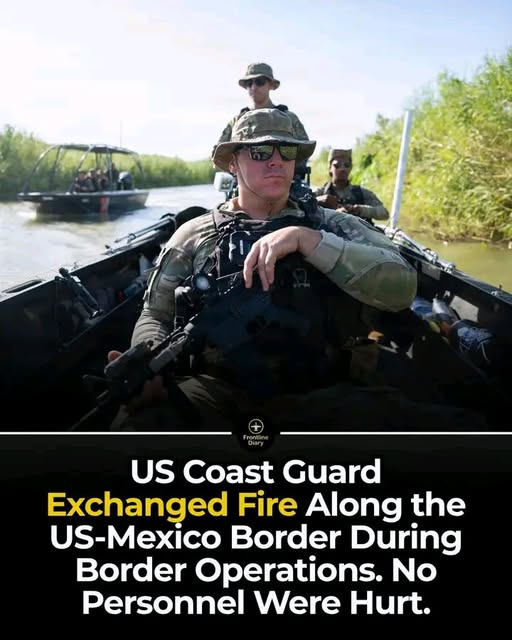
A recent border incident has resulted in hundreds more troops being deployed on both the U.S. and Mexican sides of the border, though not to fight each other.
From Military.com : “Coast Guard personnel returned fire after taking gunfire from the Mexican side of the Rio Grande during a joint border operation in Texas, an exchange that U.S. military officials have cited as impetus for moving hundreds of additional troops into the Rio Grande Valley.”
“On Sept. 26, personnel from Coast Guard Forces Rio Grande were intercepting migrants crossing the river alongside other federal agencies when they received gunfire from across the U.S.-Mexico border and returned it, according to the service.”
“No injuries to Coast Guard or other personnel were reported, and no Coast Guard equipment was damaged. Officials confirmed the incident Friday [October 2nd], as reported by Stars and Stripes.”
“It remains unclear who fired at the Coast Guard. The service said it was investigating alongside federal partners, and it did not identify the shooters…No suspects have been publicly identified. The Coast Guard’s investigation continues.”
The aftermath of the exchange?
“In the days after the shooting, the U.S. military said it was repositioning hundreds of troops and equipment to the Rio Grande Valley. A U.S. Northern Command spokesperson described the move to The Texan as part of an effort to ‘rapidly reinforce U.S. forces and federal partners’ in the area, as part of an operation called Ardent Vanguard. Joint Task Force-Southern Border framed it as planned preparation for a seasonal increase in attempted illegal activity and pointed to the Sept. 26 encounter as an example.”
“NewsNation, citing sources, reported that about 500 service members were being moved, with some dropped onto islands in the Rio Grande by Chinook helicopters. Officials have not confirmed a number publicly or said how long the deployment will last.”
And on the Mexican side…
“The response has not been limited to the U.S. side. Mexico deployed about 500 Army and National Guard personnel to its side of the border. The U.S. Embassy in Mexico said it was helping coordinate with them.”
“ ‘The embassy is helping to coordinate with Mexican forces that are being deployed in the border area where shots were fired against elements of the United States Coast Guard,’ U.S. Ambassador to Mexico Ronald Johnson said in an X post.”
“That coordination points to a response carried out with the Mexican government rather than against it, even as the question of who fired on U.S. personnel from Mexican territory remains unresolved.”
As for the Coast Guard…
“The shooting came amid a year-long expansion of the Coast Guard’s presence on the border. Since 2025, the service has run Operation River Wall, which added boats and personnel along about 260 miles of the Rio Grande in the Rio Grande Valley.”
U.S. Coast Guard on the Rio Grande, September 1st, 2026. Source: Military.com
“This new push, which officials have called Operation Unified Resolve, is meant to increase patrol capacity and monitoring in the area in coordination with U.S. Customs and Border Protection (CBP) and the Department of Homeland Security.”
“In its statement, the Coast Guard said it works with Border Patrol, the Defense Department and the Texas Military Division to secure the border and disrupt illegal activity, adding that it takes threats to its members ‘extremely seriously.’ “
“The stretch near Garceño, with its shallow river access and proximity to the Mexican state of Tamaulipas, has long been difficult for authorities to control.”
“The troop movement is underway, though officials have not said how long the heightened presence will last.”
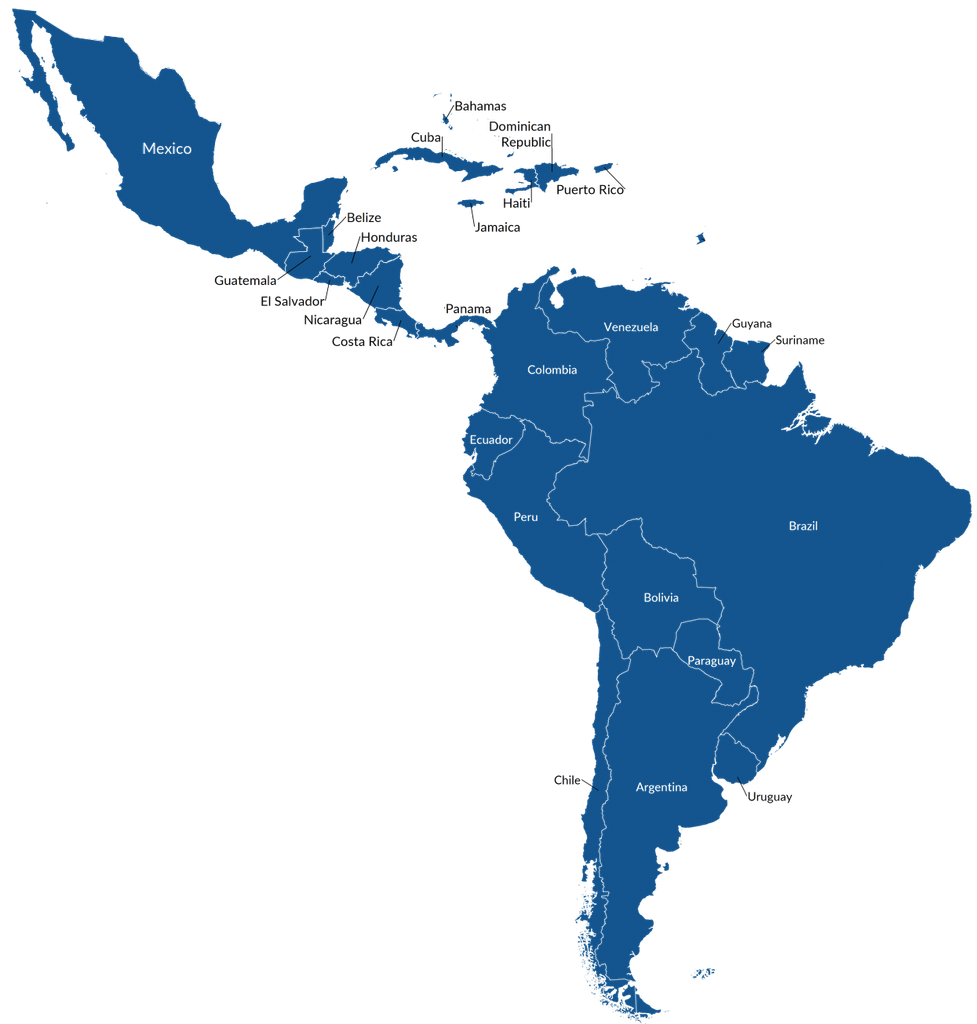
TheCorporación Latinobarómetro, headquartered in Chile, conducts an annual survey throughout Latin America.
The 2026 Latinobarómetro survey was carried out in 17 Latin American countries, from May 7th to June 17th of 2026. This was four months after the U.S. capture of Venezuelan leader Nicolas Maduro. Bear that in mind when you see the Venezuela results.
The 17 countries surveyed were Mexico, Guatemala, El Salvador, Honduras , Costa Rica, Panama, Dominican Republic, Colombia , Venezuela, Brazil, Peru, Ecuador , Bolivia, Paraguay, Uruguay, Chile, Argentina. With the exception of Portuguese-speaking Brazil, all are Spanish-speaking. Not included were Cuba and Nicaragua.
There is a lot of material in the Latinobarómetro survey, allow me to share some of the results. If you’d like to see more, go to the source.
GOVERNMENT
The very first question asked respondents to indicate which of the three following sentences they were in more agreement with:
1. “Democracy is preferable to any other form of government. ” Across Latin America, 52% agreed.
2. “In some circumstances, an authoritarian government can be preferable to a democracy.” Across the region, 17% agreed.
3. “To people like me, a democratic or non-democratic government makes no difference.” Across Latin America, 26% agreed.
Breaking that question down by countries, the country where the most people agreed with “Democracy is preferable to any other form of government” was Argentina at 73%, the country with the lowest percentage agreeing was Guatemala with 35%. In Mexico, the percentage agreeing was 45%.
Respondents were asked a set of questions about their satisfaction with public services: police, judicial system, public hospitals, public schools. In Mexico it came out like this: Police 22% Judicial System 27% Public Hospitals 36% Public Schools 49% The Latin American country with the highest approval of all 4 government services was the Central American nation of El Salvador, with 75% approval of the police, 57% of the judicial system, 51% of public hospitals and 76% of public education.
In a question about each country’s congress/parliament, respondents were asked if they feel politically represented in that national legislative body. The highest percentage was in El Salvador at 35%. Mexico’s was 25%.
Another set of questions asked respondents about their confidence in various institutions in their countries. In Mexico 55% had confidence in the Church, 53% in the Electoral Institution, 50% in the Military, 40% in the President, 40% in the radio, 34% in Newspapers, 32% in Television, 30% in Social Media, 29% in the Government, 29% in Congress, 28% in the Judicial Power, 26% in the Police, 23% in the Unions, 18% in Political Parties.
WHERE DO YOU GET YOUR INFORMATION ABOUT POLITICS?
Another question asks where respondents get their information about politics. Throughout Latin America, Television was the winner at 49%, Facebook came in at #2 with 35%, and Family was #3 at 32%. Internet was #4 at 31%, Radio and Friends tied for #5 at 24%.
FALSE INFORMATION and FREEDOM OF SPEECH
Now here’s a real zinger. Respondents were asked to choose between these two statements:
“It is necessary to control the publication of false information although this limits Freedom of Expression.” Across Latin America, 61% agreed with this statement.
“Freedom of Expression should be guaranteed regardless of the circulation of false information.” Across the region, 35% agreed with this statement.
SEVEN COUNTRIES
Respondents were asked about 7 countries, and whether each was a democracy, an authoritarian regime, or a dictatorship. Here are the 7 countries and the results from across Latin America.
1. Cuba – 77% believe it is a dictatorship/authoritarian regime and 11% believe it’s a democracy 2. Venezuela 73% say authoritarian regime/dictatorship and 15% say democracy 3. Nicaragua 56% say authoritarian regime/dictatorship and 17% say democracy 4. El Salvador 38% say authoritarian regime/dictatorship and 43% say democracy 5. Paraguay 26% say authoritarian regime/dictatorship and 43% say democracy 6. The United States 41% say it’s an authoritarian regime/dictatorship and 49% say democracy
In Mexico, 31% say the U.S. is a democracy, 27% say the U.S. is an authoritarian regime and 23% say the U.S. is a dictatorhip.
In Venezuela, 67% say the U.S. is a democracy, 16% say it’s an authoritarian regime and 9% say it’s a dictatorship. That 67% was the highest democracy rating for the U.S.
RELATIONS WITH THE UNITED STATES
Respondents were asked to rate their country’s relations with the United States. In Costa Rica, 89% said rather good or very good. That was the highest rating, followed by Dominican Republic and Chile at 88%, El Salvador at 86%, Ecuador at 80% and Venezuela at 74%. Mexico had the lowest perception of good relations with the U.S., at 50%.
Respondents were also asked about their country’s relationship with China and the European Union. Chile rated Chilean-Chinese relations at 90% rather good or very good. The same country’s respondents rated relations with the European Union at 74% rather good or very good. Those were the highest ratings for relations with China and the European Union.
For Mexico it was 61% rather good or very good relations with China and 51% with the European Union. That means that Mexican respondents think Mexico has better relations with China than the United States, and a little better relationship with the European Union than with the United States.
Respondents were also asked if they have very favorable, somewhat favorable, somewhat disfavorable or very disfavorable opinions of the following: the United States, China, European Union, Russia, Ukraine, Israel, Venezuela, Palestine, Iran. Here are the overall Latin American opinions of very favorable or somewhat favorable of each: United States 63% China 59% European Union 58% Russia 39% Ukraine 35% Israel 30% Venezuela 27% Palestine 25% Iran 20%
Breaking it down by countries, the Dominican Republic had the highest very favorable or somewhat favorable opinion of the United States at 81%. Venezuela was at #2 with 76%. Mexico was at 47%.
DONALD TRUMP
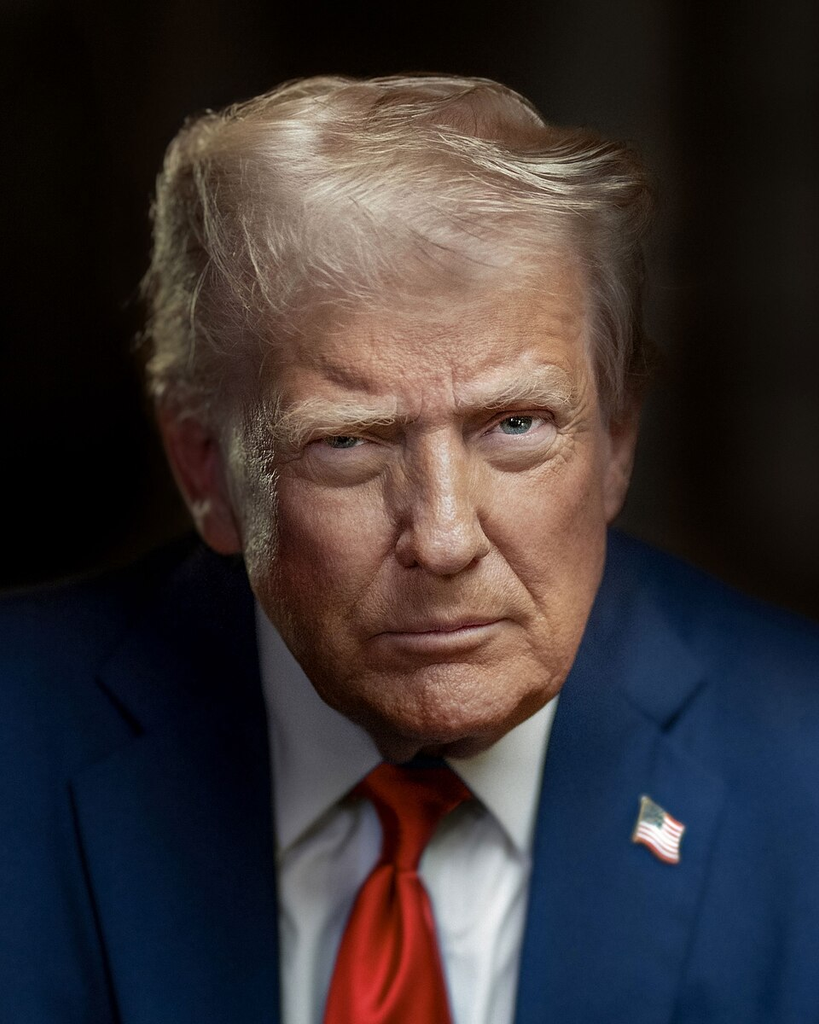
What about Donald Trump? How is U.S. President Donald Trump seen in Latin America?
This survey asks respondents to rate Trump on a scale of 0 to 10, with 0 as very bad and 10 as very good.
Trump received his highest ratings from the Dominican Republic and Venezuela. Both gave Trump a 6.2, not that high, but by school standards, a passing grade. The Mexican respondents gave Trump his lowest rating, at 2.8. The Latin American average was 4.7.
Then there was another, related question: “Do you approve or disapprove of the manner in which the President of the United States is conducting international affairs?”
Venezuela gave Trump the highest rating, at 61%, and Mexico and Uruguay gave Trump the lowest rating, at 18%. Mexico gave Trump a 79% disapproval rating and Venezuela gave Trump a 33% disapproval. The Latin American average was 34% approval and 59% disapproval.
THE UNITED STATES – POSITIVE OR NEGATIVE INFLUENCE?
When asked if the U.S. had a positive or negative influence, the highest positive rating was given by the Dominican Republic, at 79%, followed by Venezuela at 76%. The highest negative rating was from Mexico, at 62%. Venezuela had the lowest negative rating at 19%. The Latin American average was 57% positive, 37% negative.
When asked about China, the Latin American average was 65% saying China is a positive influence and 26% saying it’s a negative influence. Among the Mexican respondents, 65% said China is a positive influence, 26% said it’s a negative influence. (The Mexican results were the same as the Latin American average.) Venezuela had the lowest positive rating on Chinese influence (53%, still a majority) and the highest negative rating (40%).
WORLD IMPACT OF TRUMP POLICIES
The Mexican respondents gave it a 79% negative rating and an 18% positive rating. For Venezuela it was 63% positive and 30% said negative. The Latin American average was 38% positive and 55% negative.
THE CAPTURE OF NICOLAS MADURO BY THE UNITED STATES
Latin American respondents were asked if they were in agreement or disagreement with the capture of Maduro by the United States on January 3rd, 2026.
Captured Nicolas Maduro on USS Iwo Jima. Source: U.S. Military
Among the Costa Ricans, 89% agreed with it, the highest agreement level on that question. In fact, of the 17 countries polled, 16 of them had an agreement level of 50% or higher. (The country with the 50% was Mexico.) Argentina had a 47% agreement percentage and a 45% disagreement percentage. Mexico had a 40% disagreement rate. The Latin American average was 69% agreement and 24% disagreement. Venezuela, the country where it actually occurred, had a 69% agreement percentage. That’s interesting.
Does the capture of Maduro help or harm Venezuela? The percentage of those who said it helps was 58% in Costa Rica, 54% in the Dominican Republic, and 47% in Venezuela. Mexico had the lowest help percentage at 20%, while 51% of Mexicans said it harms Venezuela, the highest harm rating. In Venezuela, only 18% says it harms their country. The Latin American average was 35% help, 29% harm and 28% who say it neither helps nor harms.
Among respondents of Cuba’s Caribbean neighbor the Dominican Republic, 45% agreed with the embargo, while 68% of Mexican respondents disagreed. Only 19% of Mexicans agreed. The Latin American average was 34% agree, 50% disagree.
Only 16% of Latin American agree with it while 77% disagree. In Mexico it’s 7% agree and 89% disagree, the highest disagreement rate. The highest agreement rate is the Dominican Republic at 25% and a tie between Venezuela and Costa Rica at 24%.
DEPORTATION OF ILLEGAL ALIENS TO THEIR COUNTRY OF ORIGIN
The question was based on a scale of 1 to 10, with 1 as deportation is never justified and 10 is it’s always justified. Chile voted 7.2 and Mexico voted 5.1. The Latin American average was 5.7.
The next question is specifically about the United States. It’s another 10-point scale, with 1 being it’s never justified and 10 it’s always justified. Chile rated the question at 7 points. Ecuador, Mexico and Venezuela gave the U.S. its lowest permission to deport illegal aliens, with 4.7. The Latin American average was 5.4.
ORGANIZED CRIME
This question asks the perceived power of organized crime in each country. With one exception, the majorities of all countries believe organized crime has much power in their respective countries. For Costa Rica, 94% believe this, the highest figure. In Mexico it’s 88%. The only exception is El Salvador, where only 28% believe organized crime has a lot of power.
Another question is about the fight against drug trafficking and organized crime. There are three questions:. 1. Is your country winning the battle against drug trafficking and organized crime? 2. Is your country losing the battle against drug trafficking and organized crime? 3. The battle against drug trafficking and organzized crime can’t be won.
The majority of respondents from only one nation, at a 75% percentage, believe they are winning the battle against drug trafficking and organized crime. That nation is El Salvador.
As for Mexico, only 18% believe they are winning, 39% believe they are losing, and 38% believe it’s a war that can’t be won.
Another question asks if the respondents know of or have heard of criminal groups where they themselves live. In Ecuador, 47% responded in the affirmative (the highest), in Mexico it was 32%, in Venezuela it was 7%, the lowest. The Latin American average was 29%.
There is plenty more there, take a look here if you like.
The Mexican National Guard (Guardia Nacional) is the national gendarmerie. A gendarmerie is a military force with law enforcement duties. Some examples are the French Gendarmerie Nationale, the Italian carabinieri and the Guardia Civil in Spain.
The Mexican Guardia Nacional was formed in 2019 by combining units and officers from the Federal Police, Military Police and Naval Police.
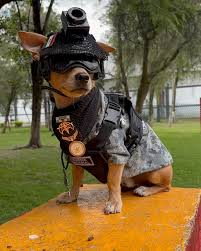
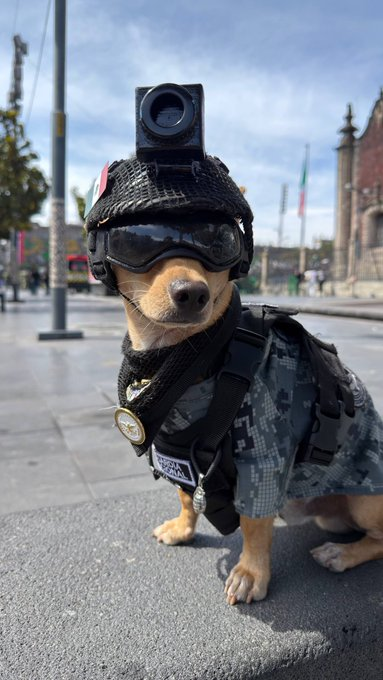
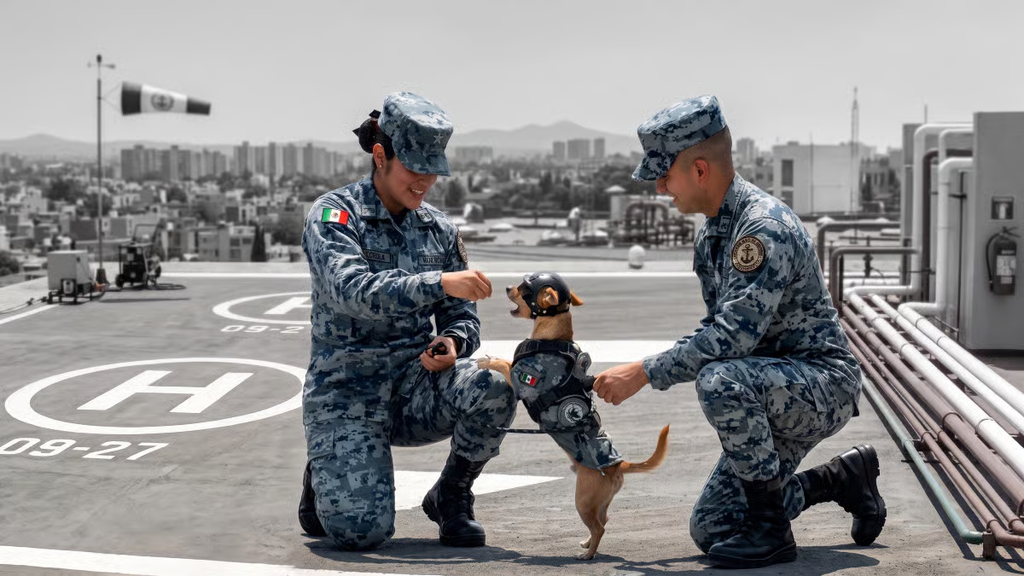
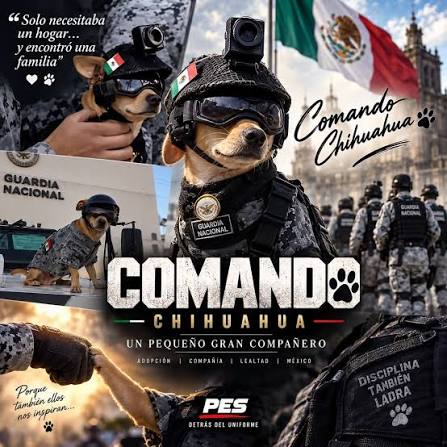
The Mexican National Guard has added a new soldier to its forces – a Chihuahua dog called “Comando Chihuahua”. Here is a photo:
Reuters ran an article about this military canine: “Comando may be tiny, but Mexico’s National Guard is giving him a very big role.Outfitted with miniature goggles, a fitted tactical vest, a helmet and even a petite head-mounted camera, the 7-kilogram (15-pound) Chihuahua has become the most unusual — and smallest — canine member of the force.”
“Officers said the 13-month-old pup is being trained not just as a crowd-pleasing mascot but for search-and-rescue work as well.”
One advantage is a Chihuahua could get into some small spaces.
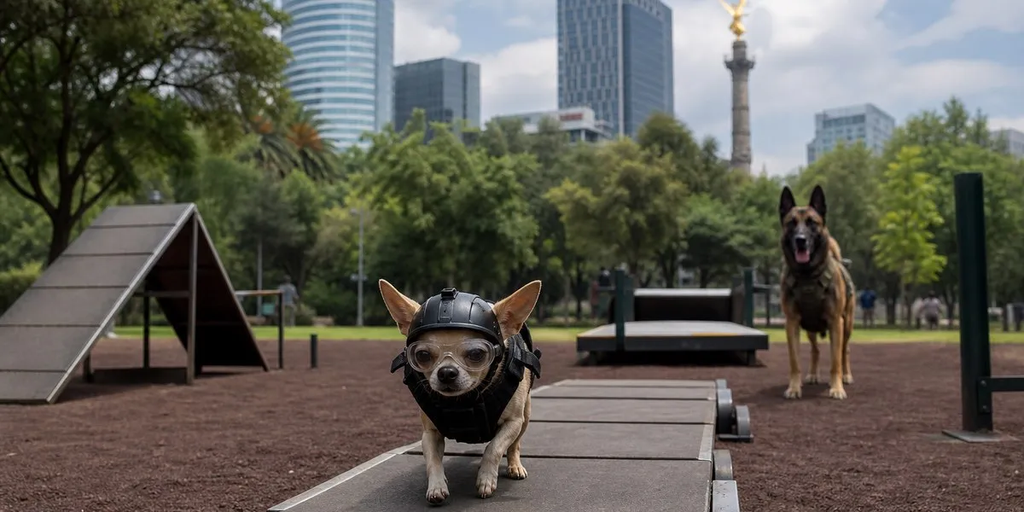
“Diminutive Comando, who stands 21 centimeters (8 inches) tall, looks nothing like the powerful dogs usually associated with military or police units.”
“During a training session in Mexico City last week, the little dog scampered up stairs and over obstacles while a much larger, fully trained canine named Roko looked on.”
“Lieutenant Debora Hernandez said Comando challenges two stereotypes: That only big dogs can serve in the National Guard, and that a military-style force cannot build a warmer connection with the public. His presence, she said, reminds people that ‘beneath the uniform, we are human beings.’ “
“The force adopted Comando about six months ago in the northern state of Chihuahua, which inspired the breed’s name, after his elderly owners became unable to care for him. Comando now appears at civic ceremonies, school events and community outreach programs.”
The Chihuahua is the world’s smallest recognized dog breed.
“Comando is an outlier in a National Guard canine force of about 350 dogs, most of them traditional working breeds such as German Shepherds and Labrador Retrievers.”
“Chihuahuas, known for their large upright ears, big personalities and expressive eyes, may be alert and energetic, but they are rarely seen as candidates for serious operational work.”
“Comando has already appeared in Mexico’s Independence Day parade and has inspired his own animated likeness and a growing crop of memes on social media.”
For more on the Independence Day parade, click here.
“This growing visibility also serves a broader purpose. Officials said Comando helps soften the image of the National Guard, which is under Army control.”
Well, you don’t want to “soften the image of the National Guard” for the drug cartels. But there’s no reason Comando Chihuahua can’t be a valuable canine contributor to the Mexican military.
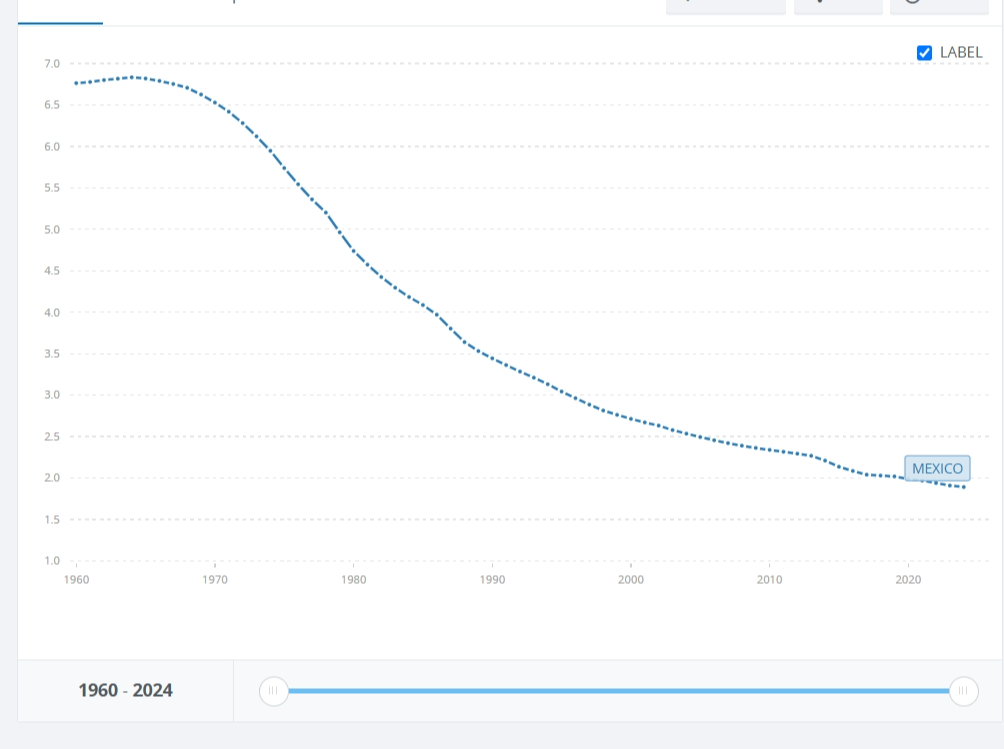
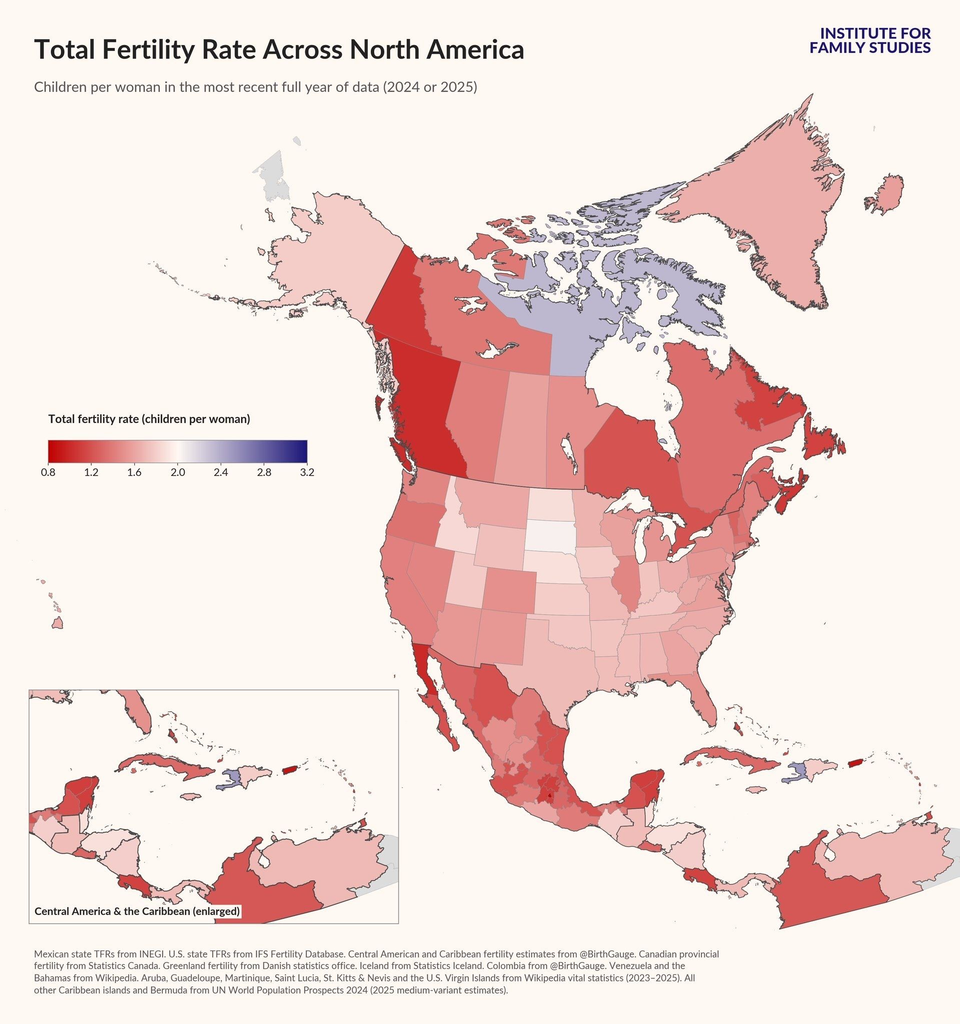
In reality the Mexican birth rate has been dropping for decades.
Here’s a chart from the World Bank that shows births per woman in Mexico from 1960 to 2024. In 1960, the rate was 6.8 births per woman, in 2024 it had dropped to 1.9 births per woman.
According to Simon Kuestenmacher, “Mexico’s new birth data is striking: fertility fell to just 1.23 births per woman in 2024, lower than any US state. Mexico City is at only 0.79 and several regions around 1.0. The least fertile US state, Vermont, is at 1.30.”
PISA is an acronym for Programme for International Student Assessment, a test battery administered internationally every three years by the OECD (Organisation for Economic Co-operation and Development), a 38-nation group of which both Mexico and the United States are member states.
Château de la Muette (Rothschild’s Château), OECD Headquarters, Paris, France Source: MySociety
The OECD recently released the results of the PISA and it attracts attention and provokes discussion as nations see their rankings on PISA.
You can see the OECD report here. The tests were administered in 2025 and included both OECD and non-OECD countries.
I’m about to quote the OECD document, so first I’ll quote its dislaimer: “This work is issued under the responsibility of the Secretary‑General of the OECD, and does not necessarily reflect the official views of OECD Member countries.”
The document reports that“More than 760 000 students took the PISA science, mathematics and reading test in 2025 across 91 countries and economies, representing around 33 million 15-year-olds across the world.”
Besides the traditional math, science and reading tests, there was a computational problem-solving test for the first time, and an optional English-as-a-foreign-language evaluation was offered. But for the rest of this article I’m only discussing the math, science and reading tests.
Here’s what the 2025 results found: “The overall performance of OECD countries declined, with the lowest average levels of performance ever observed in science, reading and mathematics... Overall reading scores saw particularly steep declines in the past three years, including in skills that matter most in the AI age: evaluating information, making connections across multiple sources and thinking critically about what we read.”
So what country “won”? And how did countries compare with each other?
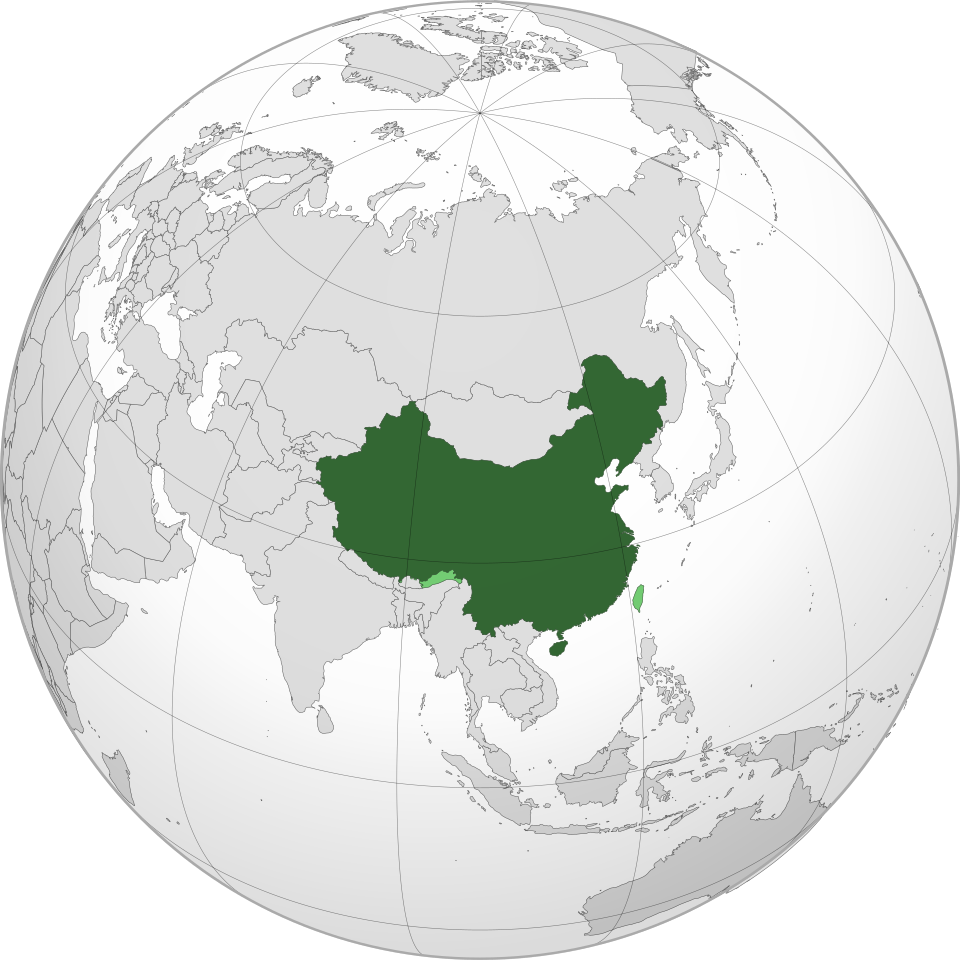
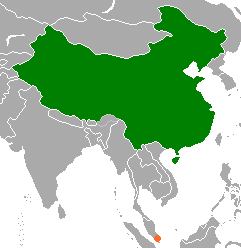
Based on that criteria, the winning country was China, with an overall score of 578.7. Well, not the whole country of China, but the provinces/municipalities of Beijing, Shanghai, Jiangsu and Zhejiang.
In second place was Singapore, with 552.7. The population of Singapore is about three-quarters ethnically Chinese.
The Chinese scored #1 on science and mathematics while Singapore had the #1 rating in reading.
China in green, Singapore in orange. Source: Wikipedia
Taiwan (ethnically Chinese) was #3 and Macao, a former Portuguese-enclave in China, was #4.
Japan was #5, South Korea #6, Estonia #7, and Hong Kong (a former British enclave in China) placed #8.
That means that the top four placings went to ethnically Chinese countries, as well as #8 Hong Kong.
The top six placings went to East Asian countries (counting Singapore for its ethnicity) and #8 was also East Asian.
That’s not surprising, East Asians typically do well at such examinations.
The highest-ranking European country was Estonia, which actually beat Hong Kong.
Following the East Asians, the Anglosphere was highly-ranked: the United Kingdom at #9, New Zealand at #10, Canada at #11, Ireland at #12, Australia at #13 and the United States at #16.
In comparison to its previous ranking, in 2022, the U.S. went up, from 18th place to 16th place. But although the U.S. ranking went up, its overall score went down (489.3 in 2022 to 485 in 2025.)
As an article in Chalkbeat explains, “The good news from the latest PISA results… is that the U.S. has gained relative standing in recent decades. Today, U.S. students score well above average in science and reading. Math scores, long America’s weakest subject, are now on par with other developed countries. The bad news is how this happened. The U.S. has steadily moved up largely because other countries’ scores have deteriorated faster than ours over the last decade. A bevy of data points show American students are learning less than they used to. Even U.S. PISA scores in math and reading are at or near their lowest level.”
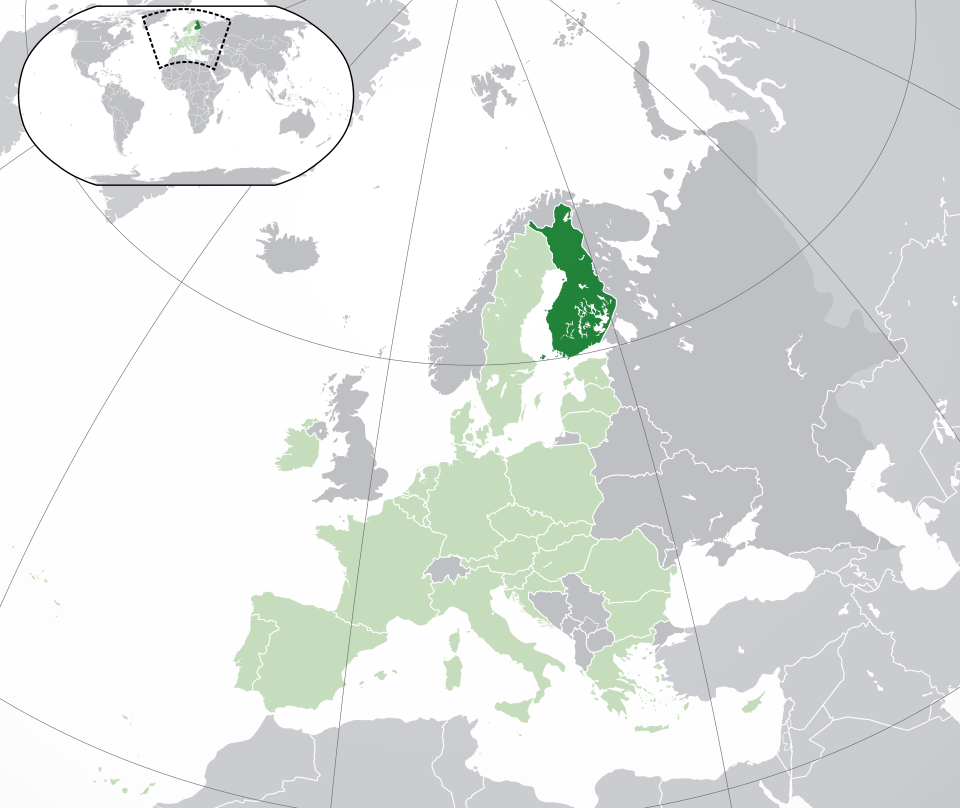
Former champion Finland (2003, 2006) was #17, barely edged out by the United States (US 485 to Finland 482.3). Finland has really gone down from previous years: 540 in 2000, 545 (and #1) in 2003, 552.7 (and #1) in 2006, 543.7 in 2009, 529.3 in 2012, 522.7 in 2015, 516.3 in 2018, and 495 in 2022. And now its overall score is 482.3. From 2000 to 2006 its score was going up, after 2006 it’s been going down. What’s going on in Finland?
Breaking down the U.S.A. score, it was 502 in Science, 490 in Reading and 463 in Mathematics. The Chinese scored 597 in Science, 527 in Reading and 612 in Mathematics. That means the Chinese beat the U.S. by 149 points in Mathematics!
Mexico was rated #61 with an overall score of 403.3. Mexico’s test scores were 414 in Science, 408 in Reading and 388 in Mathematics.
Compare that to Mexico’s 2022 scores: 410 in Science, 415 in Reading, and 395 in Mathematics.
Mexico went up in Science, down in Reading and down in Mathematics.
How did Mexico’s overall 2025 score compare to other Latin American countries?
Chile was ranked #45, Uruguay #48, Costa Rica was ranked #56. Those three countries scored higher than Mexico.
Latin American countries with lower overall scores than Mexico were Colombia #65, Brazil #66, Peru #68, Argentina #70, Ecuador #71, El Salvador #75, Dominican Republic #83, Paraguay #84 and Guatemala at #86.
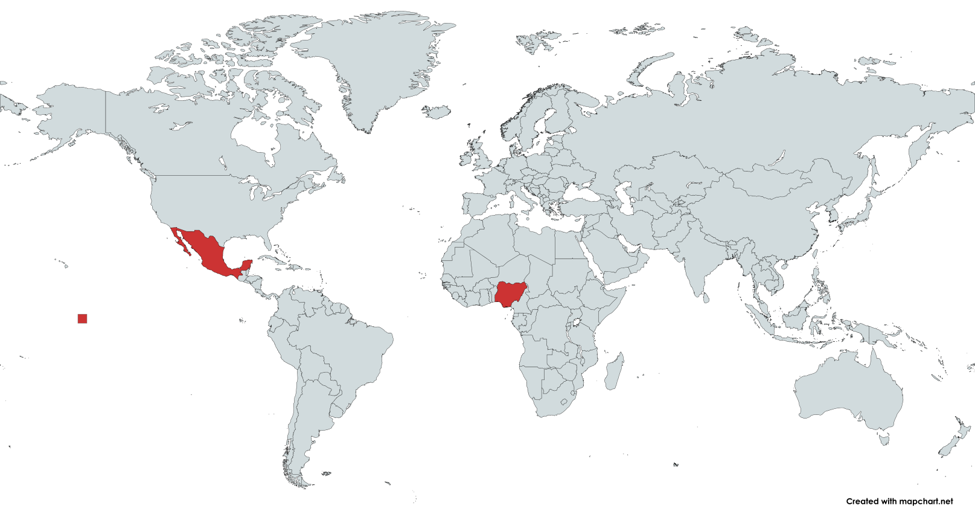
The Associated Press reports that“Authorities in Nigeria have shut down an industrial-scale methamphetamine laboratory and arrested a Mexican citizen at Lagos airport, the country’s anti-drug agency said on Tuesday [September 15th].”
“Agency spokesman Femi Babafemi said Arturo Carrera Loaiza was arrested in connection with the laboratory, located at a construction site in southeast Ebonyi State, while trying to flee the West African country.”
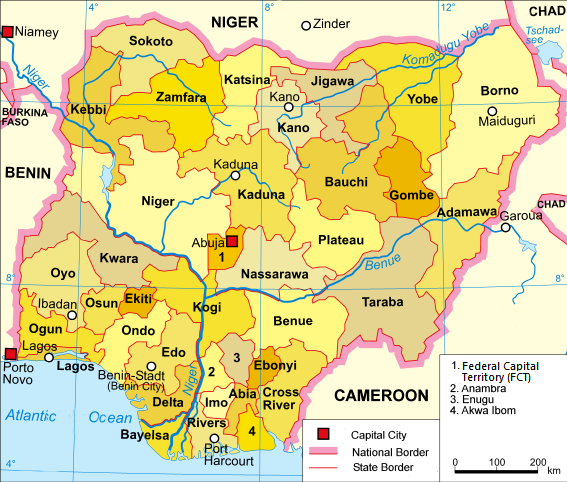
Here’s a map of the states of Nigeria. Lagos is in the southwest on the coast. To find Ebonyi state, go to the eastern end of Nigeria’s Atlantic coast and go straight up the 8° mark, it crosses the state.
“ ‘The breakthrough follows months of painstaking investigation into a wider criminal network behind a string of clandestine drug laboratories uncovered in parts of the country this year,’ Babafemi said.”
For previous reports on Mexican activity in Nigeria click here, here and here.
“Among the items recovered in the latest raid were methamphetamine, three empty dehydrators, and hundreds of kilograms of chemical compounds, including acetone, ethanol, chloride salt, and hydrochloric acid.”
“West and Central Africa have emerged as a hot spot for global trafficking and manufacturing of illicit drugs due to porous borders and corruption in recent years, according to the United Nations Office on Drugs and Crime.”
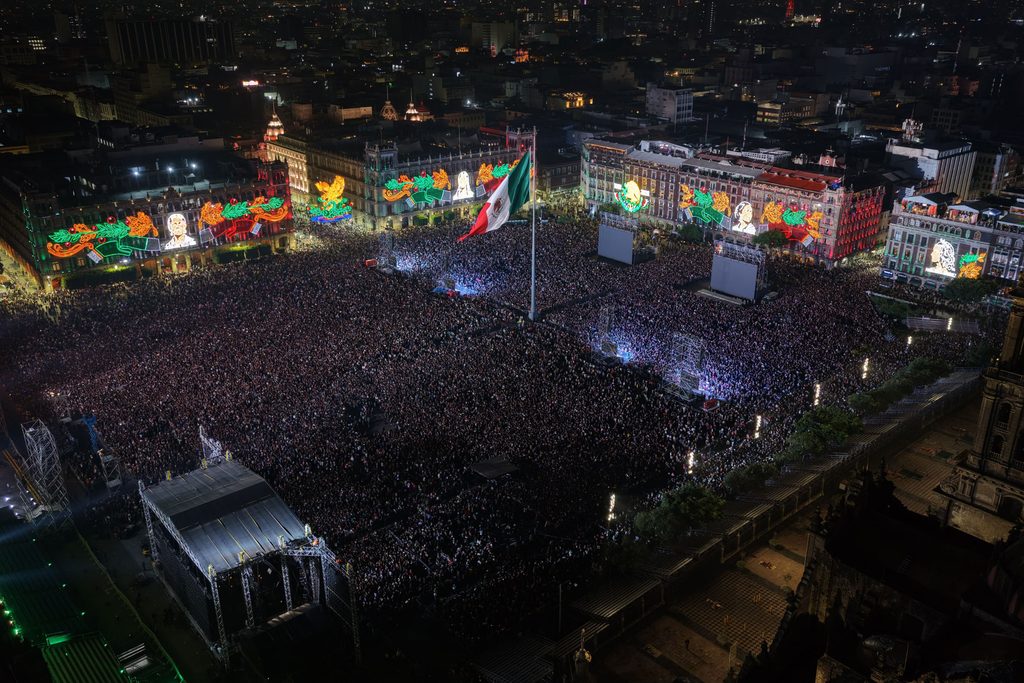
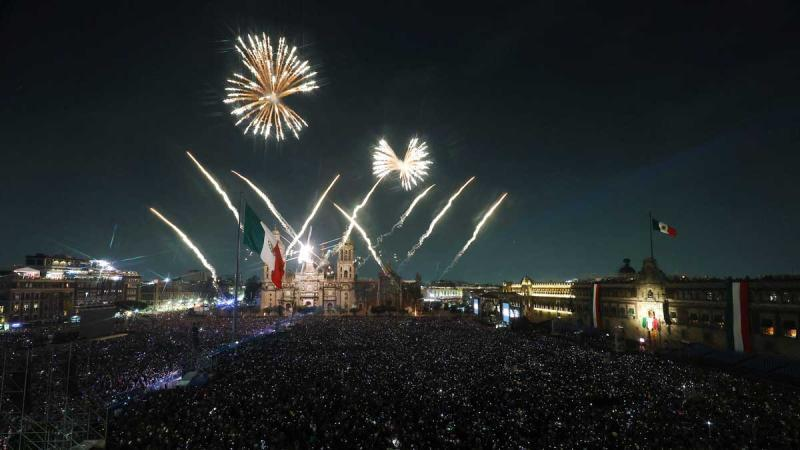
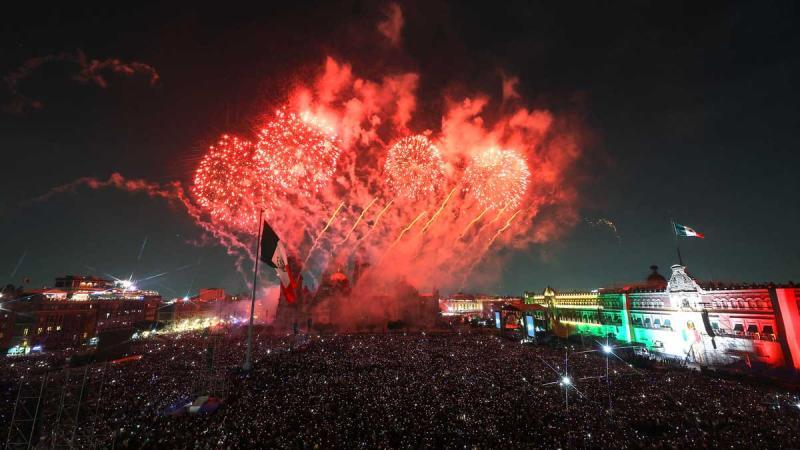
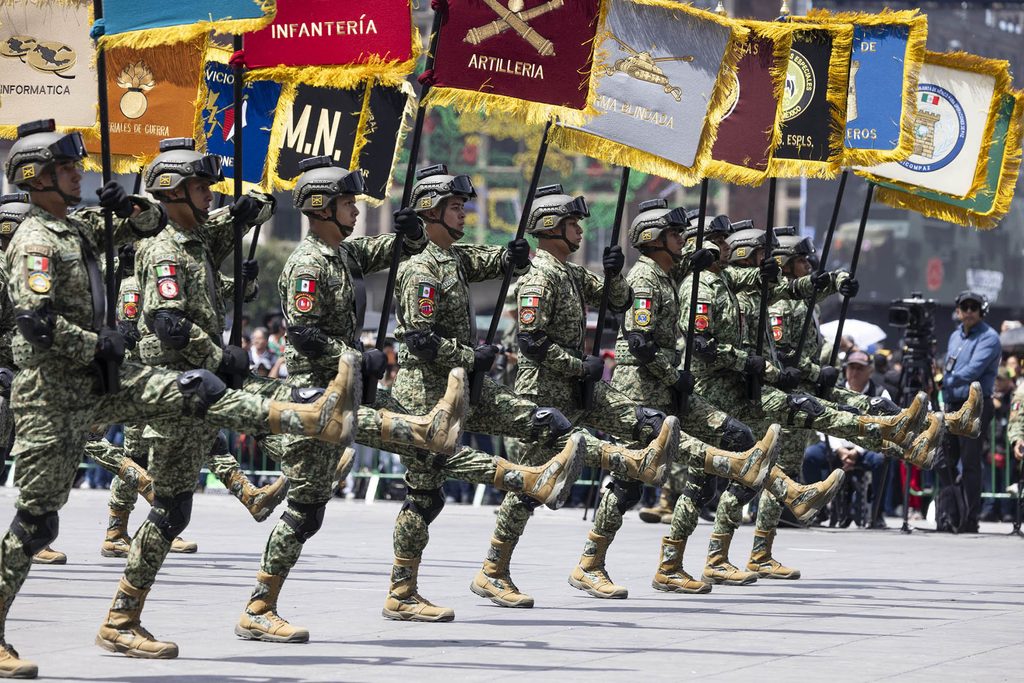
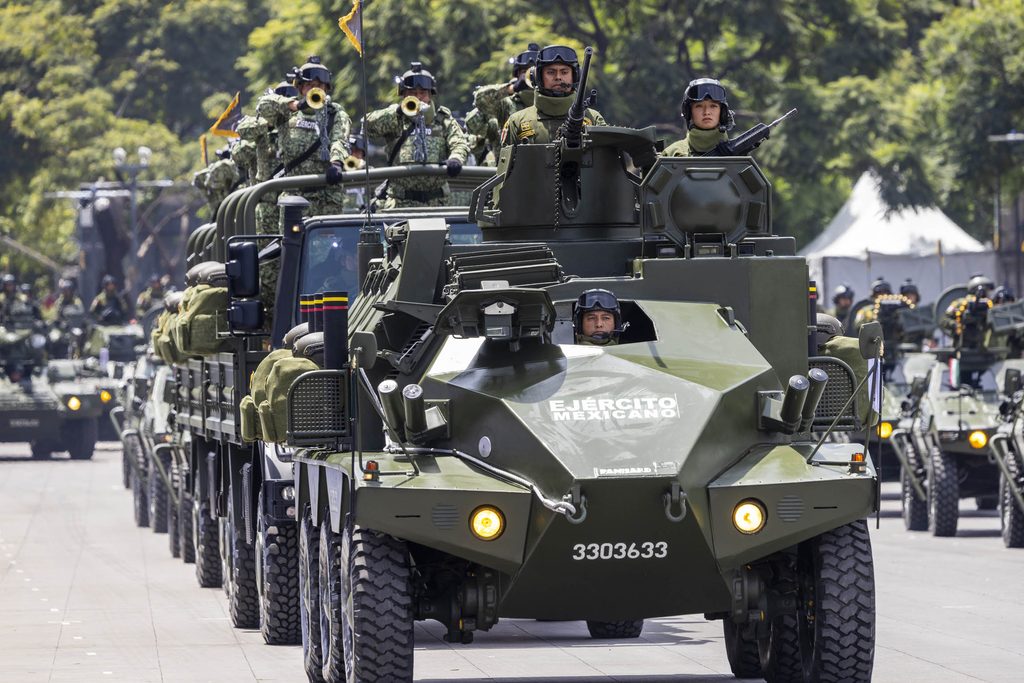
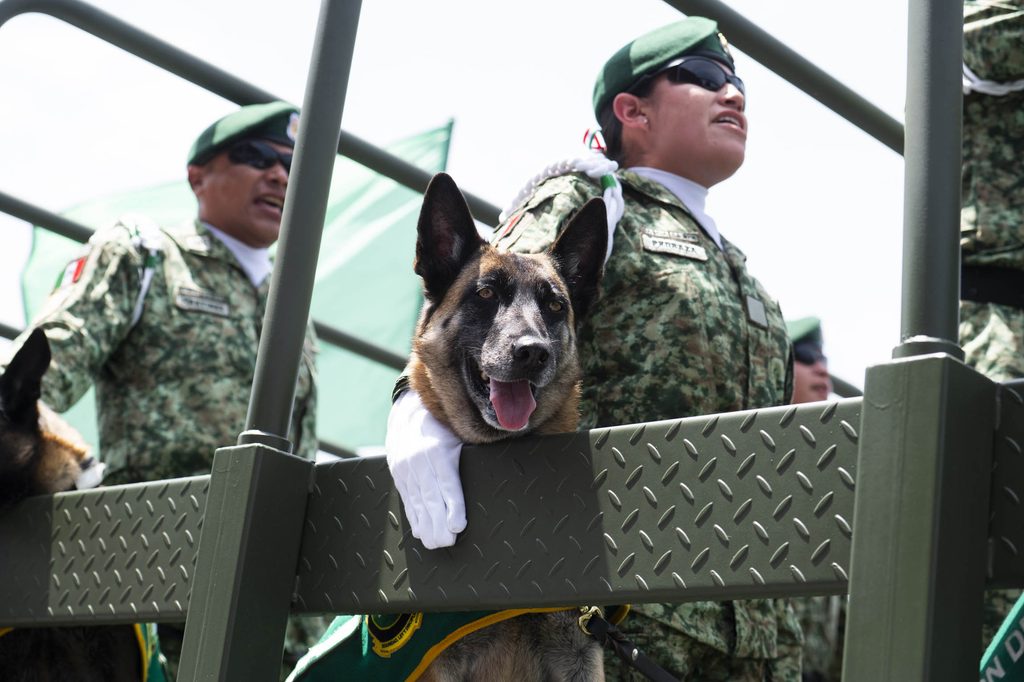
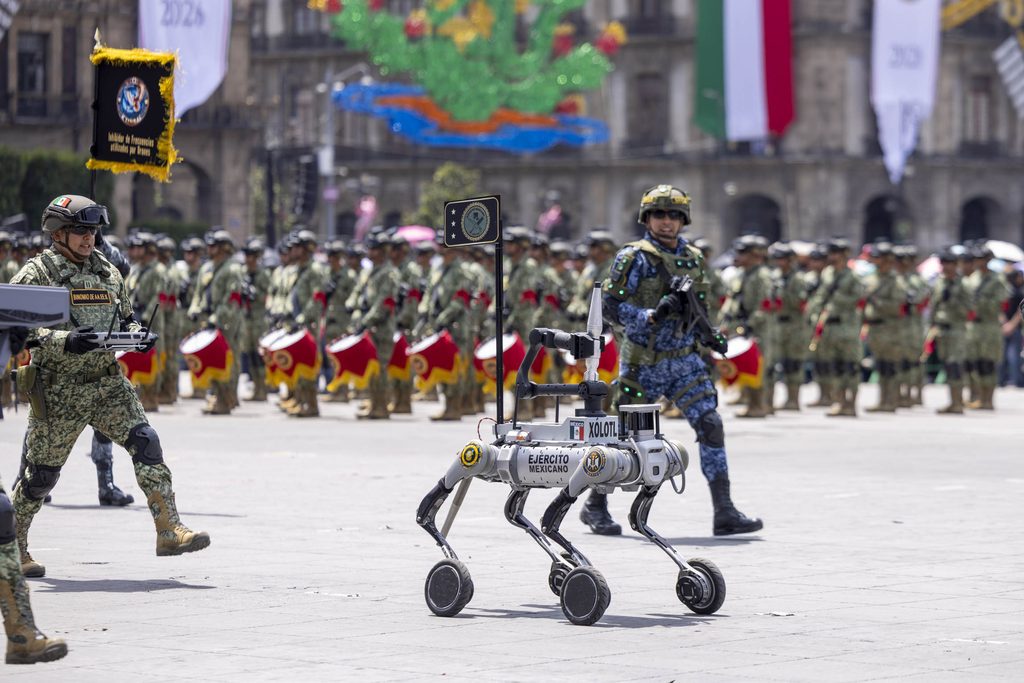
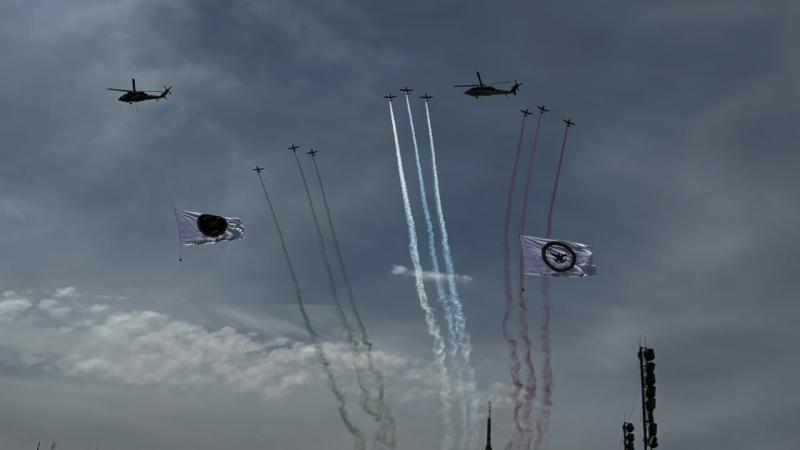
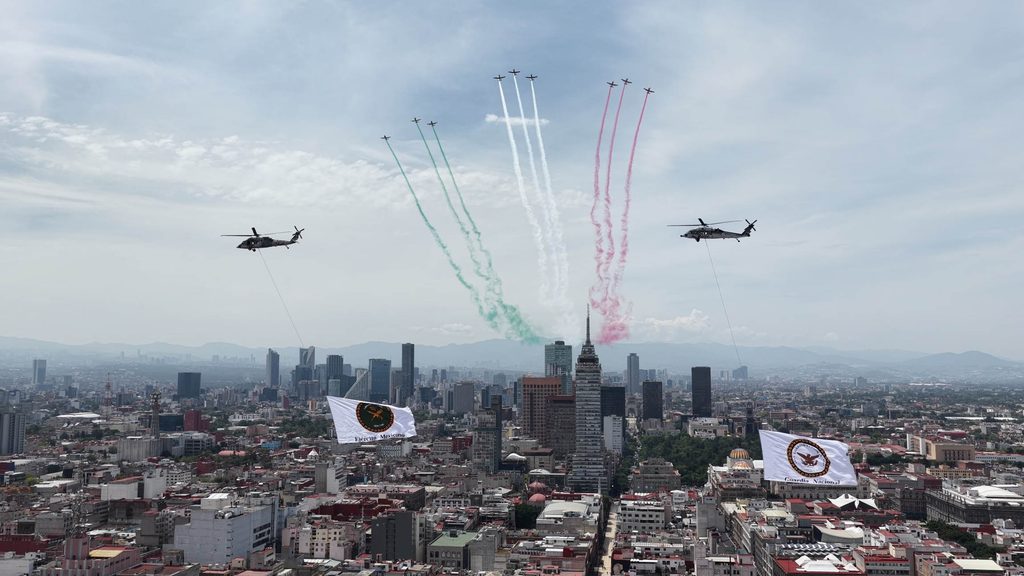
The parade wasn’t only on the ground, the Mexican Air Force participated with 93 aircraft, the Mexican Navy with 8 and the National Guard with 6. Fifteen paratroopers (10 men, 5 women) parachuted from a helicopter 6,000 feet up, down into the Zocalo plaza.











.gif)

.jpg)


