
Do Mexicans celebrate Halloween? Should they?
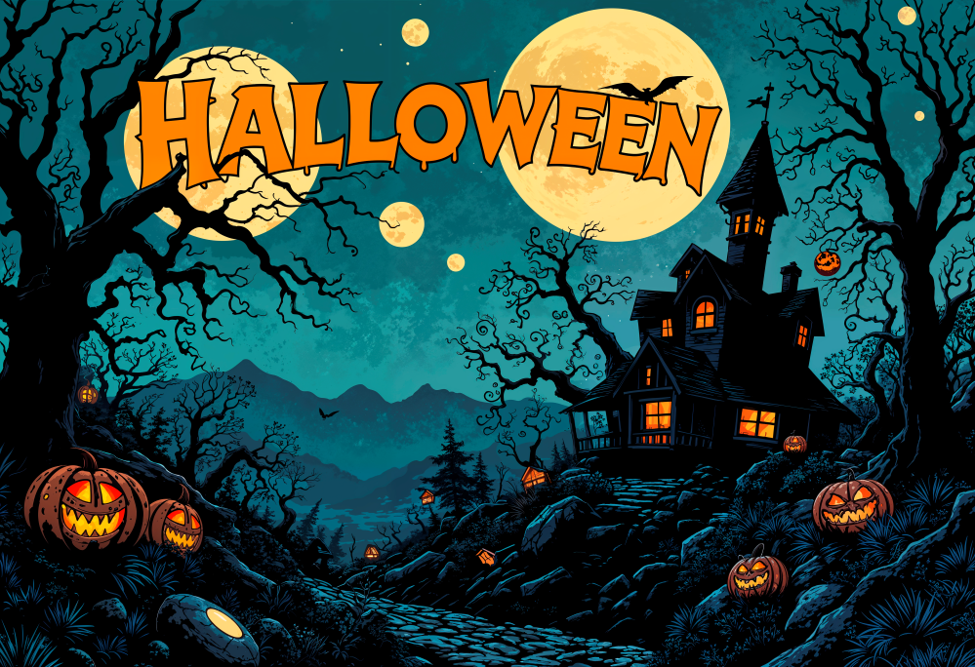
Does Halloween have anything to do with the traditional Mexican celebration known as “Day of the Dead,” on November 2nd?
At this time of year these issues are discussed, raising questions and controversies over Mexican identity, heritage, religion and commerce.
Halloween is celebrated in Mexico, and has been for the past 55 or so years. It’s gaining in popularity, and unsurprisingly, is especially popular among children.
Mexican trick-or-treaters, however, do not shout “trick-or-treat,” which is difficult to pronounce in Spanish. Instead, they chant “queremos Halloween” (we want Halloween). In other words, the celebration has been Mexicanized a little.
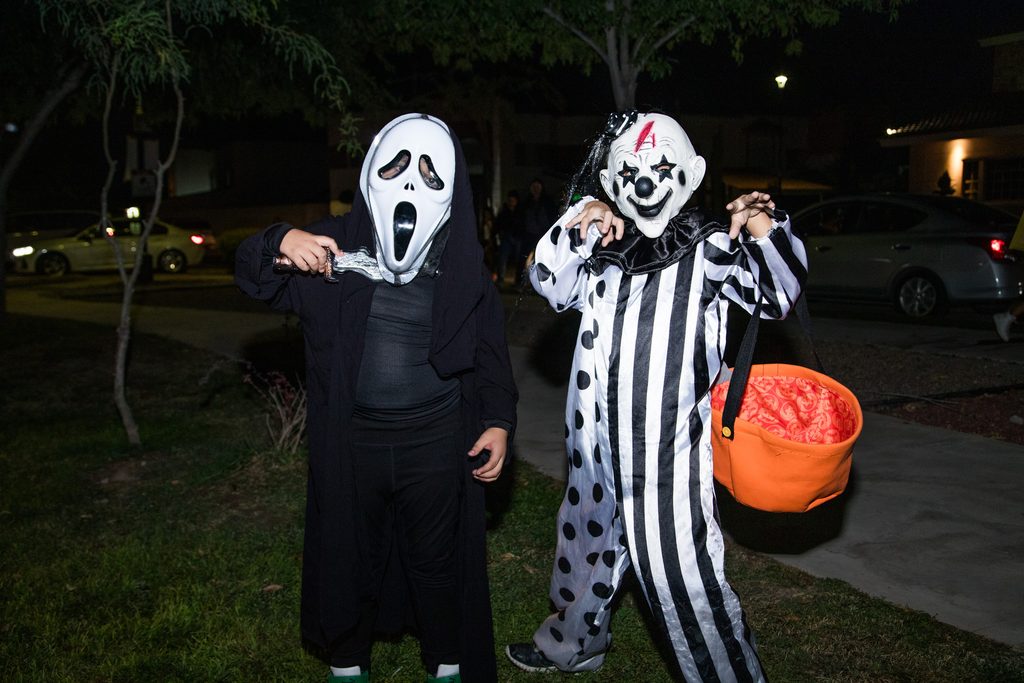
Source: Siglo de Torreon
I’ve heard the argument that Halloween in Mexico is a plot by American big business to make money. I don’t know about that, but there’s no doubt that Mexican businesses make lots of money off Halloween. After all, what’s surprising about businesses trying to make money?
Mexican companies manufacture and sell Halloween accessories: scary masks, plastic jack-o-lantern buckets, Grim Reaper scythes, makeup, spider webs, witch hats, and costumes, etc.
So like it or not, Halloween has become a Mexican festival. But is that bad or good?
Some Mexicans argue against it because it’s an American import. But so is Valentine’s Day, called in Mexico “The Day of Love and Friendship.” Almost nobody complains about that. So why Halloween?
It’s because Halloween falls on October 31st, just two days before Día de los Muertos, the Day of the Dead. Detractors of Halloween claim that Halloween and the Day of the Dead have absolutely nothing to do with each other, and that Mexicans should prefer Day of the Dead over Halloween.
That’s the strategy of the SEP (the Mexican education department). Decades ago Halloween parties were actually being held in Mexican public schools. The SEP banned them and began to promote the Day of the Dead, to encourage people to celebrate that observance instead.
The argument that Halloween and the Day of the Dead are completely unrelated is not correct, however. In fact, the two observances are historically linked.
The Day of the Dead is presented in Mexico as a 100% indigenous observance, as an Aztec holiday. Historically that’s dubious. The Aztecs celebrated their tribute to the dead in August.
It’s more correct to say that the Day of the Dead in Mexico is a Mexican form of the Catholic All Saints’ Day, and it contains both European and indigenous elements.
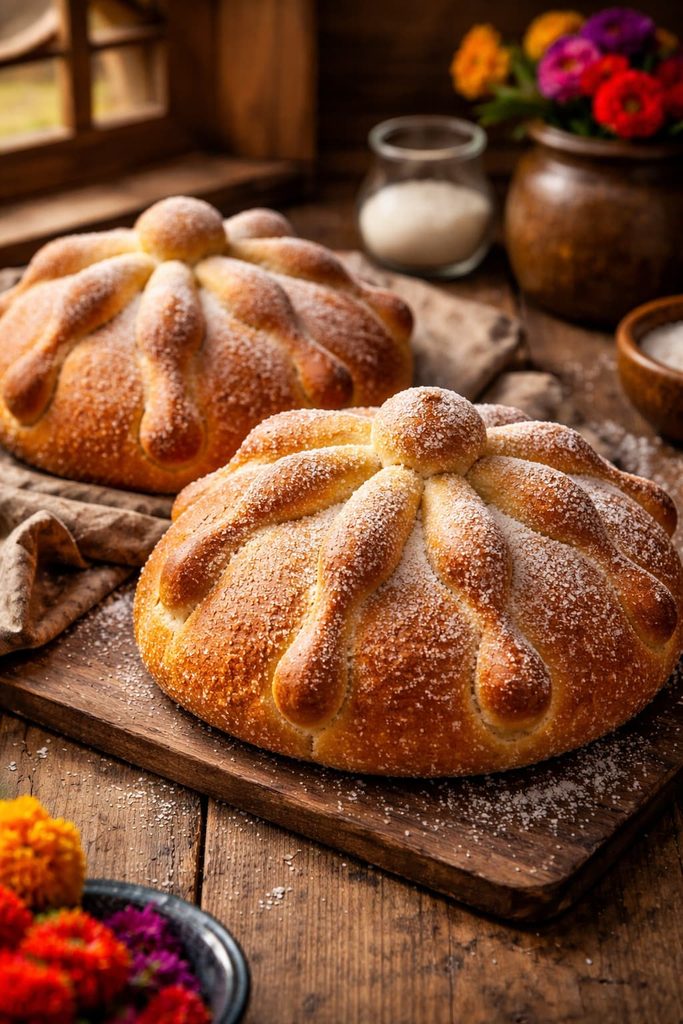
The traditional food of the day, pan de muerto, is of European origin.
The “calavera” (skull) is a humorously morbid poem which is addressed to a friend or public figure. This genre of poetry has its origin in Cervantes’ Don Quixote, in early 17th century Spain.
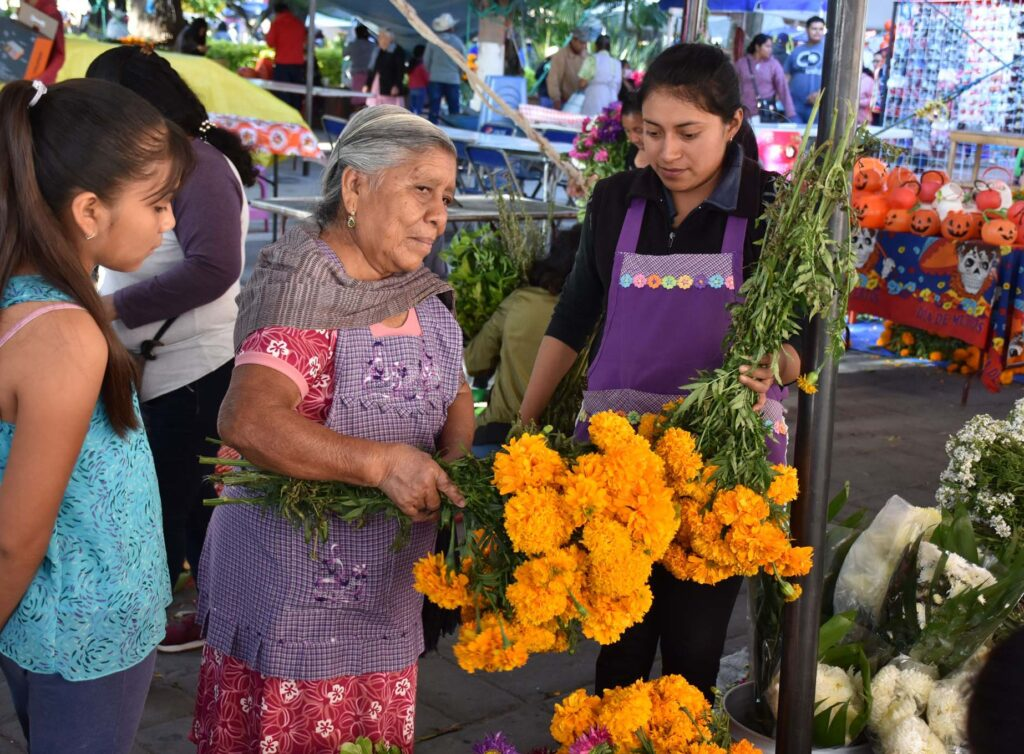
From the indigenous side is derived the use of the cempasuchil, the yellow/orange marigold, to adorn Mexican graves.
The platform called the “altar de muertos,” dedicated to the memory of a departed loved one, is of indigenous origin, although Catholicized. This is a custom in southern Mexico, but was never a custom in the north of the country.
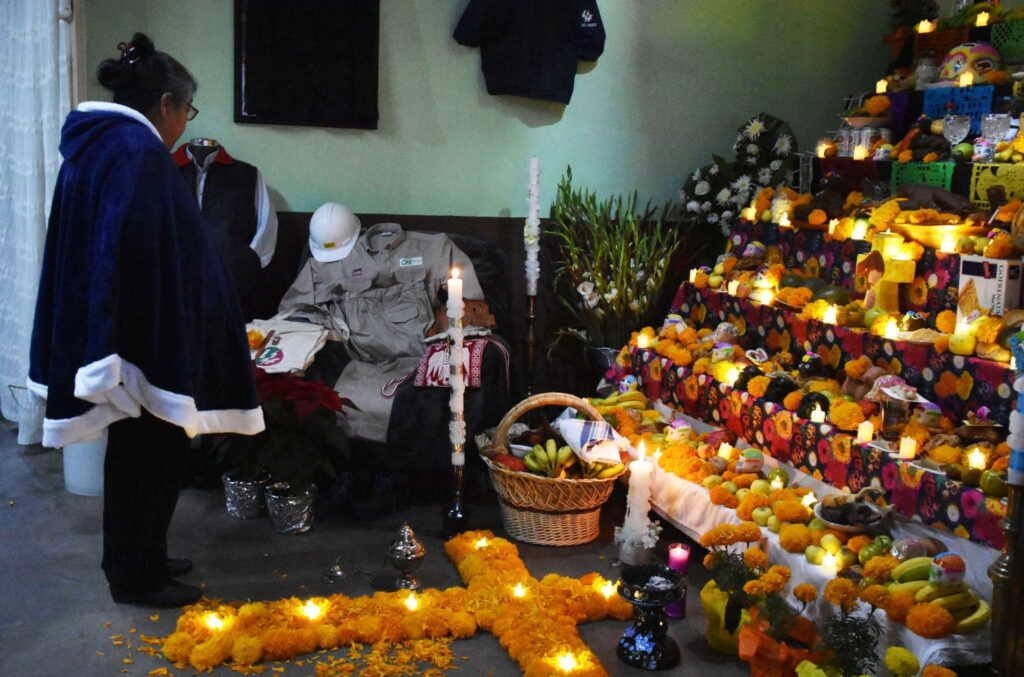
Mexico is a diverse country and everybody doesn’t observe the Day of the Dead in the exact same manner.
It might be more correct to refer to the Day of the Dead not as a single custom, but a complex of diverse customs, varying greatly among the regions and families of the country.
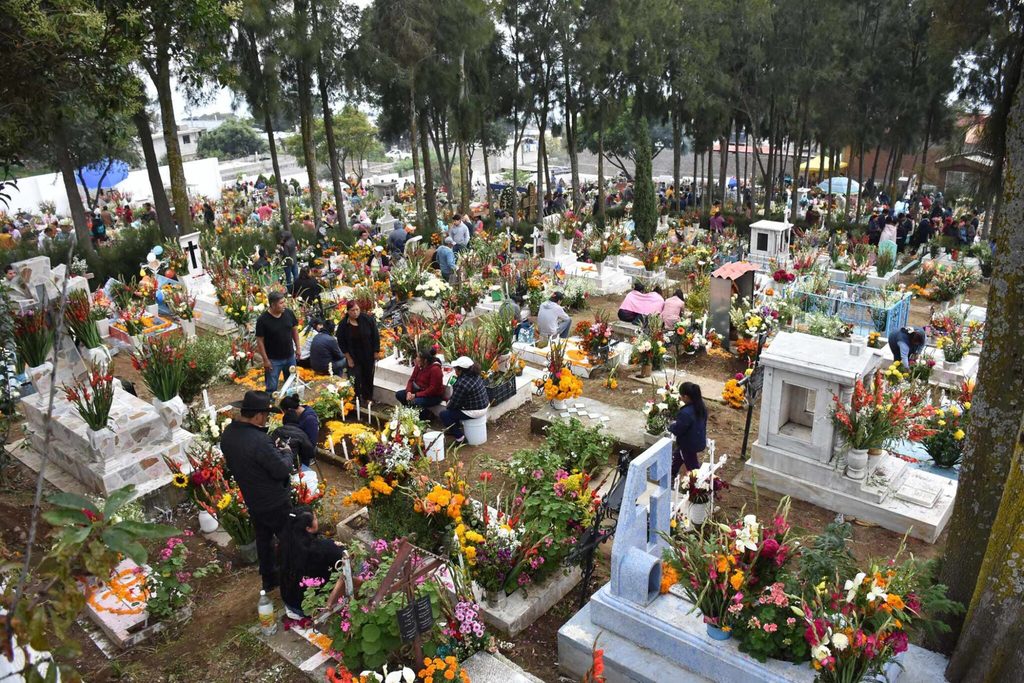
For some Mexicans, the Day of the Dead differs little from the American Memorial Day, in which people visit a cemetery to adorn the graves of departed family members.
Some Mexican families, however, spend hours in the cemetery near the grave of the dearly departed, where they have a picnic and hire musicians to sing a favorite song of the deceased.
The most famous Day of the Dead observance in Mexico is held annually on Janitzio Island, in the state of Michoacan, and it involves an all-night vigil in the cemetery and a bilingual (Spanish/Tarascan) Catholic mass. I visited that island during that observance once.
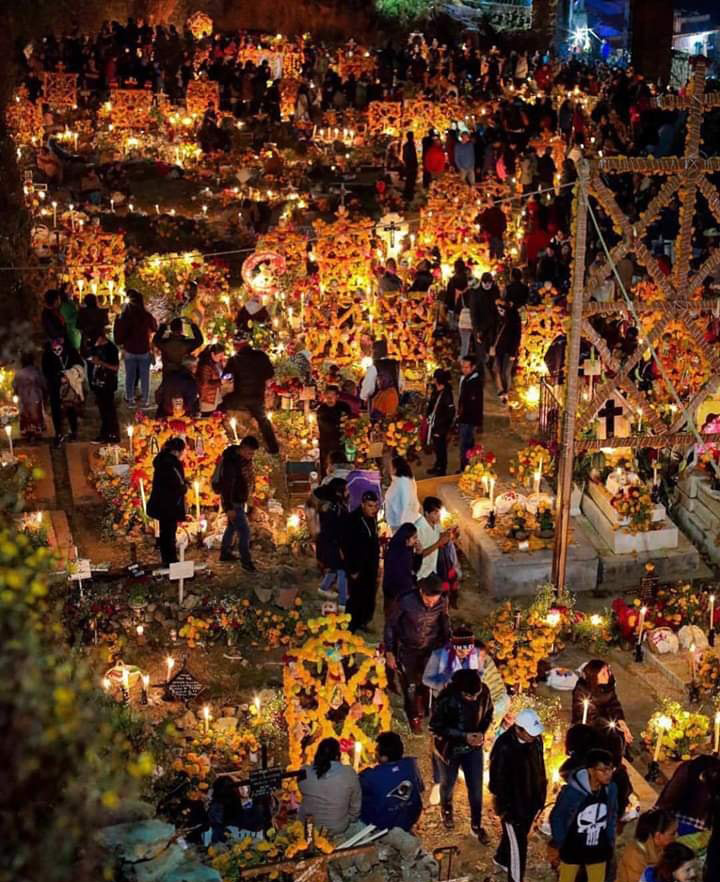
Source: voyagemexique.info
So what’s the historical link between Halloween and Day of the Dead?
Both days derive from related dates in the Catholic calendar. Halloween (October 31st) means All Hallows’ Eve, November 1st being All Hallows’ Day, and November 2nd, the Day of the Dead, is All Souls’ Day.
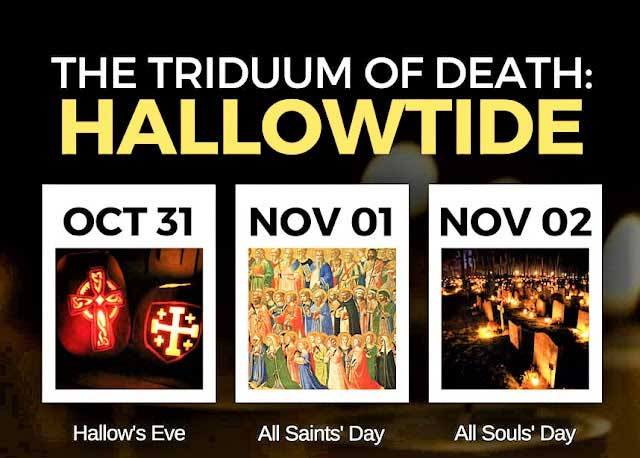
Source: The Catholic Travel Guide
That means that Halloween and the Day of the Dead, like it or not, have been related since medieval times. And nowadays both are part of contemporary Mexican society.