The Office was originally a British sitcom created by Ricky Gervais and Stephen Merchant in 2001.
Since then there have been 15 other versions of The Office produced in 15 other countries: Australia, Brazil, Canada, Chile, Czech Republic, Finland, France, Germany, India, Israel, Poland, Saudi Arabia, South Africa, Sweden and the United States. The U.S. version was the one that ran the longest, from 2005 to 2013.
Now there’s a Mexican version, produced by Prime Video, La Oficina.
From Forbes: Ricky Gervais’s The Office is making a comeback in Spanish, with a Mexican twist. Prime Video is reviving the franchise in a new setting: a soap factory in the heart of Mexico. The new take, La Oficina, premieres March 13. [article date]
“It has been over two decades since Gervais first introduced the world to his groundbreaking workplace comedy in the original UK version (2001–2003), and more than a decade since the U.S. adaptation on NBC concluded its hit nine-season run in 2013. Both series were set in the mundane world of fictional paper companies.”
La Oficina is set in Aguascalientes and the company in the show is the Jabones Olimpo soap company.
On March 7th, 2026, U.S. President Donald Trump hosted representatives of 17 Latin American countries to meet with him in Florida, where he promoted the “Shield of the Americas”, an attempt to get cooperation from Latin American countries to help fight the drug cartels.
Mexico was not represented at the summit, neither Mexican President Claudia Sheinbaum nor Foreign Minister Juan Ramon de la Fuente nor any other Mexican official.
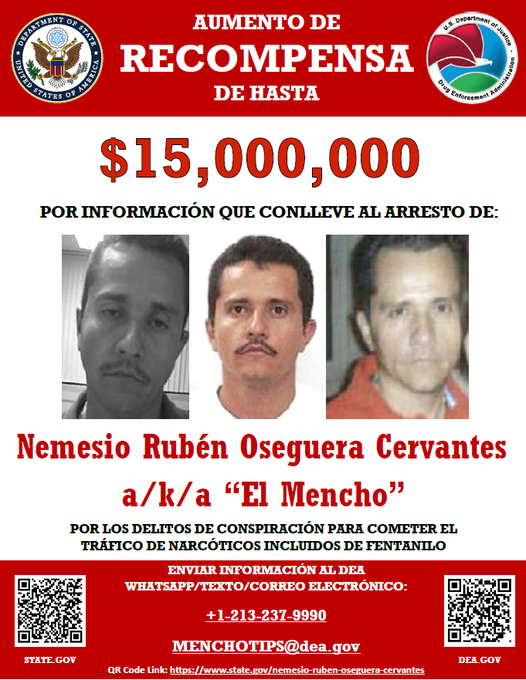
Although Sheinbaum chose not to participate in the summit, Mexico has its own relationship with the United States. Sheinbaum does not want a public intervention of the United States in Mexico, but her government is working with the U.S. on the cartel issue, the most recent example being the raid on CJNG leader El Mencho, for which the U.S. shared intelligence (see here and here).
Here are some of the words of President Trump’s address to the Latin Americans at the Florida summit: “…on this historic day, we come together to announce a brand new military coalition to eradicate the criminal cartels plaguing our region. …we’re calling this military partnership the Americas Counter Cartel Coalition, and that’s what you need.” [Text of speech here, video here]
Trump described it as a military alliance.
“And representatives of 17 different nations formally entered this new alliance. The heart of our agreement is a commitment to using lethal military force to destroy the sinister cartels and terrorist networks once and for all. We’ll get rid of them. We need your help. You have to just tell us where they are. We have amazing, we have amazing weaponry, as you probably noticed over the last short period of time.”
Trump talked about launching a missile at a cartel.
“If you want us to use a missile, they’re extremely accurate. Pew, right into the living room. [Laughter] That’s the end of that cartel person.”
Even though a Mexican representative was not present, Trump spoke about Mexico.
“As part of our commitment to countering the cartel presence in our region, we must recognize the epicenter of cartel violence is Mexico. The Mexican cartels are fueling and orchestrating much of the bloodshed and chaos in this hemisphere and the United States government will do whatever is necessary to defend our national security and to protect the safety of the American people…
Trump talked about Mexican President Sheinbaum, who wasn’t present.
“And I like the president very much. She’s a, a very good person. She’s got a beautiful voice, a beautiful woman, but beautiful voice. President, president, president. I said, ‘Let me eradicate the cartels.’ ‘No, no, no, please, president.’ We have to eradicate them. We have to knock the hell out of them because they’re getting worse. They’re taking over their country. The cartels are running Mexico. We can’t have that. Too close to us. Too close to you.”
I hope the cartels can be defeated. And militaries are part of it.
But there’s more to fighting the cartels than military strikes. It’s a complicated situation and cartels are complex organizations.
The financing and money laundering must be dealt with. The corruption must be dealt with.
And, on the U.S. side, the millions of American drug abusers who finance the cartels have to be convinced to quit using so many drugs!
Politically, Mexican President Claudia Sheinbaum has been very successful and her MORENA party and its allies have a majority in the Mexican Congress.
But look at what occurred on March 11th. President Sheinbaum’s political reform failed in the Chamber of Deputies (equivalent of the U.S. House of Representatives).
There were 259 votes in favor of the proposal, 234 against and one abstention. But it failed to receive two-thirds of the vote, which is necessary to pass a constitutional reform.
What did the reform include and why was it defeated?
The political reform would have reduced public spending on elections. It would have eliminated the selection of Mexican senators by proportional representation (32 out of 128) and would have changed the rules on the use of representatives chosen through proportional representation (200 out of 500).
So why did this measure fail?
While it’s true that MORENA and its allies have a majority in Congress, MORENA by itself doesn’t. When you add the MORENA members with its two smaller allied parties (the Labor Party and the Green Party) the coalition has a majority.
What happened on March 11th is that MORENA voted for the measure, but all the other parties voted against it, including MORENA’s allies the Labor Party and Green Party.
Now that’s interesting. But it wasn’t a surprise, it was already known before the bill was even introduced what the allied parties planned to do. Still, it was a significant defeat.
Acccording to analyst Arantza Alonso, “The defeat is significant because it highlights that the legislative coalition has limits, something that perhaps seemed unthinkable a few months ago, and that Morena did not negotiate well enough before presenting the initiative.”
On the other hand, she said that “The reform is not directly related to issues that matter greatly to citizens, like security, the economy or the relations with the US, so Sheinbaum’s approval won’t be significantly affected.”
Even before the vote, both President Sheinbaum and Ricardo Monreal (leader of the MORENA delegation in the lower house) announced that MORENA has a “Plan B” to carry out the reform.
But whatever follows doesn’t change the fact that MORENA’s two allies voted against MORENA and with the opposition parties PAN, PRI and Movimiento Ciudadano.
That reveals that MORENA doesn’t have total control over its allies.
How will this affect the Mexican political panorama? We have to wait and see.
The BBC has published an article entitled Mexico to deploy 100,000 security personnel for World Cup. From the BBC: “World Cup co-hosts Mexico have announced plans to deploy nearly 100,000 security personnel to protect fans at this summer’s tournament, amid ongoing drug cartel violence in the country.“
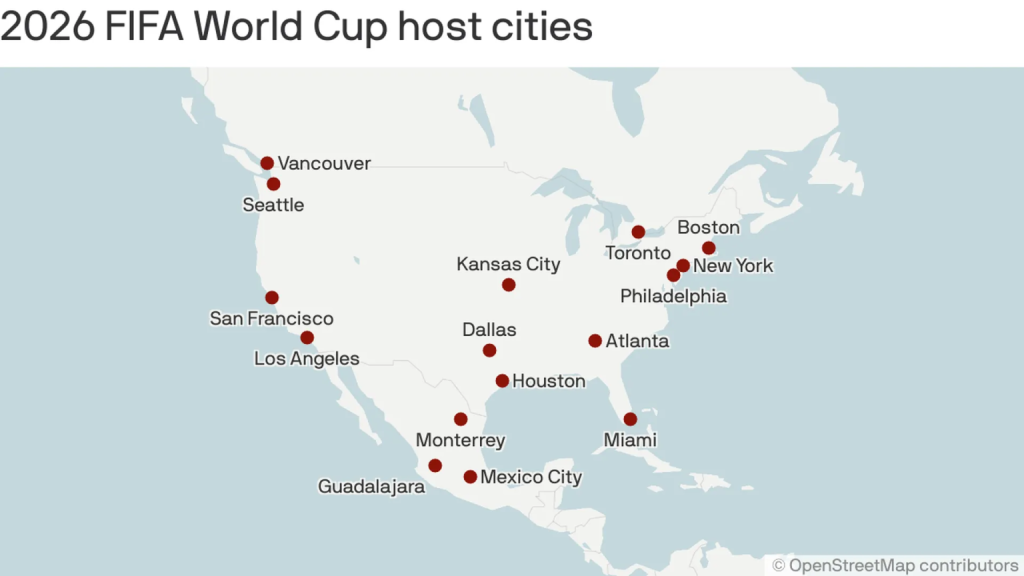
“Mexico, hosts alongside the United States and Canada, will stage World Cup fixtures across three cities – including Guadalajara, the capital city of Jalisco where the violence began last month and more than 12,000 people are reported missing.”
“Mexico will also host matches in Mexico City and Monterrey, both spared by the violence, when the World Cup is held between 11 June and 19 July…”
Both President Claudia Sheinbaum and FIFA (soccer’s governing body) “… have insisted that the violence will have no impact on the World Cup, when millions of visitors are expected.”
Mexico’s security plan for the World Cup “will oversee a security deployment of ‘just over 99,000 personnel’, according to the head of Mexico’s World Cup co-ordination centre, Roman Villalvazo Barrios. That figure includes 20,000 military personnel and 55,000 police officers, as well as members of private security companies, and involves around 2,500 military and civilian vehicles, 24 aircraft, anti-drone systems, and dogs trained to detect explosives and other substances.”
“Fifa president Gianni Infantino has said he feels ‘very reassured’ that Mexico can still successfully stage World Cup games.”
Let’s hope the World Cup games in Mexico are safe for all involved.
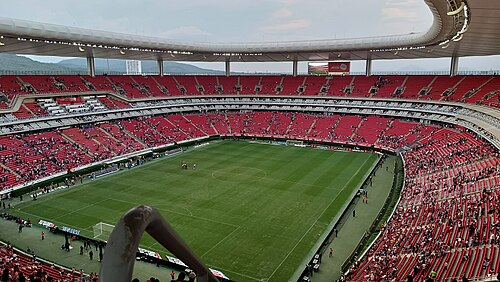
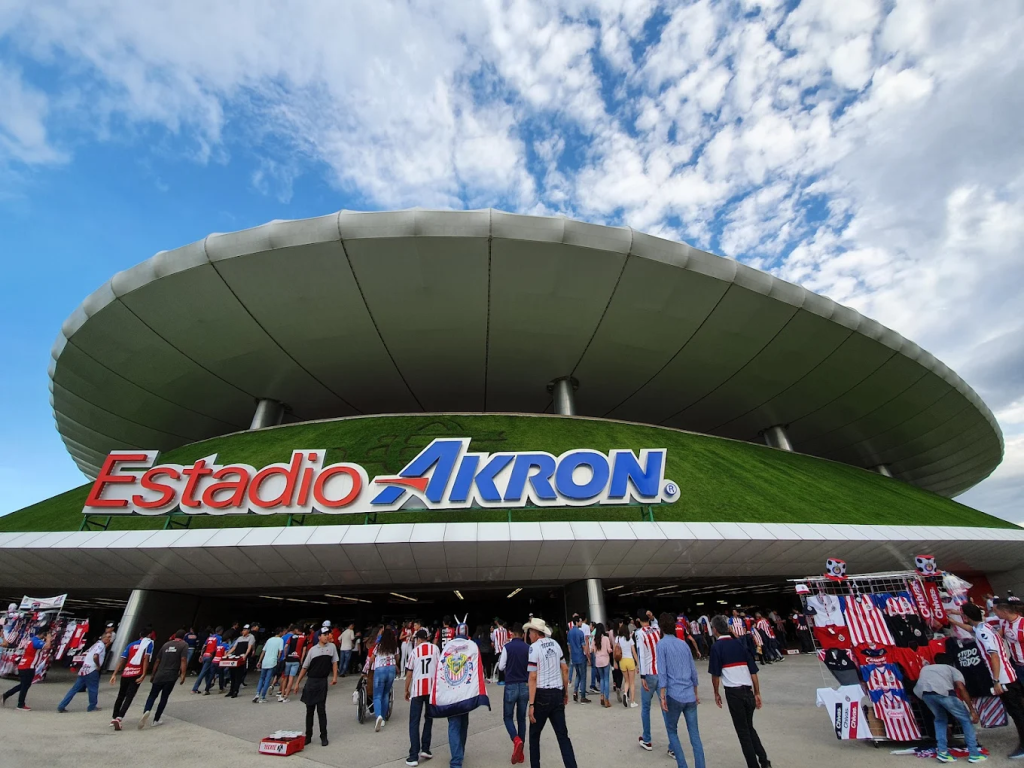
Estadio Akron, Zapopan, Guadalajara Metro Area. Scheduled World Cup Venue. Source: Alejan98
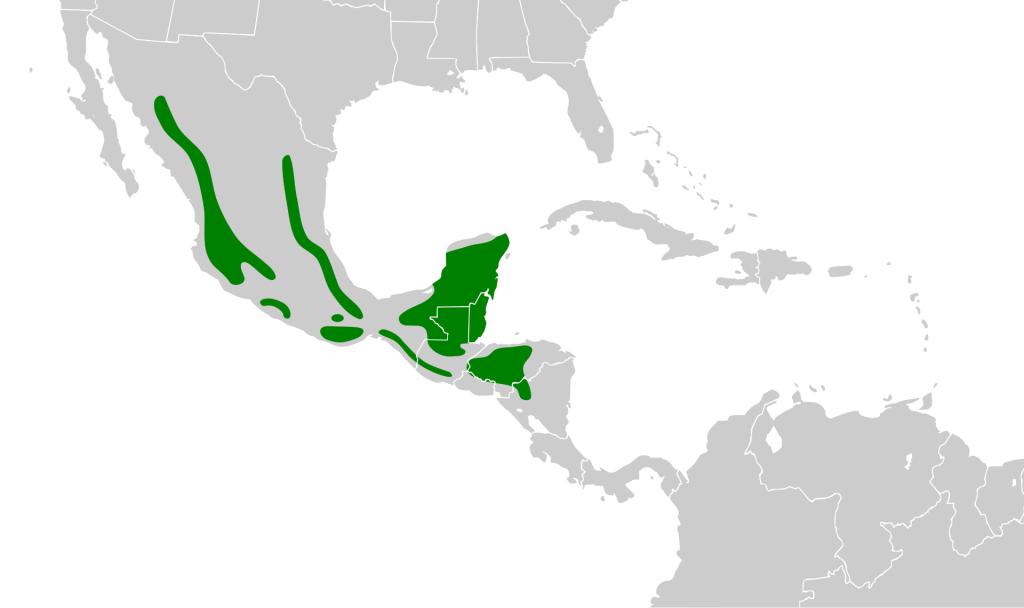
Notice how the bird ranges from Mexico to Nicaragua. It has also shown up as a “vagrant” in Texas and Arizona.
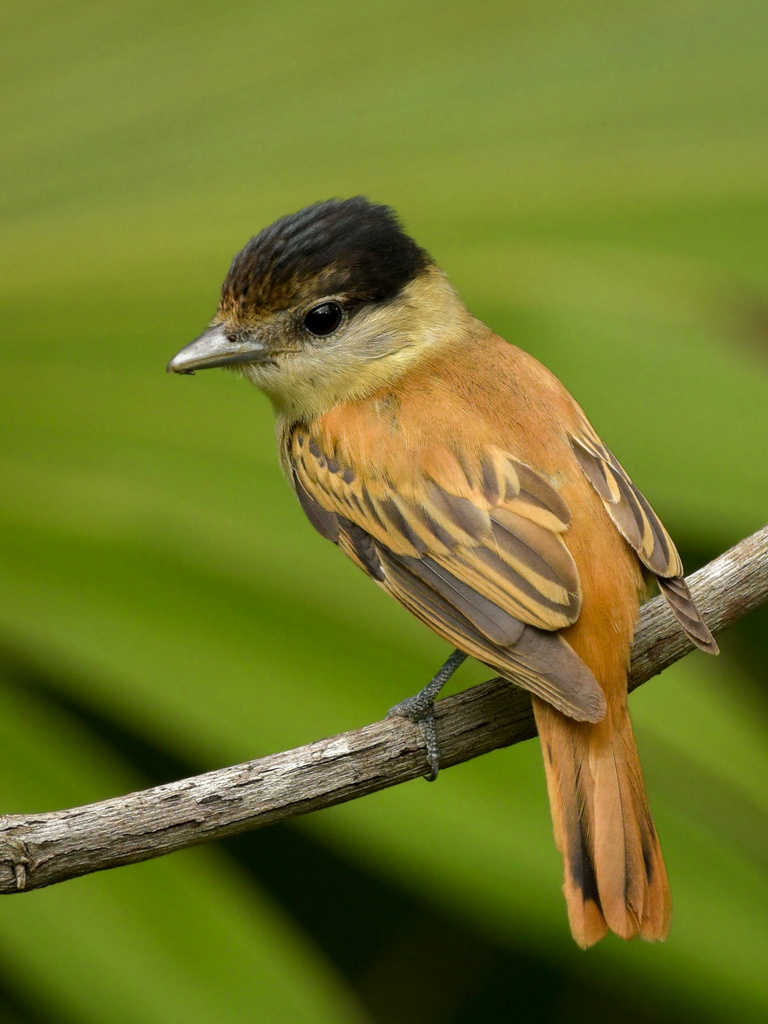
The Pachyramphus major has several names. In Honduras it’s called the cabezón collar gris, in Nicaragua the cabezón collarejo, and in Mexico the anambé mexicano, cabezón cuelligrís, mosquero-cabezón mexicano and of course the Cabezón Mexicano. In English it’s called the grey-collared becard.
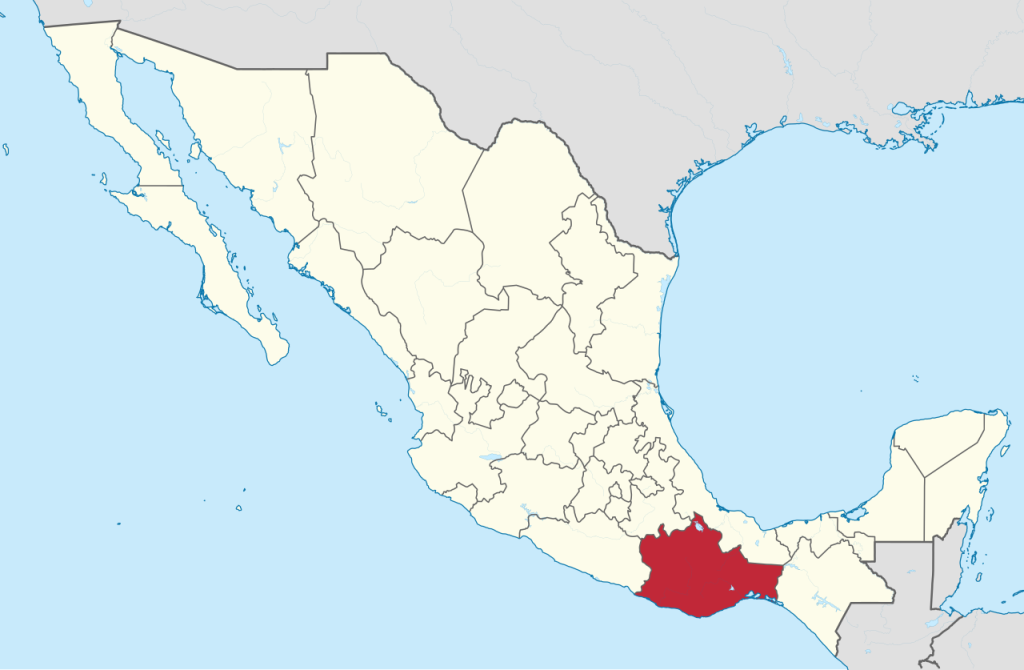
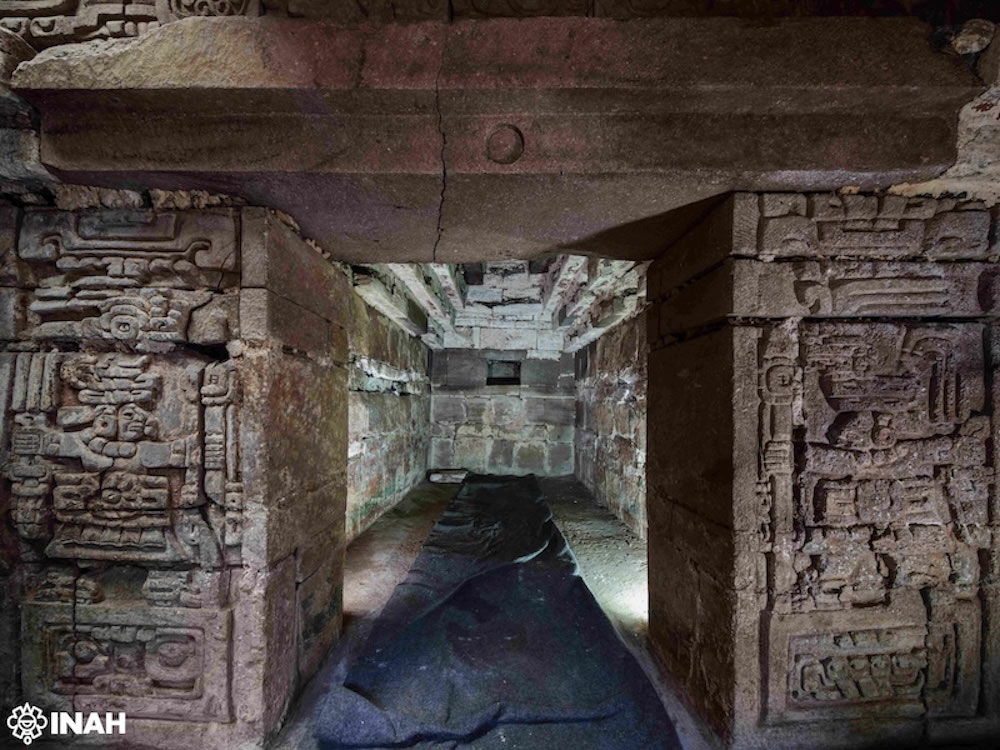
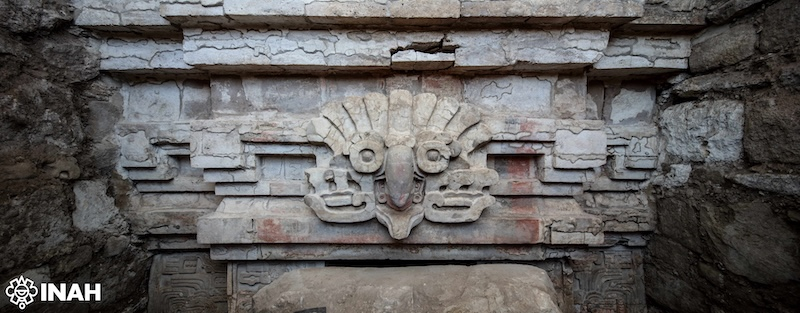
Tomb #10 is carved into the Cerro de la Cantera (Hill of the Quarry) at San Pablo Huitzo, at the northern end of the Etla Valley.
In Zapotec the area is called Huijazoo, “Watchtower of War” or “War Fortress”. It was on the Zapotec border with their enemies, the Mixtecs. It is believed that the Huijazoo lordship reached its peak from 650 A.D.-700 A.D.
The Tomb #10 discovery was announced by the Mexican government on January 23rd, 2026. In late 2025 there was a report of illegal excavations on the hill, so the Mexican government quickly moved in to properly excavate.
The government bureau carrying out the dig was INAH, an acronym for Instituto Nacional de Antropología e Historia which “investigates, conserves and disseminates the archaeological, anthropological, historic and paleontological inheritance of the nation…” (from the INAH website). It’s part of the Secretariat of Culture. (See President Sheinbaum’s Cabinet).
The Tomb #10 excavation was run by Jorge Bautista Hernández and Gabriela Galicia Moreno. The team found a shaft that had been sealed for 1400 years.
Tomb #10 is planned to be open for school field trips by the end of 2026.
The tomb dates back to about 600 A.D. It’s not known who was buried in the tomb, but presumably some ruler.
The tomb is 5.55 meters long, 1.66-2.79 meters wide, and 1.68-2.60 meters high. It’s made of limestone, cantera stone and lime stucco.
According to an article on the MAHC website , “Tomb 10 is an architectural marvel of the Late Classic Zapotec style. It is defined as a “stepped-vault” (bóveda escalonada) chamber, a complex engineering feat that utilized large limestone slabs and finely cut gray cantera stone to support the weight of the hillside above. This style is characteristic of elite Zapotec funerary architecture found at major sites like Monte Albán and Mitla, but its execution in Huitzo is particularly refined.”
The tomb has two rooms: the primary burial chamber and the antechamber in front of the primary chamber.
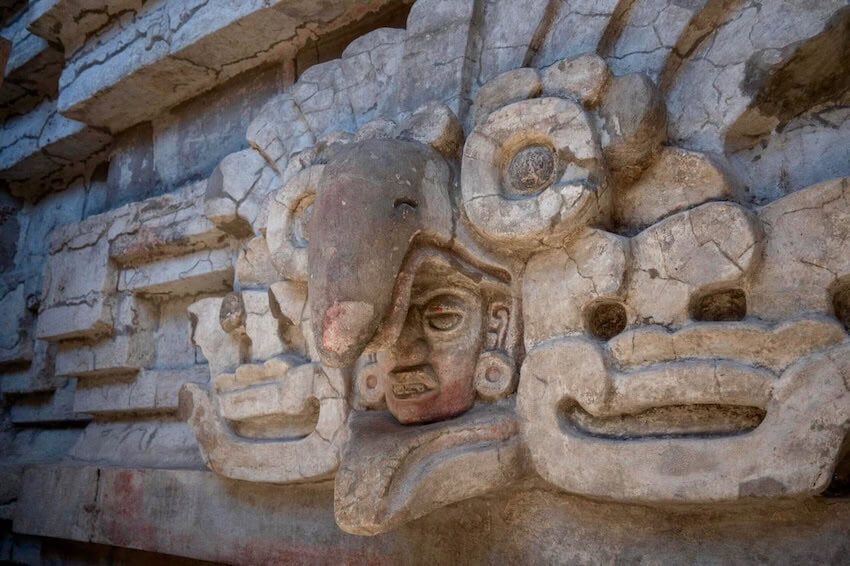
At the entrance to the antechamber, above the door, is the sculpture of an owl. From MAHC: “The most distinctive feature of the tomb’s facade is a monumental sculpture of an owl (búho or tecolote) positioned above the entrance to the antechamber. In the Zapotec worldview, the owl was a multifaceted symbol representing the night, death, and the transition into the underworld. However, the Huitzo owl carries a unique iconographic detail: its beak is depicted covering the stuccoed and painted face of a male figure. Archaeologists believe this male face represents a “Señor Zapoteca,” a deified ancestor or the specific lord for whom the tomb was built. The owl acts as a spiritual intermediary or a psychopomp, bridging the gap between the divine forces and the human lineage. This imagery reinforces the concept of ancestor veneration, a core tenet of Zapotec religion where the deceased continued to play an active role in the lives of their descendants.”
What about the actual human remains in the tomb? MAHC explains: “While the architecture and art provide a symbolic framework, the physical remains found within the tomb offer a direct link to the ancient population. Initial investigations recovered several bone fragments, which are currently being analyzed by specialists in physical anthropology. These studies aim to determine the age, sex, and health status of the individuals interred, as well as their genetic relationship to the Monte Albán elite.”
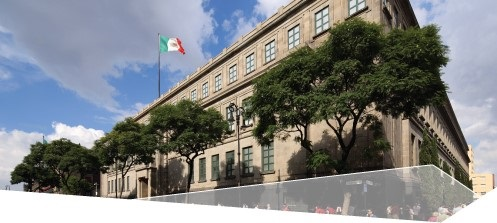
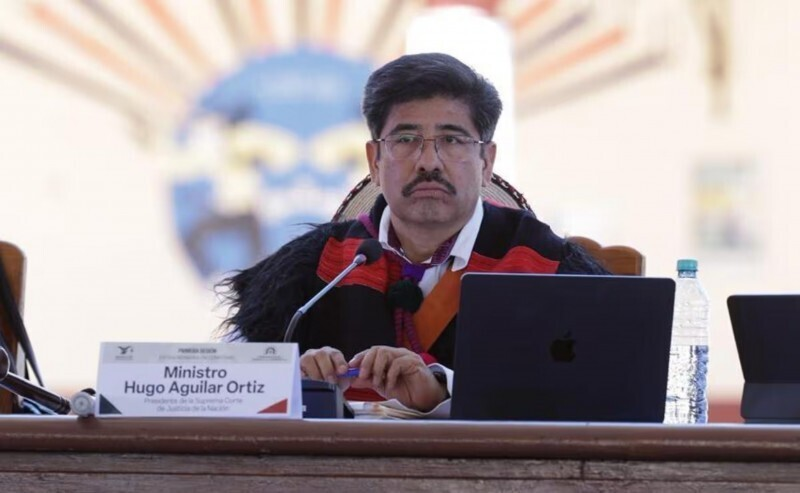
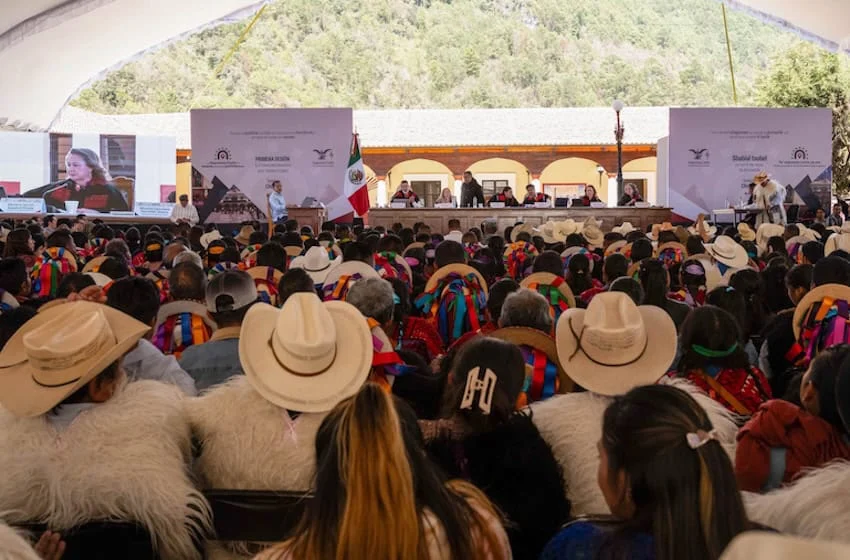
The proceedings were held in the Spanish language, but with translation to Tzotzil and Tzeltal, both Mayan languages.
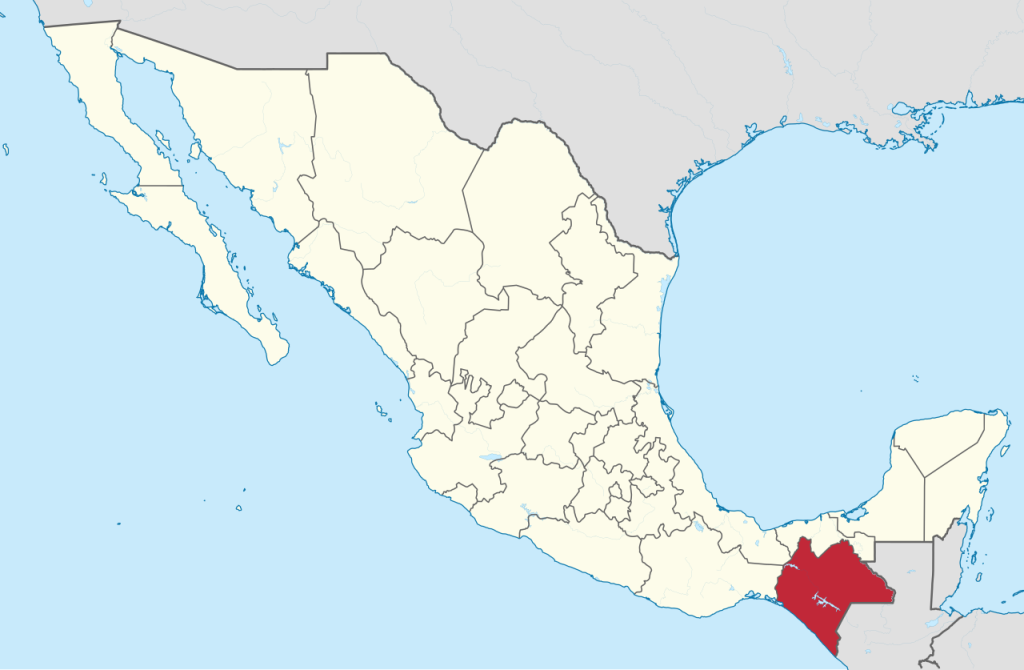
One of the cases the Court discussed was a Chiapas case, involving the community of La Candelaria in the municipio of San Cristobal de las Casas.
The Court ruled in La Candelaria’s favor, ordering the Chiapas state legislature to grant the community self-rule and give La Candelaria its budget allocation directly.
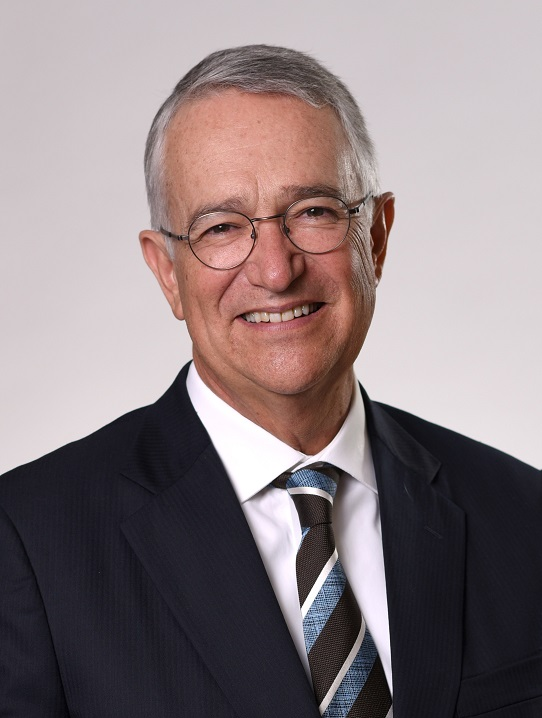
TV Azteca is in a financial bind and is entering a bankruptcy proceeding.
From Reuters via Investing.com: “Mexican broadcaster TV Azteca said on Thursday [February 26] that shareholders had approved a voluntary bankruptcy process for restructuring the company’s finances and liabilities.”
TV Azteca’s explanation?
“TV Azteca, controlled by Mexican business magnate Ricardo Salinas Pliego, blamed the bankruptcy process on multiple factors: the recent payment of nearly $2 billion in back taxes to Mexican authorities, a ‘complex negotiation’ with international creditors, the pandemic and the impact of license payments to the government in 2018. The company also pointed to ‘profound transformations’ in the television industry, including changes in the advertising market. TV Azteca is one of Mexico’s most-watched broadcasters.”
“ ‘This is a last‑resort tool aimed at preserving the value of the company, ensuring the continuity of its operations, and facilitating the orderly fulfillment of its obligations without interrupting its functioning,’ Rafael Rodriguez, TV Azteca’s CEO, said in a statement.”
“Under Mexican law, the bankruptcy process will seek an agreement between the company and creditors to restructure its debts and avoid closure. If no deal is reached, the company’s assets will be sold off to pay creditors. The process usually lasts six months.”
“Trading in the broadcaster’s shares on the Mexican stock exchange has been suspended since 2023, when the company failed to file its corporate results.”
There’s a political angle here.
“Salinas, a conservative, has had fights with left-wing President Claudia Sheinbaum and her allies over the past year amid a public feud over his back taxes. Sheinbaum repeatedly accused Salinas of being a tax dodger; he accused the government of extortion. Sheinbaum’s government had threatened to seize assets and revoke broadcast licenses if Salinas did not pay. The president has made an aggressive push to increase tax revenue to fund an expanding slate of social programs.”
“Last month, Salinas’ conglomerate Grupo Salinas said it would pay 32 billion Mexican pesos ($1.86 billion) to conclude 20 years of tax disputes with the Mexican government. Sheinbaum had previously said his companies owed more than $4 billion.”
The communique reads thusly: “Regarding the developments in the Middle East, the SRE expresses its profound concern and makes an urgent call to all the parties to prefer the diplomatic route and abstain from the use of force, with the goal of preserving peace and stability in the region.”
“In accordance with our constitutional foreign policy principles and the pacifist conviction of our country, we call for the conflict to not be escalated, its humanitarian consequences and effects on the civilian population and the global stability would be grave. We reiterate the necessity of resolving controversies through dialogue and negotiation.”
“Our embassies in the Middle East remain attentive and in continuous contact with female and male fellow Mexicans who reside in or are passing through the region, with the goal of providing the consular assistance that they need.”
Notice that the communique doesn’t specifically name any of the countries involved.
Even before that, the SRE had tweeted a message on Twitter X, reporting that “our representations in Iran, Israel, Qatar, Saudi Arabia, United Arab Emirates, Jordan, Lebanon, and Kuwait have been in permanent contact with the Mexican community, continue monitoring the situation, and have activated their protection and consular assistance protocols for nationals and family members of our diplomatic personnel…The recommendation issued by local authorities is hereby extended: remain indoors, in safe places, avoid travel, and follow the instructions of the competent authorities at all times. In light of the airspace closures and flight disruptions across the entire region, it is requested to consult with the corresponding airline regarding the status of your flights. The Foreign Ministry reiterates its recommendation not to travel to the region.”
That was followed by phone numbers of Mexican embassies in various countries. Then it recommends the “Sistema de Registro para Personas Mexicanas en el Exterior” which is a registration system for Mexicans outside of Mexico.
The comments section includes complaints that Mexico is not condemning the attacks, and also this sardonic comment: “Están mas seguros los Mexicanos en en el Golfo Pérsico que en Puerto Vallarta.” (Mexicans in the Persian Gulf are safer than those in Puerto Vallarta), in reference to the recent Mencho Mayhem which occurred in Puerto Vallarta and other cities.
A later SRE tweet said that “Following up on the current situation in the Middle East, the Secretariat of Foreign Affairs reports that the governments of Bahrain, United Arab Emirates, Iran, Israel, Kuwait, Palestine, and Qatar have closed their airspaces. Mexicans who wish to leave the region must contact their airlines and, if they require consular assistance or protection, the representations of Mexico, whose consular contact numbers are listed below. In all countries in the region, the need for shelter and avoiding unnecessary transfers remains in place.”
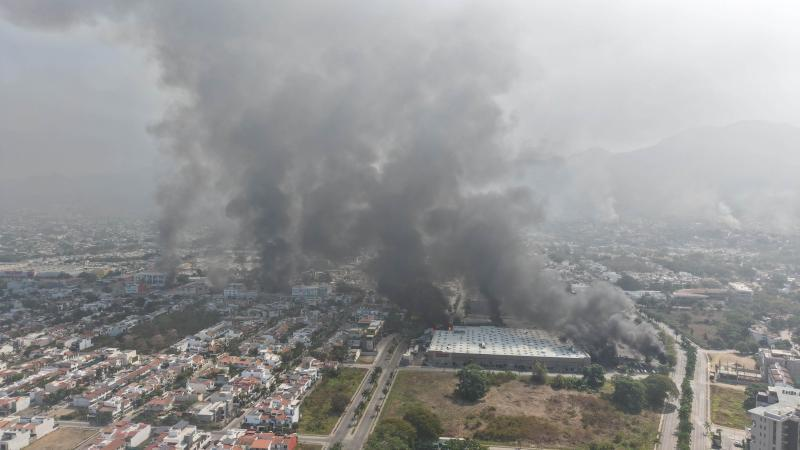
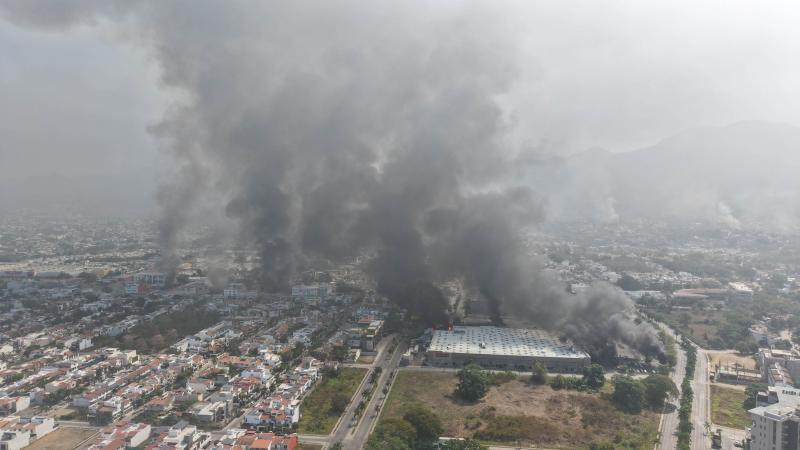
Smoke from burning vehicles in Guadalajara.. Source: Excelsior
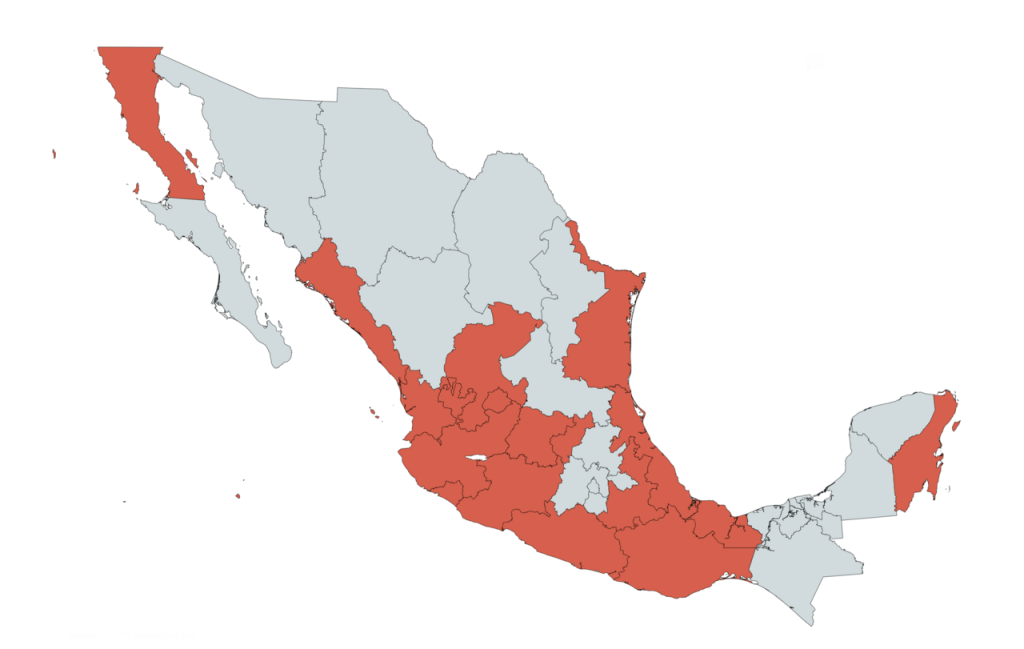
The raid was carried out by Mexican Army Special Forces, supported by the National Guard, the Mexican Air Force and intelligence personnel of the Mexican Attorney General’s department. There was also intelligence provided by the U.S. Joint Interagency Task Force-Counter Cartel (JITC-CC).
The operation sought to capture el Mencho when he was in the town of Tapalpa in the state of Jalisco. A firefight and pursuit ensued, in which Oseguera was wounded, after which he died in flight in a government helicopter enroute to Guadalajara (after which the flight was diverted to Morelia).
PRESIDENT CLAUDIA SHEINBAUM – President Sheinbaum spoke out about the operation the day it happened, and later, but she is also invovled in many other things. She doesn’t want it to appear that there’s a crisis.
WHO WILL RUN THE CJNG ? Often when a cartel boss is killed or captured, there’s a power struggle to see who will rule.
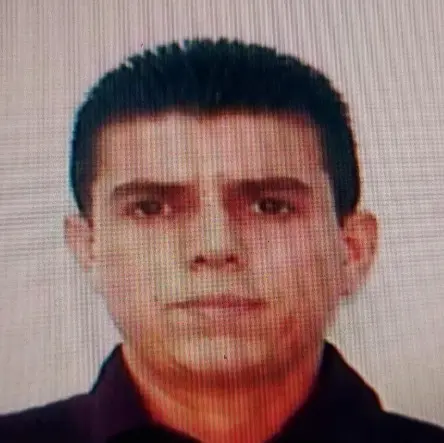
One possible successor is El Mencho’s stepson, California-born Juan Carlos Valencia Gonzalez, a dual citizen of the U.S. and Mexico.
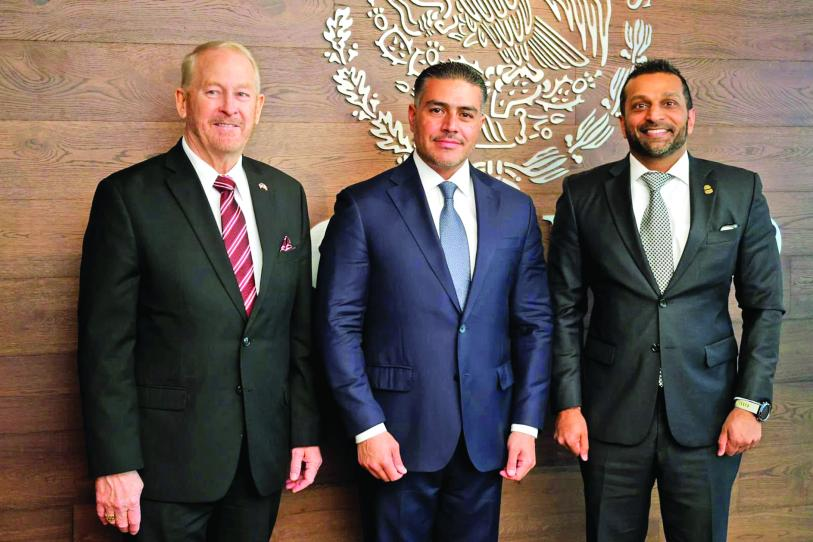
Navy Seals are curently in Mexico to train personnel and the Green Berets are coming in too.
Obviously, there may be other operations we don’t know about.
WHAT ABOUT TOURISM? No Americans were harmed during the CJNG retaliation, but some American tourists were inconvenienced and told to “shelter in place”.
In the long term, will this greatly affect tourism to Mexico? Probably not unless things like this occur frequently.
THE WORLD CUP The world soccer championship, known as the World Cup, is scheduled for this June and July in the U.S., Canada and Mexico.
One of the venues is Estadio Akron in Zapopan. That’s in the Guadalajara metro area, where some of the violence was. Is that going to be a problem?
Not according to Gianni Infantino, president of FIFA, international soccer’s governing body. Infantino was in Colombia and said that“Of course, we are monitoring the situation in Mexico these days, but I want to say from the outset that we have complete confidence in Mexico, in its president, Claudia Sheinbaum, and in the authorities, and we are convinced that everything will go as smoothly as possible.”
Hopefully he’s right about that.
DISINFORMATION Besides its considerable real world damage, the CJNG also carried on a disinformation campaign online, to make it appear that thing were worse than they actually were (which of course was bad enough).
From OCCRP (Organized Crime and Corruption Reporting Project): “The cartel’s online response to the killing of their boss…was the most powerful example yet of how propaganda — and disinformation — can be spread by social media accounts that experts believe to be linked to Mexican criminal syndicates. According to Alberto Escorcia, a Mexican journalist specializing in disinformation and artificial intelligence, it is common for these accounts to share fake, misleading, or AI-generated images of violence alongside real ones. ‘It was amplified to appear as though the whole country was on fire, and the truth is that it wasn’t,’ Escorcia said.”
“The gunfire in Puebla turned out to be a false alarm, as was the claim that armed men had taken over Guadalajara airport. A widely shared photo of a burned-out passenger plane on a runway was debunked as fake, as was another of the main church ablaze in the beach resort of Puerto Vallarta…Escorcia immediately traced a significant number of these false images back to three X accounts that, through his years of research, he believes are connected to the cartel.”
“ ‘What the Jalisco Cartel trolls do is generate a critical mass. They know how to game the Twitter [X] algorithm,’ Escorcia told OCCRP.”
A MESSAGE TO READERS – The goal here at Mexico News Report is the opposite of disinformation. The goal is accurate, documented reports on what is occurring in Mexico. Consider donating to Mexico News Report today. Click here and thank you!




.jpg)
.svg)


.svg)

.jpg)
#/media/Archivo:SRE_Logo_(2024).png)
