Mexicans Visiting Mexico Say Mexican Officials Worse than U.S. Migration Agents

Mexicans who live in the U.S. have long complained about being taken advantage of by Mexican officials when they go back to visit Mexico.

A recent article in Mexico’s Excelsior quotes such U.S.-resident Mexicans who were passing through Hermosillo in the state of Sonora.

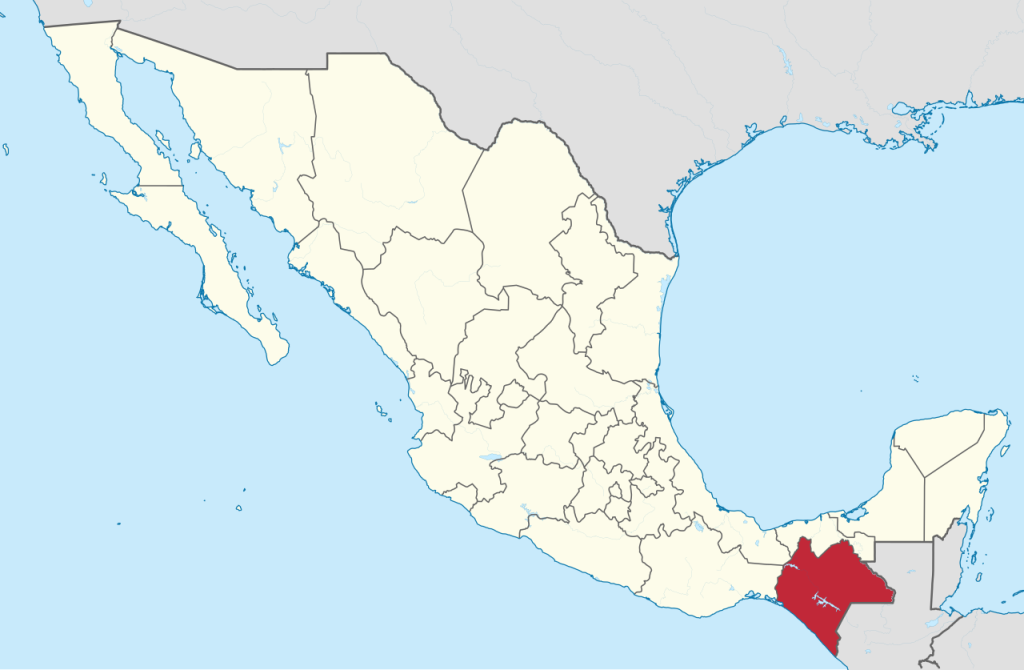
Sonora in red. Source: TUBS

From Excelsior (my translation): “Fellow Mexicans who come from the US to visit relatives in their native city complain upon returning to their homeland that they receive better treatment from U.S. migration agents than from Mexican authorities, who rob them, offend them, and blackmail them under any pretext.”

In the Hermosillo bus station, Excelsior was able to collect the testimony of various returning fellow Mexicans who complain that U.S. agents treat them better than Mexican authorities.”

Hermosillo Bus Station. Source: Daniel Sanchez Dorame

Francisca was a passenger traveling from Utah to the state of Nayarit in Mexico. “Francisca brought a Nintendo Switch for her grandson which can freely enter the country tax free, but the soldier who inspected her suitcase demanded 1800 pesos. She negotiated and paid 75 dollars to avoid problems…”

The 1800 pesos would have been equivalent to about 95 dollars, so she negotiated him down about 20 US dollars. But it was still a robbery.

Francisca reported that all the bus passengers endured similar treatment –” from some they took one or two thousand pesos. In this bus with at least 40 passengers, the fellow Mexican from whom was taken the least amount of money had 500 pesos taken…”

“The abuses of Mexican authorities to the returning fellow Mexicans are not only committed by customs soldiers, but also municipal police in each city they travel through and even from migratory authorities.”

The article ends thusly: “Migrants lament that Mexican officials are worse than those of the United States.”

Posted in Corruption, Immigration, Tourism and Travel | Tagged , , , | Leave a comment

In Mexico City, Gringo Immigrants are Targets of Mostly Peaceful Protest on July 4th

Now this is interesting. On July 4th, there was a protest in Mexico City against gentrification perpetrated by “digital nomads”, most of them Americans, who have moved to Mexico City.

Protest in Mexico City. Source: Carl de Souza

Digital nomads are people who work online, and since they work online they can work anywhere. So they go to Mexico City because the cost of living is cheaper but they’re getting their American salary. Not bad.

But some Mexico City residents resent this because it raises prices for them. Plus many of the digital nomads don’t learn Spanish.

I lived in Mexico many years, but I wasn’t like that. I spoke Spanish and integrated into Mexican society.

Many Americans in Mexico, on the other hand, don’t learn Spanish and just hang around with other Americans and Canadians and rich Mexicans. It’s true.

Anyway, I can see the point of these protestors. One of their signs said “Mexico for the Mexicans”. Well yes, of course.

Mexico has the right to permit or prohibit any foreigners from living or not living in Mexico, and on any terms it wishes to establish.

On the other hand, Mexicans should realize that Americans don’t want their country overrun with foreigners either.

Here is a report from the Mexico Daily Post on the protests:
“On July 4, 2025, hundreds of demonstrators gathered in Mexico City to protest against the growing effects of gentrification, particularly in neighborhoods like Roma and Condesa. The march, which began as a peaceful mobilization in Parque México, was organized by local residents and activist groups concerned about rising rents, cultural displacement, and the influx of foreign digital nomads, many of them from the United States.”

“Protesters carried signs with slogans such as “La vivienda es un derecho, no una mercancía” (“Housing is a right, not a commodity”) and “México para los mexicanos”. The demonstration aimed to draw attention to how gentrification has priced out long-time residents and transformed traditional communities into enclaves catering to wealthier foreigners.”

“However, as the march progressed through the Condesa neighborhood, tensions escalated. A group of masked individuals broke away from the main crowd and began vandalizing storefronts, including a Starbucks and several upscale restaurants. Windows were shattered, graffiti was sprayed on walls, and a clothing store was reportedly looted. Some demonstrators also confronted foreign diners seated at outdoor cafés, shouting slogans and demanding they leave.”

“While the majority of participants remained peaceful, the violent turn of events drew a swift response from local authorities. Police were deployed to disperse the crowd and restore order, though no major injuries were reported.”

Fuera Gringo” (Out Gringo) was part of the graffiti left by the protest.

From the Associated Press: “A protest by hundreds against gentrification and mass tourism that began peacefully Friday in Mexico City neighborhoods popular with tourists turned violent when a small number of people began smashing storefronts and harassing foreigners.”

“Masked protesters smashed through the windows and looted high-end businesses in the touristic areas of Condesa and Roma, and screamed at tourists in the area. Graffiti on glass shattered glass being smashed through with rocks read: ‘get out of Mexico.’ Protesters held signs reading ‘gringos, stop stealing our home’ and demanding local legislation to better regulate tourism levels and stricter housing laws.”

“Marchers then continued on to protest outside the U.S. Embassy and chanted inside the city’s metro system. Police reinforcements gathered outside the Embassy building as police sirens rung out in the city center Friday evening.”

“It marked a violent end to a more peaceful march throughout the day calling out against masses of mostly American tourists who have flooded into Mexico’s capital in recent years.”

“Tension had been mounting in the city since U.S. ‘digital nomads’ flocked to Mexico City in 2020, many to escape coronavirus lockdowns in the U.S. or to take advantage of cheaper rent prices in the Latin American city.”

“Since then, rents have soared and locals have increasingly gotten pushed out of their neighborhoods, particularly areas like Condesa and Roma, lush areas packed with coffee shops and restaurants.”

“Michelle Castro, a 19-year-old college student, was among the flocks of people protesting. She said that she’s from the city’s working class city center, and that she’s watched slowly as apartment buildings have been turned into housing for tourists.”

“ ‘Mexico City is going through a transformation,’ she said. ‘There are a lot of foreigners, namely Americans, coming to live here. Many say it’s xenophobia, but it’s not. It’s just that so many foreigners come here, rents are skyrocketing because of Airbnb. Rents are so high that some people can’t even pay anymore.’ ”

“The Mexico City protest follows others in European cities like Barcelona, Madrid, Paris and Rome against mass tourism.”

Posted in Immigration, Society | Tagged , , , | Leave a comment

Donald Trump Pacifies the U.S.-Mexico Border

Donald Trump has been President of the U.S.A. since January 20th. That’s less than six months.

Some people love Trump, some people hate Trump. But whatever one may say about Trump, the man has certainly fulfilled his pledge to get control of the U.S.-Mexican border.

Mexico-U.S. Border. Source: Encyclopædia Britannica

From Hamed Aleaziz at The New York Times:

“The number of people crossing the southern border illegally has dropped to levels not seen in decades, a sign that President Trump’s message of deterrence and his hard-line immigration policies are working to keep people out. Border Patrol agents made just over 6,000 arrests in June, figures released this week by the Department of Homeland Security show, punctuating a steep drop since Mr. Trump took office.”

“Mr. Trump ran on a platform of shutting down illegal crossings of the southern border and carrying out mass expulsions of people in the United States without authorization, positions that helped sweep him into office. His campaign to execute his immigration promises has invited showdowns with the courts, tested the boundaries of constitutional rights and upended America’s longstanding role welcoming those seeking refuge or asylum. But in his first few months in office, it also appears to have been effective.”

“Adam Isacson, a border expert at the Washington Office on Latin America, said the border crossings in June were the lowest since the 1960s and were likely aided by the intensified immigration push, pointing to images of arrests by Immigration and Customs Enforcement agents, the sending of immigrants to El Salvador and other countries they are not from, and the holding of migrants at the U.S. detention facility in Guantánamo Bay, Cuba.”

This is a big contrast to the previous U.S. administration:

“President Joseph R. Biden Jr.’s administration largely struggled with the southern border, with monthly arrests peaking in December 2023 at nearly 250,000. After Mr. Biden moved to limit asylum at the border, the numbers dropped under 50,000 by the closing months of his administration — but never this low.”

But actually the Biden administration didn’t “struggle” with the border, it intentionally had a near open borders policy. Obviously, that’s not Trump’s policy.

On Jan. 20, the day he took office, Mr. Trump issued an executive order that effectively blocked asylum access for those crossing illegally into the United States. Since then, the highest monthly total of illegal crossings has been nearly 9,000. On one day in late June, according to the Department of Homeland Security, agents made only 137 arrests, a figure the agency called ‘the lowest single-day total in a quarter of a century.’ ”

The article quotes Chad Wolf, who served in Trump’s first administration (before Biden).

“Chad Wolf, Mr. Trump’s acting homeland security secretary during his first administration, said he had not expected the numbers to drop so low, so quickly. ‘Deterrence actually does work,’ he said. ‘And so I think for the most part, people are thinking twice about coming illegally.’ ”

Wolf is now with the America First Policy Insitute (AFPI), a think tank that promotes Trump’s agenda. In that organization, Wolf is Executive Vice President, Chief Strategy Officer & Chair of AFPI’s Center for Homeland Security & Immigration.

Donald Trump has pacified the U.S.-Mexican border, and I think that’s good for Mexico as well.

Posted in Immigration | Tagged , , | Leave a comment

Mexican Beer Sales in U.S. Down As a Result of Trump Policies?

U.S. sales of Mexican beers Corona, Modelo and Pacifico have recently dropped and this drop may result from Donald Trump’s policies.

All 3 beer brands are made by Mexico’s Modelo group and distributed in the United States by Constellation.

Modelo Especial, by the way, is the best-selling beer in the U.S.A.

So what do Trump’s policies have to do with it?

According to CNBC:

“Constellation Brands’ beer sales fell 2% in its latest quarter as President Donald Trump’s deportations and consumers’ broader economic fears weighed on demand.”

“In April, Constellation CEO Bill Newlands said that Hispanic consumers are spending less due to their concerns about Trump’s hard-line immigration policy and possible job losses in industries with high Latino employment bases. During Wednesday’s [July 2nd’s] earnings conference call, Newlands acknowledged that raids by U.S. Immigration and Customs Enforcement were making it difficult to predict consumer behavior moving forward, although he demurred about tying the beer division’s slowdown to Hispanic shoppers specifically during the company’s fiscal first-quarter call.”

“ ‘When you see a fair amount of change, both Hispanic and non-Hispanic consumers are concerned about inflation and about cost structure,’ Newlands told analysts.”

“Hispanic consumers are a core part of Constellation’s customer base. The brewer, which owns Modelo, Corona and Pacifico, says that roughly half of its beer sales come from Latinos in the U.S.”

“Constellation’s earnings and revenue for the quarter ended May 31 fell short of Wall Street’s estimates, hurt by weaker beer demand and higher aluminum costs from Trump’s tariffs. Still, the company reiterated its full-year outlook, signaling confidence that it can achieve its financial targets despite economic uncertainty.”

Another article on the same topic on the U.K.’s Independent reported more of what CEO Newlands said:

“Newlands said its Hispanic customers are ‘very interested in beer,’ but ‘occasions on which beer is consumed have decreased,’ Yahoo Finance reported.”

“The CEO said Hispanic consumers are ‘not going out to eat as much as they had, they’re having less social occasions at home.’ ”

“Constellation Brands’ worse-than-expected earnings and revenue were also caused by President Donald Trump’s tariffs on aluminum, according to the company.”

I wrote about that here on Mexico News Report back in March and here in April.

“Trump’s mass deportation plan is in full swing. Last month, the White House announced ICE had made more than 100,000 arrests since Trump took office for the second time.”

“The Trump administration’s immigration crackdown has put fear into America’s Latino and Hispanic populations, with some too afraid to leave their homes.”  

According to The New York Post “The giant brewer of Modelo and Corona said it has suffered a double whammy from the White House as its margins got squeezed by President Trump’s tariffs — and its sales have been slammed by the immigration crackdown.”

“Constellation Brands, whose Modelo brand is the top-selling beer in the US, on Tuesday [July 1st] reported adjusted earnings per share of $3.22, below LSEG analysts’ expectations of $3.31, in the first quarter ended May 31.”

“Trump hiked levies on aluminum to 25% in March and raised them again to 50%  in early June, threatening to raise costs for products like beer, soda and energy drinks sold in cans.”

Rochester, NY-based Constellation sells only imported Mexican beers like Corona and Pacifico – which also left it heavily exposed to 25% tariffs that Trump imposed on foreign beer imports in April.”

“While the tariffs hit margins, the company also reported disappointing revenue — just $2.52 billion in the latest quarter, versus Wall Street’s forecast of $2.55 billion.”

“The beer maker blamed the sales shortfall on weaker demand ‘largely driven by…non-structural socioeconomic factors,’ as well as its divestiture of Svedka voda [sic], according to CEO Bill Newlands.” 

“In April, Newlands said that Hispanic customers – who make up roughly half of Constellation’s beer sales – had pulled back on buying from the brand amid Trump’s immigration crackdown. ”

“ ‘The fact is, a lot of consumers in the Hispanic community are concerned right now,’ Newlands said during a company conference call.”

“ ‘Over half are concerned relative to immigration issues and how those impact [them]. A number of them are concerned about job losses in industries that have a high Latino employment base.’ ”

“As a result, Hispanic consumers have cut back on discretionary spending, including goods and services like restaurants, clothing, travel – and beer, Newslands [sic] said.”

“Shipment volumes in its beer business dropped 3.3% during the latest quarter on the slump in demand.”

“Its operating margin fell 150 basis points, or 1.5%, during the same period due, in part, to the aluminum tariffs, the company said.”

“Shares in Constellation have fallen 25% so far this year. The stock plunged in January after the company reported weak fourth-quarter earnings and revealed a full-year forecast below expectations.”

“Constellation also sells wine and craft spirits, but its beer business is the real money maker, accounting for roughly 80% of total revenue.”

“Constellation reported first-quarter net income of $516.1 million, or $2.90 per share, down from $877 million, or $4.78 a share, the year before.”

“However, Constellation maintained its full-year forecast, including comparable earnings per share of $12.60 to $12.90.”

Posted in Economy, Foreign Policy, Immigration | Tagged , , | Leave a comment

Remittances from the U.S. to Mexico

Remittances are funds sent by migrants to their home country.

After India, Mexico is the second-largest recipient country of remittances in the world. Most of that money is sent by Mexicans in the United States. About 40% of it is sent in cash.

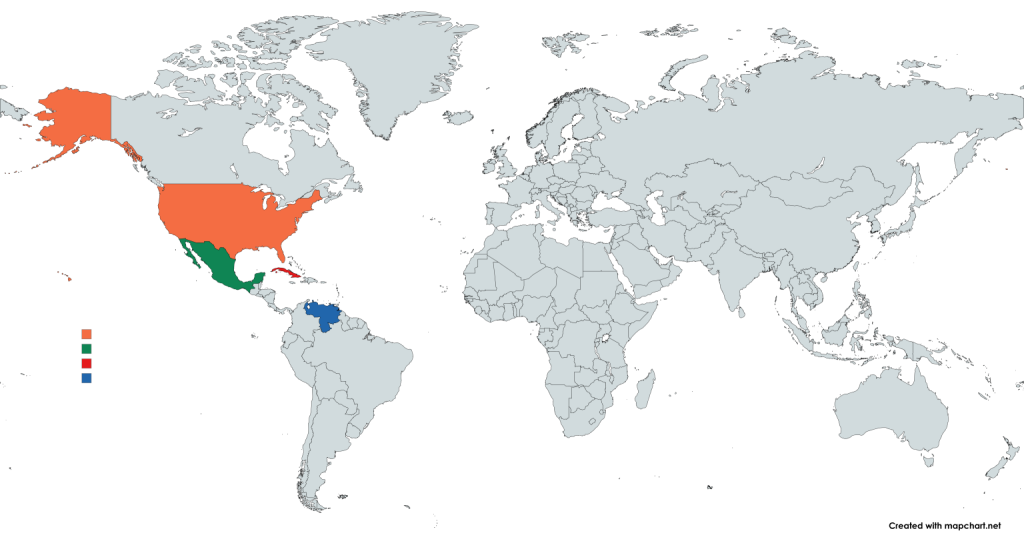
U.S.A. in orange, Mexico in green. Source : Wikipedia

Mexico’s central bank reported that in 2024, the country received $64.7 billion in remittances, a record amount. That sum accounted for nearly 4.7% of Mexico’s gross domestic product.

That explains in part why the Mexican government so fiercely defends keeping Mexicans in the United States.

But for Central American countries it’s a much higher percentage. Remittances account for a quarter of the GDP in both Honduras and Nicaragua. For El Salvador it’s 23.5% and for Guatemala 19.5%.

In May of 2025, as reported by Reuters, “Remittances sent to Mexico dropped 4.6% in May compared to a year earlier…The figure for May hit some $5.36 billion, the accumulation of some 13.9 million transactions averaging $385 each. While the size of each transaction edged up compared to the same month last year, the number of transactions dropped some 5.7%.”

More from Reuters: “In April, Mexico central bank logged the steepest drop in remittances in nearly 13 years. The May remittances data marked the second consecutive year-on-year decline and the third so far this year, according to central bank data. The decline in remittances sent to Mexico is an outlier in the region. El Salvador, Honduras and Guatemala have all registered sharp increases in remittances so far this year compared to the same period in 2024, according to official data.”

Posted in Economy, Immigration | Tagged , , , , , | Leave a comment

Colombian Mercs in Mexico

A growing number of Colombian mercenaries have been working for Mexican drug cartels.

Mexico in orange, Colombia in green. Source: Wikipedia

Spain’s El País recently ran an English-language article on the topic.

From the article:
“The growing presence of former Colombian military personnel in Mexico has authorities on edge. Last week, Claudia Sheinbaum’s administration reported the arrest of 12 Colombian citizens in connection with the deaths of eight soldiers from an antipersonnel mine in Michoacán, in the center of the country. Nine of those arrested are former military personnel, while the other three had received military training.
This case adds to other recent incidents in the region, where authorities have linked Colombian citizens to drone bomb attacks. In Guanajuato, local police claim to have identified ‘Colombian paramilitaries, lancers, and explosives experts.’ ”

And it’s not just in Mexico:

“Hundreds of former Colombian soldiers are leaving their country each year to fight in foreign conflicts, such as the war in Ukraine, attracted by high salaries. ‘To put this into perspective, in 2008, in Latin America alone, there were 12,000 mercenaries, and by 2018, the number was estimated at 2.4 million,’ says Paloma Mendoza Cortés, a professor and expert in national security at ITAM, one of Mexico’s most prestigious universities. ‘Most of them are of Colombian origin, and for many years the government denied their existence. It’s a surprising phenomenon and one that has a decisive influence that helps explain the increase in the firepower of organized crime.’ ”

“In Mexico, the CJNG and other groups offer large sums to mercenaries to fight in an extremely violent environment. In each of the last eight years, Mexico has recorded more than 30,000 murders, most of them committed with firearms. Drug trafficking to the United States, the illegal flow of weapons southward, and the mafia-like practices of criminal groups, immersed in thousands of battles to control entire regions, exacerbate the violence.”

Colombians work for different cartels and so have probably wound up fighting each other in Mexico.

Why are Colombians in such demand as mercenaries?

“Colombians are highly valued in the military contractor market overseas. Andrés Macías, a member of the U.N. Working Group on the use of Mercenaries, explains that this is due to their ‘extensive experience’ in counterinsurgency combat. ‘The level of training of the Colombian military is very high and almost comparable to that of the United States. Furthermore, a regular soldier can retire at 40. In other words, at a young age, people can accumulate up to 20 years of military experience in one of the most highly trained armies in the world,’ he points out.”

It usually boils down to the money.

“The most common reason former military personnel give for becoming mercenaries — in more than a dozen countries such as Ukraine, Russia, Yemen, and the United Arab Emirates, among others — is the meager retirement pay they receive as veterans. Offers from security companies, foreign militaries, and now cartels are also pushing many to fight in foreign conflicts.”

“The lure of earning up to five times more has led many to fall into traps, as several Colombian groups have reported, such as those who fought with Sudanese paramilitaries or those currently facing prosecution for the assassination of Jovenel Moïse in Haiti. ‘Many are offered a contract to perform specific activities and are then forced to do others. This is what is known as predatory recruitment,’ explains Macías. Being in an unknown country, often without their own money or documentation, recruits are vulnerable to falling entirely into the hands of these mercenary networks.”

“Colombian President Gustavo Petro, along with his administration, has promoted a law against mercenarism to prohibit an activity that ‘exploits retired military personnel.’ Those involved in the business blame the Colombian government for failing to protect veterans so they can adapt to civilian life.”

Nor do Colombian mercs necessarily travel directly from Colombia to Mexico. The article quotes a 31-year old Colombian military veteran in Mexico who tells how he got there: “I was in Ukraine for a few months. Many of us created TikTok accounts where we showed our daily lives. The cartels contact you through them.”

The cartel offered this individual 2,000 dollars a month and offered to transport him and others from Warsaw, Poland to Mexico. ” ‘Leaving from Colombia is more difficult’, he said, ‘You have to cross the Darién River with fake passports, and now, with the security Panama has put in place, it makes you think twice,’ he notes.”

Posted in Crime | Tagged , , , , , | Leave a comment

Sophisticated but Incomplete Tunnel Discovered on U.S.-Mexico Border

An uncompleted drug smuggling tunnel has been discovered on the U.S.-Mexico border.

From a U.S. Customs and Border Protection document dated June 18th, 2025: “U.S. Border Patrol agents have uncovered and disabled a large-scale narcotics smuggling tunnel linking Tijuana to the San Diego area. The uncompleted tunnel extended more than 1,000 feet inside the U.S. and was highly sophisticated.”

It was discoverd in April.

“In early April, Border Patrol agents assigned to the San Diego Sector Tunnel Team discovered the tunnel as it was actively under construction. The Tunnel Team made entry into the tunnel, which ran under a portion of the Otay Mesa Port of Entry. Based on preliminary indications, the tunnel had a projected exit point near or within a nearby commercial warehouse space.

And check this out….”The investigation revealed the tunnel was equipped with electrical wiring, lighting, ventilation systems, and a track system designed for transporting large quantities of contraband.”

And this… “When agents made the first entry into the tunnel, they encountered multiple makeshift barricades. These barricades were placed haphazardly by the tunnel workers in an apparent effort to impede agents’ southbound progress and the eventual identification of the tunnel’s origin.”

“Agents carefully mapped the tunnel, which measured 2,918 feet in total length. Inside, the tunnel dimensions measured 42 inches in height, 28 inches in width and ran approximately 50 feet underground at its deepest point. On Monday [June 16th], Border Patrol in collaboration with Homeland Security Investigations and Government of Mexico authorities worked to locate the origin point of the tunnel. The entrance was located within a residence in the Nueva Tijuana neighborhood. Mexican authorities served a warrant at the location and found the entrance to the tunnel had recently been concealed by freshly laid tile.”

Of course, this is far from the first such tunnel: “Since 1993, more than 95 tunnels have been found and decommissioned in the San Diego area.”

What do they plan to do with it? “This tunnel has been scheduled for immediate remediation by the U.S. Border Patrol San Diego Sector Tunnel Team. Contractors will pour thousands of gallons of concrete into the tunnel, preventing the tunnel from use by Foreign Terrorist Organizations.”  

Here’s a photo of the tunnel:

Posted in Crime | Tagged , , , | Leave a comment

Mountain Lion Catches a Cat in Monterrey

Sierra Alta, a residential sector in the mountains of southern Monterrey (Nuevo Leon state), had an unexpected visitor when a skinny mountain lion pursued and caught a domestic cat, apparently killing it and taking it away.

Source: El Norte

You can watch the video here, from El Norte:
https://www.youtube.com/embed/-p_62ye9JkI

The mountain lion has many names, including cougar, puma, catamount and others. Its scientific name is Puma concolor. The species lives in both North America and South America. Here is its range:

Source: Kokosdieb

For another Monterrey article, see Beavers in Monterrey.

Posted in Wildlife | Tagged , , | Leave a comment

Mexico Has One City on List of 200 Happiest Cities in the World

The Institute for Quality of Life, based in London, England, has released its 2025 Happy Cities Index.

It purports to list the 200 happiest cities in the world.

Mexico had one city on that list. Can you guess which city?

First off, how do they determine the happiest cities in the world?

They have a complicated system, based on six major criteria: citizens, governance, environment, economy, health and mobility. And these six criteria, or themes as they are called, are further subdivided into sub-criteria.

If you’re interested, check out the group’s methodology page here.

Then the 200 cities are divided into gold, silver and bronze, as are the medals in the Olympics. There are 31 gold cities, 69 silver cities and 200 bronze cities.

In the 2025 Happiest Cities list, the #1 city was Copenhagen, Denmark, with a score of 1039. The #2 city was Zurich, Switzerland, with 993 points. Singapore was #3, Aarhus, Denmark was #4 and Antwerp, Belgium was #5.

The highest U.S. city was New York City at #17. The United States had 18 cities on the list, more than any other country, although Denmark beat the U.S. on the amount of “Gold Cities”. Denmark has four Gold Cities and the U.S. has two.

Germany and Australia tied for second place with 11 cities each on the list. Belgium followed with 10 cities on the list.

The United Kingdom, Taiwan and Poland were next, tied in total cities on the list with 9 apiece. They were followed by Italy and China with 8 cities each.

Denmark had 7 total cities on the list. Switzerland, Sweden and Spain each had 6 cities.

Besides Mexico, the only Spanish- speaking Western Hemisphere countries were Argentina (Buenos Aires #74), Ecuador (Quito #187) and Panama (Panama City #197).

If you’re interested in perusing the list yourself, just click here. Maybe your city is on it!

And now, drum roll please, the only Mexican city on the list was – Guadalajara, at #191.

Felicidades Guadalajara !

Guadalajara, Jalisco state, Mexico. Source: Isaacdavid


Posted in Geography | Tagged , , , , , | Leave a comment

SRE Evacuates 175 Mexicans from the Middle East

In the Middle East, Israel and Iran have been bombing each other and more recently the U.S. has bombed Iran.

The SRE (Secretaría de Relaciones Exteriores), Mexico’s foreign ministry, has continued to evacuate Mexicans from the Middle East. (See this previous article on the topic).

As of June 22nd, 2025, the SRE reported that it had evacuated 175 Mexicans.

As a service to my readers, here below is a world map, showing all the countries mentioned in the article in red:

Source: mapchart.net

From a June 22nd SRE Twitter X tweet:

“MEXICAN EMBASSIES IN THE MIDDLE EAST CONTINUE ON ALERT, OFFERING ASSISTANCE TO FELLOW MEXICANS IN THE REGION”

“The SRE personnel, through their embassies in Iran, Israel, Jordan, Egypt and Azerbaijan, remain on alert and continue offering orientation, assistance and consular protection to the female and male Mexicans found in the Midde East, particularly to faciliate their departure from the zone of conflict. To this point, they have facilitated the evacuation of 175 persons who have departed safely and are doing well.”

ISRAEL: “Israeli airspace is only partially open. The [Mexican] embassy in Israel has facilitated the departure by land and sea to Egypt, Jordan and Cyprus, of 116 Mexican persons.”

JORDAN : “The embassy in Jordan has supported the departure of 29. The [Jordanian] airspace is open, but the flights continue being irregular with frequent cancellations.”

IRAN: “The [Mexican] embassy in Iran assisted a second group of fellow Mexicans who departed successfully to Azerbaijan, where they were received by the personnel of our embassy in that country. In total 30 persons have departed from Iran, all of them are safe and well.”

Posted in Foreign Policy | Tagged , , , , , , , | Leave a comment