This Ron Johnson is not to be confused with Ronald Harold Johnson, U.S. Senator from Wisconsin.
Ronald D. Johnson is a fluent speaker of Spanish which is a good skill for an ambassador to Mexico to have.
This is from Ambassador Johnson’s bio on the U.S. embassy website: “Ronald Johnson..has served the United States government for over four decades, first as an officer in the U.S. Army, then as a member of the intelligence community, and most recently as the U.S. Ambassador to El Salvador. Among his various roles, Ambassador Johnson was the Central Intelligence Agency’s Science and Technology Liaison to the U.S. Special Operations Command, in Tampa, Florida. Prior to that, he was a Special Advisor to the U.S. Southern Command in Miami managing collaboration between the Command and the Intelligence Community. He worked on a wide range of regional issues including refugees, counter-narcotics, counter terrorism, human rights and tropical virus disease control. Ambassador Johnson has held various other assignments, including as the Deputy Special Advisor to the Commander, U.S. Special Operations Command (2006 – 2008), and as a senior operations officer at the CIA. Ambassador Johnson served in the U.S. Army from 1984 – 1998 and retired as a Colonel. He also served in the Alabama Army National Guard, enlisting as a private in 1971 and reaching the rank of Captain before going on to active duty in the Army in 1984.”
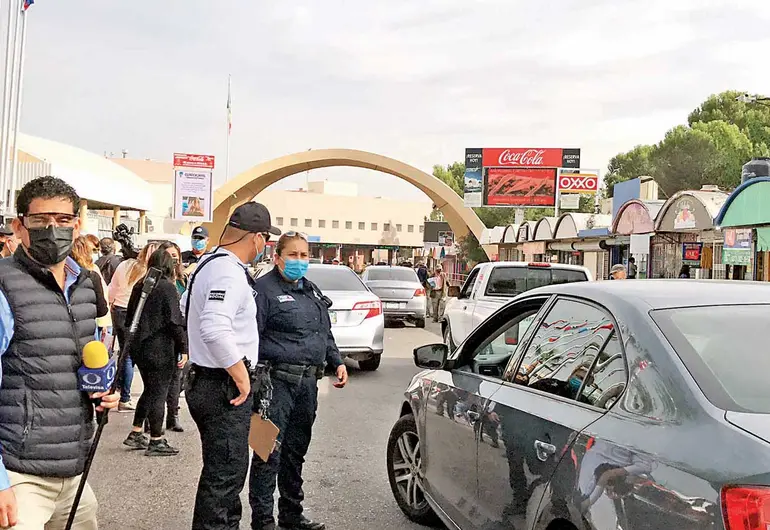
On May 19th, 2025, Johnson presented his credentials to Mexican President Claudia Sheinbaum. Here’s a picture of the presentation:
“Maya Blue” was a blue pigment invented by the Maya culture around 800 A.D. This unique pigment resists fading and is resistant to many chemical solvents. It was used on murals, buildings, ceramics, sculptures and codices. Here is an example of Maya Blue:
The use of Maya Blue spread from the Maya to other Mesoamericans, and survived the Spanish Conquest. In the colonial period it was still used in Catholic artwork which combined Indian and European artistic techniques. Here is a colonial-era painting of Jacob’s Ladder by Juan Gerson, a Nahua artist, which utilizes Maya Blue. This work is found in the the monastery church of Asuncion Tecamachalco in the state of Puebla.
The use of Maya Blue died out in Mexico in the colonial period, but curiously, the technique survived in Cuba until the mid-1800s.
Finally, it died out there too and was rediscovered by researchers in the twentieth century.
So how was the Maya Blue pigment produced?
From LiveScience.com: “For decades, scientists tried to decode the precise method of manufacturing Maya blue, but they did not succeed until 2008. By analyzing traces of the pigment found on pottery at the bottom of a well at Chichén Itzá, a Maya site in the Yucatán Peninsula, a team of researchers led by Dean Arnold, an adjunct curator of anthropology at the Field Museum in Chicago, determined that the key to Maya blue was actually a sacred incense called copal. By heating the mixture of indigo, copal and palygorskite over a fire, the Maya produced the unique pigment, he reported at the time.”
Now Arnold has discovered another method that was used: “But at the annual meeting of the Society for American Archaeology in Denver on April 25, Arnold presented his discovery of a second method for creating Maya blue. The new research has been published in Arnold’s book “Maya Blue” (University Press of Colorado, 2024).”
“After closely examining a dozen Maya bowls found at Chichén Itzá, Arnold realized that white residue in the vessels was probably palygorskite that was ground when wet, which would have left traces in the tiny fractures that grinding tools left in the pots. Microscopic examination of the 12 bowls further revealed tiny, burnt plant stems, and the bases of the bowls showed that they were heated from below, his detective work showed.”
” ‘Consequently, the observations of these bowls provide evidence that the ancient Maya used this method as a second way to create Maya blue,’ Arnold said in the presentation.”
As Arnold aptly describes the Maya’s invention of Maya Blue, “This is a genius discovery that they made.”
Since last September, there has been a vicious struggle between two factions of the Sinaloa Cartel, which however has not stopped its lucrative business of exporting drugs to the United States.
The intra-cartel war pits one faction, led by the son of “El Mayo” Zambada against the Chapitos, sons of “El Chapo” Guzman. (See Sinaloa Cartel War – Death Toll Passes 1,200). Here’s a map showing the Sinaloa Cartel’s dominant areas of operation, in red:
Meanwhile, you can’t expect narcos from other cartels to sit quietly. In fact, it’s now possible that the CJNC (Cártel de Jalisco Nueva Generación) is teaming up with the Chapitos faction of the Sinaloa Cartel. This map shows the dominant areas of the CJNG, in blue:
From the UK’s Mirror: “Fears are growing over a new ‘super cartel’ as two of the most violent gangs in Mexico are believed to have formed an alliance – JaliscoNew Generation Cartel (CJNG) and the ‘Los Chapitos’ faction of the Sinaloa Cartel.”
“A video spread on social media showing several armed men with two others appearing to have been captured by the drug cartels. There is no information as to the location the image was taken, however, those who took the video have claimed it shows an alleged alliance between CJNG and ‘La Chapiza’, a group of armed men who work for the Sinaloa Cartel faction. One of those in the video is heard saying: ‘The rumours are true, the alliance between the New Generation Cartel and La Chapiza is confirmed.’ “
“In the video they also refer to Nemesio Oseguera Cervantes, who is known as El Mencho, and to one of Joaquín Guzmán Loera’s sons who have been identified as leaders of the notorious gangs. As the video draws to a close, the men fire their weapons into the air in celebration.”
“The video appeared online shortly after the Drug Enforcement Agency (DEA) published its 2025 National Drug Threat Assessment, which included mention on a potential alliance between the notorious gangs.”
“It is believed that working together, the two groups are hoping to strengthen their operations and to provide a stronger front against common rivals, particularly the faction led by Ismael ‘El Mayo’ Zambada – a former top leader of the Sinaloa Cartel who was arrested in July 2024…”
“Negotiations between CJNG and Los Chapitos are said to have began [sic, should be “begun”] last year, as representatives met in Guadalajara and Nayarit. It has been reported that as part of the agreement to work together, Jesús Alfredo Guzmán Salazar , one of the Sinaloa Cartel leader Joaquín ‘El Chapo’ Guzmán’s sons, would be handed over to the CJNG as a guarantee. The DEA report added: ‘According to Mexican news sources, CJNG could capitalise on the conflict between the Los Mayos and Los Chapitos factions of the Sinaloa Cartel, essentially by choosing sides in favour of their former rivals, Los Chapitos, against Los Mayos.’ ”
According to the DEA’s 2025 National Drug Threat Assessment, “A strategic alliance between CJNG and Los Chapitos has the potential to expand these groups’ territories, resources, firepower, and access to corrupt officials, which could result in a significant disruption to the existing balance of criminal power in Mexico and could serve to increase northbound drug flow and southbound weapons trafficking at the U.S.-Mexico border.”
This is NASA’s Astronomy Picture of the Day for April 30th. It’s a nighttime photo of the Cerro de la Bufa, a distinctive rock formation standing above the city of Zacatecas. (Click here for a daytime photo).
Look at the nighttime sky above the Bufa, and notice that the crescent moon and the planets of Venus and Saturn form a somewhat-sideways smiley face. It’s impressive!
The ongoing war between two factions of the Sinaloa cartel, being fought in Mexico’s Sinaloa state, broke out last September 9th and continues.
As of May 5th, according to AFP, the death toll in the conflict had passed 1,2000 dead, with 1,400 missing.
Of that total, nearly 39 minors had been killed and 100 minors had disappeared.
On May 5th, there was a shooting in Badiraguato municipality in which a 7-year old girl and a 12-year old girl were killed. According to AFP, the two were ‘caught in the crossfire between gunmen and security forces.’ “
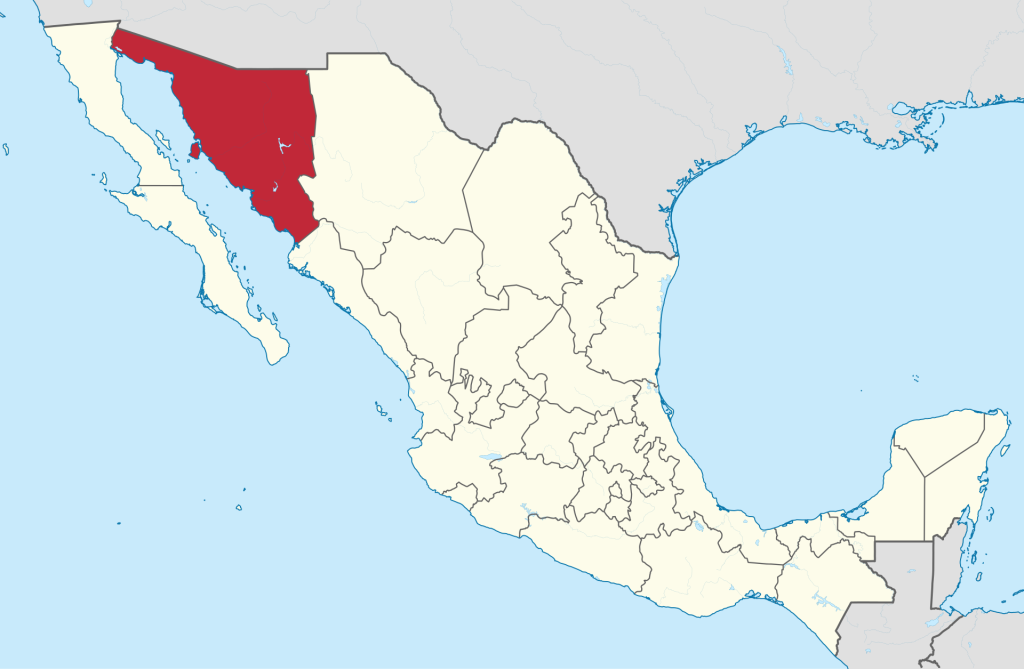
For previous reports on this situation, see here, here, here , here , here , here , here and here. Here is a map of Mexico, with Sinaloa state in red:
The tragic story of recently-murdered Ivan Morales Corrales displays the power and ruthlessness of a Mexican drug cartel.
Ivan Morales Corrales was a Mexican federal agent.
On May 1st, 2015, Morales was part of a secret mission in Jalisco state to capture Nemesio Ruben “El Mencho” Oseguera Cervantes, leader of the Cártel Jalisco Nueva Generación (CJNG).
There were five helicopters on the mission. The one Morales Corrales was in was hit by RPGs and crashed and burned. Of the 18 persons on board the aircraft 9 survived.
Morales survived but was horribly burned, with second and third degree burns over 70% of his body, after which he underwent 15 reconstructive surgeries.
In December of 2015, Morelos received the Police Medal of Merit from then-President Enrique Pena Nieto.
2015 – President Pena Nieto and Ivan Morales Corrales. Source: Univisión
In September of 2024, Morelos was in the U.S. where he testified in the trial of Ruben Oseguera González “El Menchito”, the son of “El Mencho”.
El Menchito had actually given the order to attack the helicopter and was later arrested in Mexico and extradited to the United States.
On March 7th, 2025, El Menchito was found guilty and sentenced to life imprisonment for international drug trafficking.
On April 30th, 2025, nearly 10 years after the attack on the helicopter, Morales and his wife were ambushed and shot to death in Temixco, state of Morelos.
So the CJNG got its revenge on a brave Mexican who had already suffered greatly in the Cartel War.
The discovery of an altar at the Maya site of Tikal in Guatemala may shed more light on the relationship between Tikal and Teotihuacan. Or does it pose more questions than it answers?
Tikal was part of the Maya culture area, in what is now eastern Mexico and northern Central America.
Eight hundred miles to the west of Tikal was the non-Maya city of Teotihuacan, north of present-day Mexico City.
Archaeologists have found evidence in Tikal of Teotihuacan influence. But what sort of relationship was it?
Was it just Teotihuacan influence? Was Tikal actually conquered by Teotihuacan? Did it have a Teotihuacan ruling class?
The April 8th issue of Antiquity magazine (published by Cambridge University Press) has an article about the altar and the general topic.
From the Antiquity article: “The nature and extent of interactions between the distant regions and cultures of Mesoamerica remain open to much debate. Close economic and political ties developed between Teotihuacan and the lowland Maya during the Early Classic period (AD 250–550), yet the relationship between these cultures continues to perplex scholars. This article presents an elaborately painted altar from an elite residential group at the lowland Maya centre of Tikal, Guatemala. Dating to the fifth century AD, the altar is unique in its display of Teotihuacan architectural and artistic forms, adding to evidence not only for cultural influence during this period, but also for an active Teotihuacan presence at Tikal.”
Here below is a photo of the altar now (from the southwest) and below that an artist’s rendering of how it looked before (from the northwest) :
Photo of Altar at Tikal,from southwest. Source: E. Roman Illustration of Altar at Tikal, from northwest. Source: H. Hurst
The artwork on the altar is in Teotihuacan, not Maya, style. The Antiquity article says that “The form and painted decoration of the … altar point strongly to the presence of artists trained at Teotihuacan.”
The article’s conclusion states that “The…compound and its altar add to the growing evidence of Teotihuacan influence in Maya material culture and imagery, suggesting not just local adoption of artistic styles but potentially the presence of Teotihuacan-trained painters practising their skills at Tikal in the fifth century AD… Far from loose Maya imitations, the altar murals are expert examples of a complex, non-local style and likely evidence of the direct presence of Teotihuacan at Tikal as part of a foreign enclave…”
Ford Motor Company is raising prices for three Ford vehicles manufactured in Mexico.
From Car and Driver: “Ford will raise prices on three Mexico-made cars as a result of the Trump administration’s tariff on vehicles built outside the United States, according to a report from Reuters. A spokesperson from Ford confirmed the news to Car and Driver and said that the increases will affect vehicles built after May 2 but won’t go into effect until after July 4. Following the holiday, Ford is planning to sunset its current ‘From America, For America’ employee pricing program, which opens employee pricing to everyone.”
So you still have time to purchase one of these before the prices go up.
Car and Driver: “Prices on the Bronco Sport, Maverick, and Mustang Mach-E, all three of which Ford builds in Mexico, will see increases. The Ford spokesperson said the price hikes are part of the brand’s ‘usual’ mid-year pricing changes,’ combined with some tariffs we are facing. We have not passed on the full cost of tariffs to our customers.’ As the price changes don’t affect vehicles built before May 2, they shouldn’t have an impact on the price of cars already on dealer lots.”
So get down to your dealer if you want one before the price hike!
Car and Driver: “The extent of the price increases isn’t totally clear yet. According to the Reuters report, an internal dealer memo reflects price increases as much as $2000, though the report doesn’t make it clear which model will see that change. The Ford representative who spoke with Car and Driver referenced smaller changes and pointed to a $600 price hike for the Bronco Sport Heritage as well as a $700 price hike for the Maverick XLT AWD.”
There’s been a firestorm in the media over a recent CNN interview with a Sinaloa Cartel gangster. See here for example.
I decided to watch the whole CNN video . It lasts ten and a half minutes and stars CNN correspondent Isobel Yeung, who is half-Chinese and half-British and was raised in England.
Isobel Yeung takes the viewer to Mexico’s Sinaloa state where the Sinaloa Cartel’s intra-cartel war is still going on. (See here). The infamous interview with the gangster is only a part of the video.
If you watch the whole video, it’s actually quite informative and does not glorify the drug cartels.
Isobel Yeung accompanies the Mexican National Guard in a helicopter to the mountains of Sinaloa, where she visits a marijuana field, a poppy field and a meth lab.
She witnesses the aftermath of violence in the streets of Culiacan and attends the funeral of a victim of the violence, interviewing the victim’s sister.
As part of the big picture, she interviews a member of the Sinaloa cartel who is involved in the production of fentanyl. It’s not a long interview.
Here is the text of the interview. Yeung spoke in English and the cartel guy responded in Spanish.
Interview: Yeung: “How safe or dangerous is this area to be in?” Sinaloa Cartel Guy: “Right now, all areas are dangerous.” Yeung: “The Mexican military are making a big effort to crack down on the drug production here, how are you responding to that and how does that impact your work?” Sinaloa Cartel Guy: “They’re doing a good job. There are more of them now, so we have to find a way to keep doing this, to keep working. Of course, on a smaller scale, not the same as before. But it continues.” Yeung: “I mean, according to the Trump administration, you are a terrorist. I mean, the cartels have been labeled a foreign terrorist organization. What do you make of that?” Sinaloa Cartel Guy: “Well, the situation is ugly. But we have to eat.” Yeung: “What’s your message to Donald Trump if he’s watching this?” Sinaloa Cartel Guy: ‘My respect. According to him, he’s looking out for his people, but the problem is the consumers are [in the United States]. If there weren’t any consumers, we would stop.” Yeung: “There is a lot of violence playing out on these streets here at the moment every day, right? I mean, people are dying on a daily basis. Children are afraid to go to school. Do you have any sense of remorse over your role and your involvement in this group?” Sinaloa Cartel Guy: “Of course. Of course. Things are sad, but — well, things are sad.”
After that the cartel guy ended the interview saying the CNN people needed to leave for their own safety.
Another thing about the video is that Isobel Yeung or someone in her team knows how to properly handle Spanish surnames, which is not true of all journalists!
In conclusion, I think it was a good news report and I salute Isobel Yeung for it.
Don’t take my word for it. Watch the video yourself, by clicking here.
Mexico’s President Claudia Sheinbaum plans to construct at least 3,000 kilometers of passenger rail lines, in 13 new passenger routes. Click here for my previous article about the Mexico City-Pachuca line.
Construction of this line is projected to create 200,000 jobs and the project is supposed to be completed in two and a half years, to be in use in 2027. That’s the plan.