On June 2nd, Claudia Sheinbaum won the Mexican presidential election and is slated to take office October 1st.
Now it’s official. Today, on August 15th, Sheinbaum received the official document validating her victory. The document was issued by the TEPJF, the Tribunal Electoral del Poder Judicial de la Federación, Mexico’s electoral court. Here is a photo of Sheinbaum receiving the document from Mónica Aralí Soto Fregoso, Chief Magistrate of the TEPJF:
Mexico’s new Congress takes over on September 1st, which means there is a one-month overlap during which AMLO is still the president and the new Congress is in session.
Also it’s been announced that Claudia Sheinbaum plans to continue the morning press conferences which AMLO holds.
Here are some links to previous articles about the election and transition:
The 2024 Summer Olympics was held in Paris from 24 July to 11 August. Mexico won 3 silver medals and 2 bronze medals, but no gold.
This was an improvement over the previous 2020 Tokyo Olympics (held in 2021) in which Mexico won 4 bronze medals but no silver and no gold.
Looking at the big picture, there were Olympic teams from 204 countries and territories. In addition, there was a Refugee Olympic Team in competition.
Because of the Russia-Ukraine War, both Russia and its ally Belarus were not allowed to send a team. However, some athletes from those two countries competed as “Individual Neutral Athletes” provided that they didn’t actively support the war.
The U.S. team won the largest amount of total medals at 126, followed by China at 91. The two countries tied in quantity of gold medals at 40 apiece.
Other countries with high medal counts were Japan with 45 (20 gold), Australia at 53 (18 gold), host country France with 64 (16 gold), the Netherlands with 34 (15 gold), Great Britain with 65 (14 gold), South Korea with 32 (13 gold), Italy with 33 (12 gold) and Germany with 33 (12 gold).
The first medal won by Mexican athletes was on July 28th. The three members of the team were, from left to right in photo above: Alejandra Valencia, Ana Paula Vazquez and Angela Ruiz.
Alejandra is the only Mexican Olympian who medaled in both the 2020 Summer Olympics (in 2021) and in the 2024 Summer Olympics.
Alejandra was born in Hermosillo, Sonora. Angela Ruiz was born in Saltillo. Ana Paula Vazquez was born in Ramos Arizpe, which is part of the Saltillo metroplex.
Here’s a photo of the team biting their medals. From left to right: Angela Ruiz, Alejandra Valencia and Ana Paula Vazquez.
Of the seven, Prisca Awiti was born in England (to a Mexican mother) and has three citizenships: British, Kenyan and Mexican.
Osmar Olvera was born in Mexico City.
The other five all hail from northern Mexico: Angela Ruiz (Saltillo), Ana Paula Vazquez (Ramos Arizpe), Alejandra Valencia (Hermosillo), Juan Celaya (San Nicolas de los Garza), Marco Verde (Mazatlan).
Coahuila is the only state claiming two of the medalists: Angela Ruiz and Ana Paula Vazquez.
OTHER LATIN AMERICAN/ SPANISH-SPEAKING COUNTRIES
How does Mexico’s medal count compare with those of other Latin American and Spanish-speaking countries ?
Brazil won 20 medals: 3 gold, 7 silver and 10 bronze.
Spain won 18 medals: 5 gold, 4 silver and 9 bronze.
Ten other Spanish-speaking Latin American countries won medals. Puerto Rico is included as, even though it is a U.S. territory, it fields its own Olympic Team:
CUBA 9 total medals: 2 gold, 1 silver, 6 bronze
DOMINICAN REPUBLIC 3 total medals: 1 gold, 2 bronze
GUATEMALA 2 total medals: 1 gold, 1 bronze
PANAMA 1 total medal: silver
COLOMBIA 4 total medals: 3 silver, 1 bronze
ECUADOR 5 total medals: 1 gold, 2 silver, 2 bronze
PERU 1 medal: bronze
CHILE 2 total medals: 1 gold, 1 silver
ARGENTINA 3 total medals: 1 gold, 1 silver, 1 bronze
2. Secretario de Relaciones Exteriores (Foreign Minister) Juan Ramón de la Fuente
Juan Ramon de la Fuente (pictured right) is the former rector (president) of the UNAM (the Universidad Nacional Autónoma de México) and a former Mexican representative to the UN.
3. Secretario de Hacienda y Crédito Público, SHCP (Finance Secretary)
6. Secretaria de Bienestar (Secretary of Welfare) Ariadne Montiel Reyes
7. Secretaria de la Función Pública (Secretary of the Civil Service) Raquel Buenrostro Sánchez
8. La Secretaría de Infraestructura, Comunicaciones y Transportes (SICT) (Secretariat of Infrastructure, Communicaciones and Transport) Secretario de Comunicaciones (Secretary of Communications) Jesús Antonio Esteva Medina
9. Secretaría del Trabajo y Previsión Social (STPS) (Secretariat of Labor) Marath Baruch Bolaños López
La Secretaría del Medio Ambiente y Recursos Naturales (Secretariat of Environment and Natural Resources) Secretaria de Medio Ambiente (Secretary of Environment)
Alicia Barcena (pictured right)
Current Foreign Minister of Mexico
11. Secretaría de Energía (Secretariat of Energy) Luz Elena González Escobar
12. Secretaría de Agricultura y Desarrollo Rural , SADER (Secretariat of Agriculture and Rural Development) Julio Berdegué Sacristán
Secretaría de Educación Pública (Secretariat of Public Education)
Mario Delgado
Currently Chairman of MORENA party.
14. Secretaría de Salud (Secretariat of Health) David Kershenobich Stalnikowitz
15. Secretaría de Turismo SECTUR (Secretariat of Tourism) Josefina Rodriguez Zamora
16. Secretaría de Desarrollo Agrario, Territorial y Urbano SEDATU (Secretariat of Agrarian, Territorial and Urban Development) Edna Elena Vega Rangel
17. Secretaría de Cultura (Secretariat of Culture) Claudia Curiel de Icaza
18. Consejería Jurídica del Ejecutivo Federal CJEF Legal Advisor Ernestina Godoy Ramos
19. Consejo Nacional de Humanidades, Ciencias y Tecnologías CONAHCYT (National Council of Humanities, Sciences and Technologies) Rosaura Ruíz Gutiérrez
TWO POSTS WHOSE OCCUPANTS HAVE NOT YET BEEN DESIGNATED:
SEDENA – Secretaría de la Defensa Nacional (Defense Department)
SEMAR – Secretaría de Marina (Secretariat of the Navy)
According to Statista.com, in 2023, 36.71 million Americans traveled to Mexico. That was an increase over the previous year’s total of 33.54 million. (See my previous article How Many Americans Travel to Mexico ?)
The border crossing back into the U.S. took two and a half hours, there were so many cars crossing.
The Associated Press has reported on a disturbing development in Mexico – drug cartels extorting corporations.
Drug cartels do not limit themselves to drug trafficking. They are involved in various businesses, and this development reflects a growing cartelization of the economy, making it more and more difficult to extirpate the cartels, as if it weren’t so difficult already.
What’s going on sounds like a growing cartelization of the economy.
This week, the American Chamber of Commerce, whose members tend to be larger Mexican, American or multinational corporations, released a survey of its members in which 12% of respondents said that “organized crime has taken partial control of the sales, distribution and/or pricing of their goods.”
That means drug cartels are distorting parts of Mexico’s economy, deciding who gets to sell a product and at what price — and in return they are apparently demanding sellers pass a percentage of sales revenue back to the cartel.
In the past, cartels have carried out violent attacks, arson and even killings of those found selling goods that had not been “authorized” by them or bought from distributors they control.
About half of the 218 companies in the American Chamber survey said that trucks carrying their products had suffered attacks, and 45% of the companies said they had received extortion demands for protection payments.
And
Mexico’s powerful drug cartels have expanded their income sources by both extorting money from companies and even taking over legitimate businesses.
The article discusses the particular case of the FEMSA corporation.
FEMSA (Fomento Económico Mexicano, S.A.B. de C.V.) is a beverage and retail company, with its headquarters in Monterrey in northern Mexico. It is Mexico’s fifth-biggest company and runs Oxxo, the biggest convenience store chain in the country.
Back to the AP article: The problem came to a head when the Femsa corporation, which operates Oxxo, Mexico’s largest chain of convenience stores, announced late last week that it was closing all of its 191 stores and seven gas stations in another border city, Nuevo Laredo, because of gang problems.The company said it had long had to deal with cartel demands that its gas stations buy their fuel from certain distributors. But the straw that broke the camel’s back came in recent weeks when gang members abducted two store employees, demanding they act as lookouts or provide information to the gang.
Since convenience stores are used by most people in Mexico, the gangs see them as good points to keep tabs on the movements of police, soldiers and rivals.
“We had incidents in stores that consisted of them (gangs) demanding we give them certain information, and they even abducted two colleagues to enforce this demand,” Roberto Campa, Femsa’s director of corporate affairs, told local media.
In a statement Monday [July 29th], Femsa said its stores in Nuevo Laredo remain closed this week “due to acts of violence that put our colleagues’ safety at risk.”
Cartel violence in Mexico has long been focused on smaller businesses, where owners often visit their shops and are easily abducted or approached by gang members to demand extortion payments. But Femsa is the largest soft drink bottler in Latin America, the largest Coca Cola bottler by sales volume and is listed on the Mexican stock exchange.
On Tuesday [July 30th], Femsa said in a statement that it was making progress in talks with authorities that might provide guarantees for the safety of its employees and allow the chain to reopen its stores in Nuevo Laredo.
Oxxo is a big chain. I’ve made purchases at Oxxo stores many a time.
Femsa’s Oxxo convenience stores are a target in part because they are so ubiquitous in Mexico: there are about 20,000 nationwide. In 2022, gangs set fires at about two dozen of the stores in the central state of Guanajuato to protest attempts to arrest a cartel leader.
On Wednesday [July 31st], President Andrés Manuel López Obrador — whose policy is to avoid confronting the cartels — displayed the recommendations authorities had made to Femsa in a meeting Monday [July 29th]. Those recommendations largely placed responsibility on the company, asking it to hire in-store security guards, install panic buttons and place cameras outside the stores.
In 2009, police in the western state of Jalisco found at least four severed heads in Styrofoam coolers with the stores’ logo on them; such coolers were sold to hold chilled drinks, but it became something of a trend for gangs to use them to hold decapitated heads.
Dubbed “narco-antennas” by local media, the cartel’s system involved internet antennas set up in various towns built with stolen equipment. The group charged approximately 5,000 people elevated prices between 400 and 500 pesos ($25 to $30) a month.
The article also reports the story of Julio Almanza:
On Monday [July 29th] , the head of the business chambers’ federation in Tamaulipas state, across the border from Texas, gave television interviews complaining about drug cartel extortion in the state. Hours later on Tuesday [July 30th], Julio Almanza was shot to death outside his offices in the city of Matamoros, across from Brownsville, Texas.
“We are hostages to extortion demands, we are hostages of criminal groups,” Almanza said in one of his last interviews. “Charging extortion payments has practically become the national sport in Tamaulipas.”
Newsweek reports that the Global Guardian security firm is warning Americans to be careful in Mexico.
I’m currently in Mexico and saw the article yesterday. If you’d told me yesterday not to go to Mexico it would have been too late!
From Newsweek: Americans have been told to be careful when traveling in and around Mexico, in case there is a fallout from the recent arrest of two top Sinaloa drug cartel leaders. Ismael “El Mayo” Zambada Garcia, co-founder of the Mexican Sinaloa drug cartel, and another leader Joaquín Guzmán López were arrested in El Paso, Texas, last weekend. [Americans Issued Warning About Travel to Mexico, by Jordan King, Newsweek, July 30th, 2024]
Actually, Zambada and Guzman were arrested July 25th, last Thursday, which was not on a weekend.
Anyway back to Newsweek: The Virginia-based private security firm Global Guardian has urged Americans traveling to Mexico over the next few days to “pay attention to warnings or notices from the U.S. Embassy and consulates” so they do not get caught up in street violence. Director of intelligence Mike Ballard told Border Report: “They should maintain awareness of where they are going, especially (border cities) like Tijuana and Juarez, make sure they’re not driving into an active firefight situation.”
It’s always good to be careful.
Meanwhile, officials from the Mexican border state of Chihuahua also issued a warning, after Chihuahua Gov. Maru Campos said folks should “prepare for the worst of scenarios in case of a spike in violence from these detentions.” Public Safety Director Gilberto Loya said during a news conference on Monday: “Why prepare? Because it’s not clear what happened. (There could be) a different response from criminal groups if it was a surrender or a betrayal between cells of the same cartel.”
The warnings have stopped short of explicitly telling Americans not to travel in and around Mexico.
Some Americans do not want to visit Mexico at all. On the other hand, as I reported in a previous article, 36.71 million Americans traveled to Mexico in 2023, an increase over the previous year’s total of 33.54. [See How Many Americans Travel to Mexico?]
It’s a choice.
Back to Newsweek:
The Sinaloa drug cartel was described as “one of the most violent and powerful drug trafficking organizations in the world” by Attorney General Merrick Garland. Both Zambada and Guzmán are facing “multiple charges in the United States for leading the cartel’s criminal operations, including its deadly fentanyl manufacturing and trafficking networks,” according to Garland’s statement.
The Sinaloa cartel and the Jalisco Nueva Generación cartel are fighting it out in the Mexican state of Chiapas (which borders Guatemala). Approximately 500 Mexicans have fled into Guatemala to get away from the violence.
The government of Guatemala, under President Arevalo, has taken two actions: 1. Provide a refuge for the Mexicans, near the border. 2. Have the Guatemalan army reinforce the border.
Every four years three things occur: Leap Year, the U.S. Presidential Election, and the Summer Olympics.
Of course there are exceptions. For example, the 2020 Olympics were held in 2021, the games weren’t held in World War II. And 1900 wasn’t a Leap Year. But generally speaking, it’s every four years.
This year’s Olympics are shcduled to be held in Paris, France. The opening ceremonies are scheduled for July 26th, but certain Olympic events are beginning two days earlier, on the 24th. So the games are upon us.
There is a six-hour time zone difference between Paris and the U.S. Eastern Zone. So if it’s 6 a.m. on the East Coast, it’s 12 o’clock noon in Paris. Take that into consideration.
There are 206 countries participating in the Olympics. That includes Puerto Rico, a U.S. territory, which fields its own Olympic team.
Because of the Russia-Ukraine War, both Russia and its ally Belarus are not allowed to send a team. However, athletes from those two countries can compete as “Individual Neutral Athletes” provided that they don’t actively support the war.
Mexico has an Olympic team composed of 107 athletes, competing in 24 sports.
The first Mexican athletes scheduled to compete are a women’s archery team and a male archery team on July 25th.
Currently the highest-rated Mexican archer on the team is 29-year old Alejandra Valencia, who won a bronze medal for Mexico in the 2020 (2021) Olympics. She is currently rated #3 in women’s archery. So she must be hoping for another medal this time. Here’s Alejandra in action:
Lazaro’s son Cuauhtemoc Cardenas (pictured right) was a politician who ran for president in 1988, 1994, and 2000; served as a Senator from 1976-1980 and as Jefe de Gobierno of Mexico City from 1997 to 1999, and was one of the founders of the PRD party. Cuauhtemoc is now 90.
Cuahtemoc’s son, and thus Lazaro’s grandson, is Lazaro Cardenas, or Lazaro Cardenas Batel in the Spanish-surname system. Cardenas Batel is the one who’s been chosen to be the Chief of Staff of President Sheinbaum beginning October 1st.
Here’s a photo of Lazaro Cardenas Batel with President-Elect Claudia Sheinbaum:
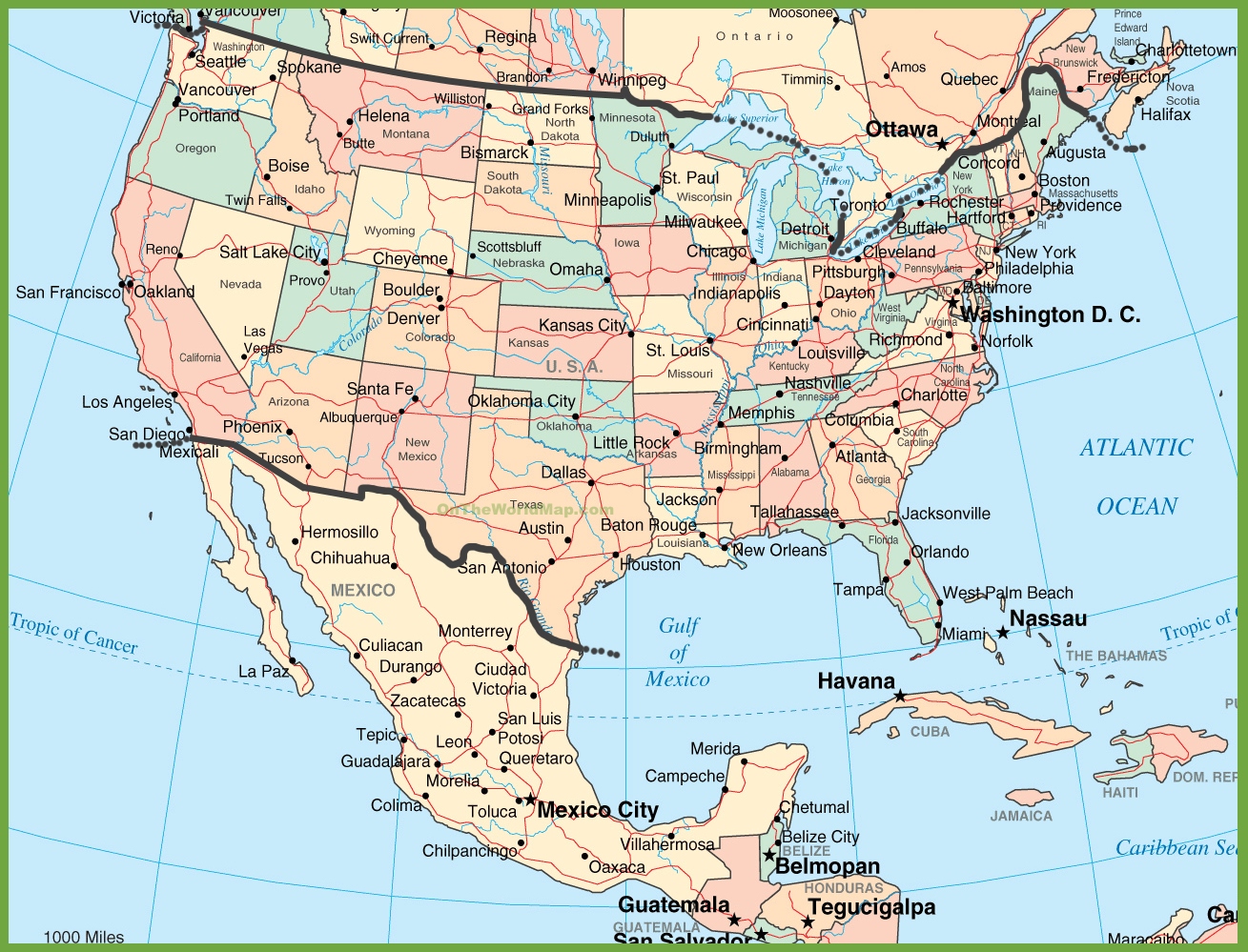
All 3 generations of the Cardenas family served as mayor of Michoacan, the state in which Grandfather Cardenas was born. Here is a map showing the location of Michoacan, in red:
To summarize, for her Chief of Staff, Claudia Sheinbaum selects the grandson of the Cardenas family, who has the same name as the grandfather. It’s a Blast from the Past.
According to the Mexican Navy, the Sinaloa cartel and the Jalisco Nueva Generación (CJNG) cartel are now producing precursor chemicals in order to produce methamphetamine.
It’s been estimated that there are 100 ways to concoct methamphetamine. Formerly in Mexico, they used ephedrine as the principal precursor, but the Mexican government got stricter on ephedrine, so they switched to the P2P and methylamine method.
The Mexican meth producers imported P2P and methylamine from China, but now they don’t need to, because they found ways to concoct these chemicals themselves with pre-precursor chemicals.
These pre-precursors are substances used for other purposes, such as cleaning products, petrochemicals, food, cosmetics and pharmaceuticals. They are called dual-use chemicals.
Currently this doesn’t apply to fentanyl, because its pre-precursors don’t have so many dual legal uses.


#/media/Archivo:Juan_Ram%C3%B3n_de_la_Fuente_2012_Cropped.jpg)
.jpg)
#/media/Archivo:Garc%C3%ADa_Harfuch_(cropped).jpg)
#/media/Archivo:Marcelo_Ebrard_(45267928315)_(cropped).jpg)
.jpg)
.jpg)

.svg)